


Page 840 - Clinical Immunology_ Principles and Practice ( PDFDrive )
P. 840
812          Part SIX  Systemic Immune Diseases


                  $257$                 $257,& %5$1&+(6           Analysis of clonal CD4 populations has yielded identical T-cell
                                                               receptors (TCRs) in independent temporal artery biopsies from
                                                               the same patient, strongly supportive for antigen driving T-cell
                                                                                                   20
                                                               behavior in the tissue microenvironment.  Wall-embedded
                                                               vasDCs serve as antigen-presenting cells (APCs); the nature of
                                                               the antigen remains unknown. Reports about infectious agents
                                                               isolated from temporal arteries have notoriously not been
                                                               confirmed in independent studies. The older adult host is expected
                                                               to accumulate viral and bacterial microorganisms, and locally
                                                               deposited pathogens may not indicate causal involvement but,
                                                               rather, represent the vascular microbiota. Carefully designed
                                                               experiments need to probe for a specific role of pathogens isolated
                                                               from temporal artery tissue.
                                                                  T helper 1 (Th1) cells are a key pathogenic element in GCA.
                                                               Interferon-γ  (IFN-γ),  the  Th1  marker  cytokine,  has  multiple
                                                               disease-relevant  functions:  activating  endothelial  cells  and
                                                               macrophages, regulating wall remodeling, inducing microvascular
                                                                                                           14
                                                               neoangiogenesis, and driving intimal-layer expansion.  IFN-γ
                                                               production is predominantly produced in the adventitia, where
                                                               T cells are instructed by vasDCs. Th1 cells are present in lesions
                                                               from untreated patients and persist despite prolonged cortico-
                                                                            21
                                                               steroid therapy,  suggesting independence of vasculitogenic
                                                               Th1 cells from the steroid-sensitive acute-phase response and
              $GYHQWLWDO WKLFNHQLQJ    $GYHQWLWDO QHRDQJLRJHQHVLV
                                                               emphasizing their role as stabilizers of chronic-persistent lesions.
           0HGLDO WKLQQLQJ  ZDOO GHVWUXFWLRQ  0\RILEUREODVW PRELOL]DWLRQ  During early vasculitis, Th1 cells are accompanied by Th17 cells.
              $QHXU\VP IRUPDWLRQ          DQG SUROLIHUDWLRQ    However, Th17 cells are highly sensitive to steroid therapy and
                                                                                            21
                 'LVVHFWLRQ              ,QWLPDO K\SHUSODVLD   chronic lesions are Th17 depleted.  Comparative analysis of
                                          /XPLQDO RFFOXVLRQ
                                                               sequential temporal artery biopsy tissues harvested from patients
                                                               before and after treatment has demonstrated that adaptive
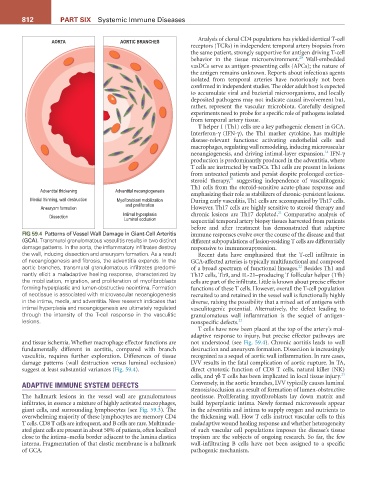
        FIG 59.4  Patterns of Vessel Wall Damage in Giant-Cell Arteritis   immune responses evolve over the course of the disease and that
        (GCA). Transmural granulomatous vasculitis results in two distinct   different subpopulations of lesion-residing T cells are differentially
        damage patterns. In the aorta, the inflammatory infiltrates destroy   responsive to immunosuppression.
        the wall, inducing dissection and aneurysm formation. As a result   Recent data have emphasized that the T-cell infiltrate in
        of neoangiogenesis and fibrosis, the adventitia expands. In the   GCA-affected arteries is typically multifunctional and composed
        aortic branches, transmural granulomatous infiltrates predomi-  of a broad spectrum of functional lineages.  Besides Th1 and
                                                                                                   22
        nantly elicit a maladaptive healing response, characterized by   Th17 cells, Th9, and IL-21–producing T follicular helper (Tfh)
        the mobilization, migration, and proliferation of myofibroblasts   cells are part of the infiltrate. Little is known about precise effector
        forming hyperplastic and lumen-obstructive neointima. Formation   functions of these T cells. However, overall the T-cell population
        of neotissue is associated with microvascular neoangiogenesis   recruited to and retained in the vessel wall is functionally highly
        in the intima, media, and adventitia. New research indicates that   diverse, raising the possibility that a mixed set of antigens with
        intimal hyperplasia and neoangiogenesis are ultimately regulated   vasculitogenic potential.  Alternatively,  the  defect leading  to
        through the intensity of the T-cell response in the vasculitic   granulomatous wall inflammation is the sequel of antigen-
        lesions.                                               nonspecific defects. 22
                                                                  T cells have now been placed at the top of the artery’s mal-
                                                               adaptive response to injury, but precise effector pathways are
        and tissue ischemia. Whether macrophage effector functions are   not understood (see Fig. 59.4). Chronic aortitis leads to wall
        fundamentally different  in aortitis,  compared with  branch   destruction and aneurysm formation. Dissection is increasingly
        vasculitis, requires further exploration. Differences  of tissue   recognized as a sequel of aortic wall inflammation. In rare cases,
        damage patterns (wall destruction versus luminal occlusion)   LVV results in the fatal complication of aortic rupture. In TA,
        suggest at least substantial variances (Fig. 59.4).    direct cytotoxic function of CD8 T cells, natural killer (NK)
                                                                                                                 23
                                                               cells, and γδ T cells has been implicated in local tissue injury.
        ADAPTIVE IMMUNE SYSTEM DEFECTS                         Conversely, in the aortic branches, LVV typically causes luminal
                                                               stenosis/occlusion as a result of formation of lumen-obstructive
        The hallmark lesions in the vessel wall are granulomatous   neotissue. Proliferating myofibroblasts lay down matrix and
        infiltrates, in essence a mixture of highly activated macrophages,   build hyperplastic intima. Newly formed microvessels appear
        giant cells, and surrounding lymphocytes (see Fig. 59.3). The   in the adventitia and intima to supply oxygen and nutrients to
        overwhelming majority of these lymphocytes are memory CD4   the thickening wall. How T cells instruct vascular cells to this
        T cells. CD8 T cells are infrequent, and B cells are rare. Multinucle-  maladaptive wound healing response and whether heterogeneity
        ated giant cells are present in about 50% of patients, often localized   of such vascular cell populations imposes the disease’s tissue
        close to the intima–media border adjacent to the lamina elastica   tropism are the subjects of ongoing research. So far, the few
        interna. Fragmentation of that elastic membrane is a hallmark   wall-infiltrating B cells have not been assigned to a specific
        of GCA.                                                pathogenic mechanism.

