


Page 844 - Clinical Immunology_ Principles and Practice ( PDFDrive )
P. 844
816          Part SIX  Systemic Immune Diseases


              A                                                B


              C                                                D
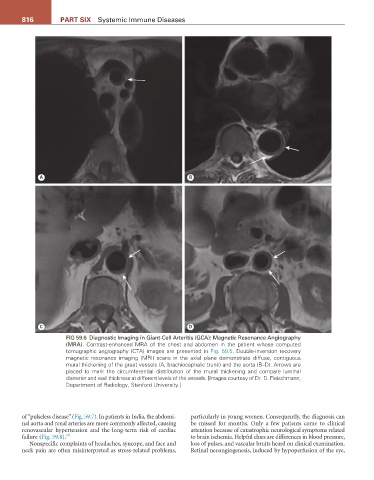
                       FIG 59.6  Diagnostic Imaging in Giant-Cell Arteritis (GCA): Magnetic Resonance Angiography
                       (MRA). Contrast-enhanced MRA of the chest and abdomen in the patient whose computed
                       tomographic angiography (CTA) images are presented in Fig. 59.5. Double-inversion recovery
                       magnetic resonance imaging (MRI) scans in the axial plane demonstrate diffuse, contiguous
                       mural thickening of the great vessels (A, brachiocephalic trunk) and the aorta (B–D). Arrows are
                       placed to mark the circumferential distribution of the mural thickening and compare luminal
                       diameter and wall thickness at different levels of the vessels. [Images courtesy of Dr. D. Fleischmann,
                       Department of Radiology, Stanford University.]


        of “pulseless disease” (Fig. 59.7). In patients in India, the abdomi-  particularly in young women. Consequently, the diagnosis can
        nal aorta and renal arteries are more commonly affected, causing   be missed for months. Only a few patients come to clinical
        renovascular hypertension and the long-term risk of cardiac   attention because of catastrophic neurological symptoms related
        failure (Fig. 59.8). 30                                to brain ischemia. Helpful clues are differences in blood pressure,
           Nonspecific complaints of headaches, syncope, and face and   loss of pulses, and vascular bruits heard on clinical examination.
        neck pain are often misinterpreted as stress-related problems,   Retinal neoangiogenesis, induced by hypoperfusion of the eye,

