


Page 951 - Clinical Immunology_ Principles and Practice ( PDFDrive )
P. 951
918          Part Seven  Organ-Specific Inflammatory Disease


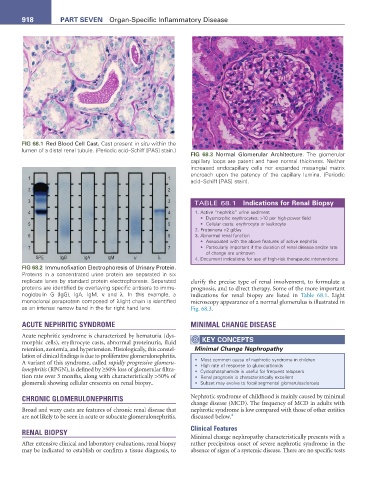
        FIG 68.1  Red Blood Cell Cast. Cast present in situ within the
        lumen of a distal renal tubule. (Periodic acid–Schiff [PAS] stain.)
                                                               FIG 68.3  Normal Glomerular Architecture. The glomerular
                                                               capillary loops are patent and have normal thickness. Neither
                                                               increased  endocapillary  cells  nor  expanded  mesangial  matrix
                                                               encroach upon the patency of the capillary lumina. (Periodic

                                                               acid–Schiff [PAS] stain).

                                                                 TABLE 68.1  Indications for renal Biopsy

                                                                 1. Active “nephritic” urine sediment
                                                                   •  Dysmorphic erythrocytes: >10 per high-power field
                                                                   •  Cellular casts: erythrocyte or leukocyte
                                                                 2. Proteinuria >2 g/day
                                                                 3. Abnormal renal function
                                                                   •  Associated with the above features of active nephritis
                                                                   •  Particularly important if the duration of renal disease and/or rate
                                                                    of change are unknown
             63(     ,J*     ,J$    ,J0      κ       λ           4. Document indications for use of high-risk therapeutic interventions
        FIG 68.2  Immunofixation Electrophoresis of Urinary Protein.
        Proteins in a concentrated urine protein are separated in six
        replicate lanes by standard protein electrophoresis. Separated   clarify the precise type of renal involvement, to formulate a
        proteins are identified by overlaying specific antisera to immu-  prognosis, and to direct therapy. Some of the more important
        noglobulin G (IgG), IgA, IgM,  κ and  λ. In this example, a   indications for renal biopsy are listed in  Table 68.1. Light
        monoclonal paraprotein composed of λlight chain is identified   microscopy appearance of a normal glomerulus is illustrated in
        as an intense narrow band in the far right hand lane.   Fig. 68.3.

        ACUTE NEPHRITIC SYNDROME                               MINIMAL CHANGE DISEASE

        Acute nephritic syndrome is characterized by hematuria (dys-
        morphic cells), erythrocyte casts, abnormal proteinuria, fluid    KeY COnCePtS
        retention, azotemia, and hypertension. Histologically, this constel-  Minimal Change Nephropathy
        lation of clinical findings is due to proliferative glomerulonephritis.
        A variant of this syndrome, called rapidly progressive glomeru-  •  Most common cause of nephrotic syndrome in children
                                                                 •  High rate of response to glucocorticoids
        lonephritis (RPGN), is defined by ≥50% loss of glomerular filtra-  •  Cyclophosphamide is useful for frequent relapsers
        tion rate over 3 months, along with characteristically >50% of   •  Renal prognosis is characteristically excellent
        glomeruli showing cellular crescents on renal biopsy..   •  Subset may evolve to focal segmental glomerulosclerosis
        CHRONIC GLOMERULONEPHRITIS                             Nephrotic syndrome of childhood is mainly caused by minimal
                                                               change disease (MCD). The frequency of MCD in adults with
        Broad and waxy casts are features of chronic renal disease that   nephrotic syndrome is low compared with those of other entities
        are not likely to be seen in acute or subacute glomerulonephritis.  discussed below. 4
                                                               Clinical Features
        RENAL BIOPSY
                                                               Minimal change nephropathy characteristically presents with a
        After extensive clinical and laboratory evaluations, renal biopsy   rather precipitous onset of severe nephrotic syndrome in the
        may be indicated to establish or confirm a tissue diagnosis, to   absence of signs of a systemic disease. There are no specific tests

