


Page 953 - Clinical Immunology_ Principles and Practice ( PDFDrive )
P. 953
920          Part Seven  Organ-Specific Inflammatory Disease


              $                                                %


              &                                                '

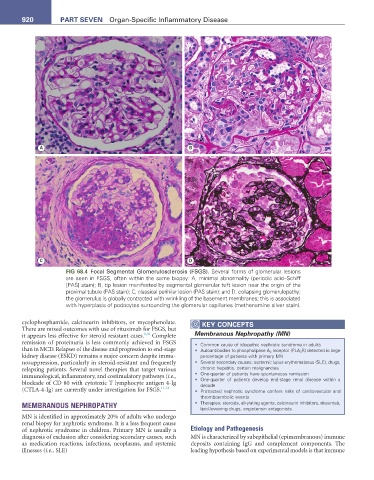
                       FIG 68.4  Focal Segmental Glomerulosclerosis (FSGS). Several forms of glomerular lesions
                       are seen in FSGS, often within the same biopsy: A, minimal abnormality (periodic acid–Schiff
                       [PAS] stain); B, tip lesion manifested by segmental glomerular tuft lesion near the origin of the
                       proximal tubule (PAS stain); C, classical perihilar lesion (PAS stain); and D, collapsing glomerulopathy;
                       the glomerulus is globally contracted with wrinkling of the basement membranes; this is associated
                       with hyperplasia of podocytes surrounding the glomerular capillaries (methenamine silver stain).

        cyclophosphamide, calcineurin inhibitors, or mycophenolate.    KeY COnCePtS
        There are mixed outcomes with use of rituximab for FSGS, but
        it appears less effective for steroid resistant cases. 9,10  Complete   Membranous Nephropathy (MN)
        remission of proteinuria is less commonly achieved in FSGS   •  Common cause of idiopathic nephrotic syndrome in adults
        than in MCD. Relapses of the disease and progression to end-stage   •  Autoantibodies to phospholipase A 2  receptor (PLA 2 R) detected in large
        kidney disease (ESKD) remains a major concern despite immu-  percentage of patients with primary MN
        nosuppression, particularly in steroid-resistant and frequently   •  Several secondary causes: systemic lupus erythematosus (SLE), drugs,
        relapsing patients. Several novel therapies that target various   chronic hepatitis, certain malignancies
        immunological, inflammatory, and costimulatory pathways (i.e.,   •  One-quarter of patients have spontaneous remission
        blockade of CD 80 with cytotoxic T lymphocyte antigen 4-Ig   •  One-quarter of patients develop end-stage renal disease within a
                                                                   decade
        (CTLA-4-Ig) are currently under investigation for FSGS. 11,12  •  Protracted nephrotic syndrome confers risks of cardiovascular and
                                                                   thromboembolic events
        MEMBRANOUS NEPHROPATHY                                   •  Therapies: steroids, alkylating agents, calcineurin inhibitors, rituximab,
                                                                   lipid-lowering drugs, angiotensin antagonists
        MN is identified in approximately 20% of adults who undergo
        renal biopsy for nephrotic syndrome. It is a less frequent cause
        of nephrotic syndrome in children. Primary MN is usually a   Etiology and Pathogenesis
        diagnosis of exclusion after considering secondary causes, such   MN is characterized by subepithelial (epimembranous) immune
        as medication reactions, infections, neoplasms, and systemic   deposits containing IgG and complement components. The
        illnesses (i.e., SLE)                                  leading hypothesis based on experimental models is that immune

