


Page 954 - Clinical Immunology_ Principles and Practice ( PDFDrive )
P. 954
CHaPter 68  Immunological Renal Diseases                921


                                                                    $


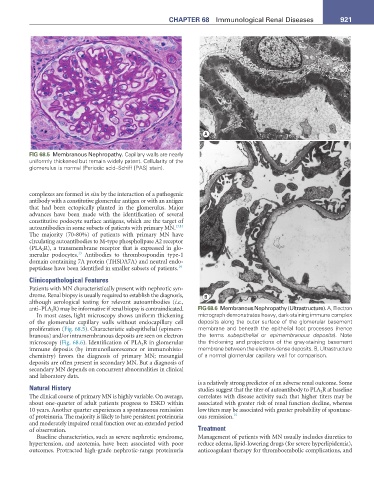
           FIG 68.5  Membranous Nephropathy. Capillary walls are nearly
           uniformly thickened but remain widely patent. Cellularity of the
           glomerulus is normal (Periodic acid–Schiff [PAS] stain).


           complexes are formed in situ by the interaction of a pathogenic
           antibody with a constitutive glomerular antigen or with an antigen
           that had been ectopically planted in the glomerulus. Major
           advances have been made with the identification of several
           constitutive podocyte surface antigens, which are the target of
           autoantibodies in some subsets of patients with primary MN. 13,14
           The majority (70-80%) of patients with primary MN have
           circulating autoantibodies to M-type phospholipase A2 receptor
           (PLA 2 R), a transmembrane receptor that is expressed in glo-
                           13
           merular podocytes.   Antibodies to thrombospondin type-1
           domain containing 7A protein (THSDA7A) and neutral endo-
           peptidase have been identified in smaller subsets of patients. 14
           Clinicopathological Features
           Patients with MN characteristically present with nephrotic syn-
           drome. Renal biopsy is usually required to establish the diagnosis,   %
           although serological testing for relevant autoantibodies (i.e.,
           anti–PLA 2 R) may be informative if renal biopsy is contraindicated.  FIG 68.6  Membranous Nephropathy (Ultrastructure). A, Electron
             In most cases, light microscopy shows uniform thickening   micrograph demonstrates heavy, dark-staining immune complex
           of the glomerular capillary walls without endocapillary cell   deposits along the outer surface of the glomerular basement
           proliferation (Fig. 68.5). Characteristic subepithelial (epimem-  membrane and beneath the epithelial foot processes (hence
           branous) and/or intramembranous deposits are seen on electron   the  terms  subepithelial  or  epimembranous  deposits).  Note
           microscopy (Fig. 68.6). Identification of PLA 2 R in glomerular   the  thickening  and  projections  of  the  gray-staining  basement
           immune deposits (by immunofluorescence or immunohisto-  membrane between the electron-dense deposits. B, Ultrastructure
           chemistry) favors the diagnosis of primary MN; mesangial   of a normal glomerular capillary wall for comparison.
           deposits are often present in secondary MN. But a diagnosis of
           secondary MN depends on concurrent abnormalities in clinical
           and laboratory data.
                                                                  is a relatively strong predictor of an adverse renal outcome. Some
           Natural History                                        studies suggest that the titer of autoantibody to PLA 2 R at baseline
           The clinical course of primary MN is highly variable. On average,   correlates with disease activity such that higher titers may be
           about one-quarter of adult patients progress to ESKD within   associated with greater risk of renal function decline, whereas
           10 years. Another quarter experiences a spontaneous remission   low titers may be associated with greater probability of spontane-
           of proteinuria. The majority is likely to have persistent proteinuria   ous remission. 15
           and moderately impaired renal function over an extended period
           of observation.                                        Treatment
             Baseline characteristics, such as severe nephrotic syndrome,   Management of patients with MN usually includes diuretics to
           hypertension, and azotemia, have been associated with poor   reduce edema, lipid-lowering drugs (for severe hyperlipidemia),
           outcomes. Protracted high-grade nephrotic-range proteinuria   anticoagulant therapy for thromboembolic complications, and

