


Page 969 - Clinical Immunology_ Principles and Practice ( PDFDrive )
P. 969
936          Part seven  Organ-Specific Inflammatory Disease


                                         Early phases                 Late phases
                                        Clinically silent          Clinically silent or overt


                                Initial lesion  Fatty streak  Atheroma  Fibroatheroma  Complicated lesion
                               Macrophages  Intracellular lipid  Intra-and extra-  Lipid core  Endothelial damage
                               Foam cells  accumulation  cellular lipid  Fibrosis  Hematoma
                               NO reduction  Leukocytes recruitment  accumulation  Calcification  Thrombosis
                               ICAM/VCAM/
                               endothelin expression
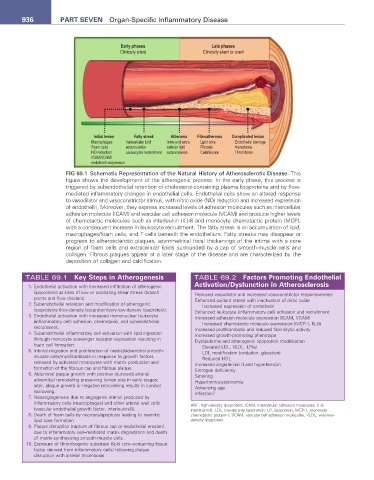
                       FIG 69.1  Schematic Representation of the Natural History of Atherosclerotic Disease. This
                       figure shows the development of the atherogenic process. In the early phase, this process is
                       triggered by subendothelial retention of cholesterol-containing plasma lipoproteins and by flow-
                       mediated inflammatory changes in endothelial cells. Endothelial cells show an altered response
                       to vasodilator and vasoconstrictor stimuli, with nitric oxide (NO) reduction and increased expression
                       of endothelin. Moreover, they express increased levels of adhesion molecules such as intercellular
                       adhesion molecule (ICAM) and vascular cell adhesion molecule (VCAM) and produce higher levels
                       of chemotactic molecules such as interleukin (IL)-8 and monocyte chemotactic protein (MCP),
                       with a consequent increase in leukocyte recruitment. The fatty streak is an accumulation of lipid,
                       macrophages/foam cells, and T cells beneath the endothelium. Fatty streaks may disappear or
                       progress to atherosclerotic plaques, asymmetrical focal thickenings of the intima with a core
                       region of foam cells and extracellular lipids surrounded by a cap of smooth-muscle cells and
                       collagen. Fibrous plaques appear at a later stage of the disease and are characterized by the
                       deposition of collagen and calcification.


         TABLE 69.1  Key steps in atherogenesis                  TABLE 69.2  Factors Promoting endothelial
                                                                 activation/Dysfunction in atherosclerosis
          1. Endothelial activation with increased infiltration of atherogenic
            lipoproteins at sites of low or oscillating shear stress (branch   Reduced vasodilator and increased vasoconstrictor responsiveness
            points and flow dividers).                           Enhanced oxidant stress with inactivation of nitric oxide
          2. Subendothelial retention and modification of atherogenic   Increased expression of endothelin
            lipoproteins (low-density lipoprotein/very-low-density lipoprotein).  Enhanced leukocyte (inflammatory cell) adhesion and recruitment
          3. Endothelial activation with increased mononuclear leukocyte   Increased adhesion molecule expression (ICAM, VCAM)
            (inflammatory cell) adhesion, chemotaxis, and subendothelial   Increased chemotactic molecule expression (MCP-1, IL-8)
            recruitment.                                         Increased prothrombotic and reduced fibrinolytic activity
          4. Subendothelial inflammatory cell activation with lipid ingestion   Increased growth-promoting phenotype
            through monocyte scavenger receptor expression resulting in   Dyslipidemia and atherogenic lipoprotein modification
            foam cell formation.                                   Elevated LDL, VLDL, LP(a)
          5. Intimal migration and proliferation of medial/adventitial smooth-  LDL modification (oxidation, glycation)
            muscle cells/myofibroblasts in response to growth factors   Reduced HDL
            released by activated monocytes with matrix production and   Increased angiotensin II and hypertension
            formation of the fibrous cap and fibrous plaque.     Estrogen deficiency
          6. Abluminal plaque growth with positive (outward) arterial   Smoking
            adventitial remodeling preserving lumen size in early stages;   Hyperhomocysteinemia
            later, plaque growth or negative remodeling results in luminal   Advancing age
            narrowing.                                           Infection?
          7. Neoangiogenesis due to angiogenic stimuli produced by
            inflammatory cells (macrophages) and other arterial wall cells   HDL, high-density lipoprotein; ICAM, intercellular adhesion molecules; IL-8,
            (vascular endothelial growth factor, interleukin-8).  interleukin-8; LDL, low-density lipoprotein; LP, lipoprotein; MCP-1, monocyte
          8. Death of foam cells by necrosis/apoptosis leading to necrotic   chemotactic protein-1; VCAM, vascular cell adhesion molecules; VLDL, very-low-
            lipid core formation.                              density lipoprotein.
          9. Plaque disruption (rupture of fibrous cap or endothelial erosion)
            due to inflammatory cell–mediated matrix degradation and death
            of matrix-synthesizing smooth-muscle cells.
          10. Exposure of thrombogenic substrate (lipid core–containing tissue
            factor derived from inflammatory cells) following plaque
            disruption with arterial thrombosis.

