


Page 964 - Clinical Immunology_ Principles and Practice ( PDFDrive )
P. 964
CHaPter 68  Immunological Renal Diseases                931


                                                                    For patients with “pure” class V lupus MN and nephrotic-range
                                                                  proteinuria, both the  ACR and the EULAR/ERA-EDTA have
                                                                  recommended oral prednisone and MMF. A prospective controlled
                                                                  trial showed that both IVCY and CSA were more effective than
                                                                  steroids alone in inducing remission of proteinuria in lupus MN
                                                                  but that relapse of nephrotic syndrome occurred significantly
                                                                  more often in the CSA group than in the IVCY treatment group.
                                                                  Scleroderma (Systemic Sclerosis) Renal Disease

                                                                      KeY COnCePtS
                                                                   Nephropathies of Selected Connective
                                                                   Tissue Diseases

                                                                   •  Scleroderma renal crisis: Predominantly renal vasculopathy; moderate
                                                                     to severe (high renin) hypertension with progressive renal failure—
                                                                     treated with angiotensin-converting enzyme inhibitors (ACEIs); additional
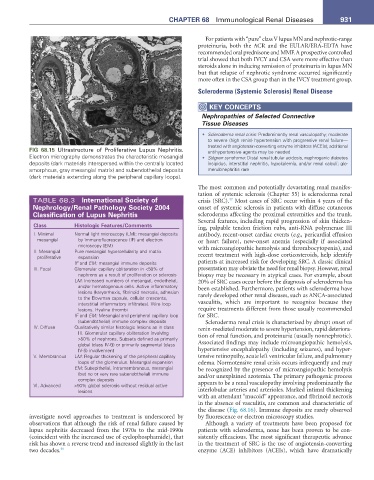
           FIG 68.15  Ultrastructure of Proliferative Lupus Nephritis.   antihypertensive agents may be needed
           Electron micrography demonstrates the characteristic mesangial   •  Sjögren syndrome: Distal renal tubular acidosis, nephrogenic diabetes
           deposits (dark materials interspersed within the centrally located   insipidus, interstitial nephritis, hypokalemia, and/or renal calculi; glo-
           amorphous, gray mesangial matrix) and subendothelial deposits   merulonephritis rare
           (dark materials extending along the peripheral capillary loops).

                                                                  The most common and potentially devastating renal manifes-
                                                                  tation of systemic sclerosis (Chapter 55) is scleroderma renal
            TABLE 68.3  International Society of                  crisis (SRC).  Most cases of SRC occur within 4 years of the
                                                                            47
            nephrology/renal Pathology Society 2004               onset of systemic sclerosis in patients with diffuse cutaneous
            Classification of Lupus nephritis                     scleroderma affecting the proximal extremities and the trunk.
                                                                  Several features, including rapid progression of skin thicken-
            Class        Histologic Features/Comments             ing, palpable tendon friction rubs, anti-RNA polymerase III
            I. Minimal   Normal light microscopy (LM); mesangial deposits   antibody, recent-onset cardiac events (e.g., pericardial effusion
             mesangial     by immunofluorescence (IF) and electron   or heart failure), new-onset anemia (especially if associated
                           microscopy (EM)                        with microangiopathic hemolysis and thrombocytopenia), and
            II. Mesangial   Pure mesangial hypercellularity and matrix
             proliferative  expansion                             recent treatment with high-dose corticosteroids, help identify
                         IF and EM: mesangial immune deposits     patients at increased risk for developing SRC. A classic clinical
            III. Focal   Glomerular capillary obliteration in <50% of   presentation may obviate the need for renal biopsy. However, renal
                           nephrons as a result of proliferation or sclerosis  biopsy may be necessary in atypical cases. For example, about
                         LM: Increased numbers of mesangial, endothelial,   20% of SRC cases occur before the diagnosis of scleroderma has
                           and/or hematogenous cells. Active inflammatory   been established. Furthermore, patients with scleroderma have
                           lesions (karyorrhexis, fibrinoid necrosis, adhesion   rarely developed other renal diseases, such as ANCA-associated
                           to the Bowman capsule, cellular crescents,
                           interstitial inflammatory infiltrates). Wire loop   vasculitis, which are important to recognize because they
                           lesions. Hyaline thrombi               require treatments different from those usually recommended
                         IF and EM: Mesangial and peripheral capillary loop   for SRC.
                           (subendothelial) immune complex deposits  Scleroderma renal crisis is characterized by abrupt onset of
            IV. Diffuse  Qualitatively similar histologic lesions as in class   renin-mediated moderate to severe hypertension, rapid deteriora-
                           III. Glomerular capillary obliteration involving   tion of renal function, and proteinuria (usually nonnephrotic).
                           >50% of nephrons. Subsets defined as primarily
                           global (class IV-G) or primarily segmental (class   Associated findings may include microangiopathic hemolysis,
                           IV-S) involvement                      hypertensive encephalopathy (including seizures), and hyper-
            V. Membranous  LM: Regular thickening of the peripheral capillary   tensive retinopathy, acute left ventricular failure, and pulmonary
                           loops of the glomerulus. Mesangial expansion  edema. Normotensive renal crisis occurs infrequently and may
                         EM: Subepithelial, intramembranous, mesangial   be recognized by the presence of microangiopathic hemolysis
                           (but no or very rare subendothelial) immune   and/or unexplained azotemia. The primary pathogenic process
                           complex deposits
            VI. Advanced  >90% global sclerosis without residual active   appears to be a renal vasculopathy involving predominantly the
                           lesions                                interlobular arteries and arterioles. Marked intimal thickening
                                                                  with an attendant “mucoid” appearance, and fibrinoid necrosis
                                                                  in the absence of vasculitis, are common and characteristic of
                                                                  the disease (Fig. 68.16). Immune deposits are rarely observed
           investigate novel approaches to treatment is underscored by   by fluorescence or electron microscopy studies.
           observations that although the risk of renal failure caused by   Although a variety of treatments have been proposed for
           lupus nephritis decreased from the 1970s to the mid-1990s   patients with scleroderma, none has been proven to be con-
           (coincident with the increased use of cyclophosphamide), that   sistently efficacious. The most significant therapeutic advance
           risk has shown a reverse trend and increased slightly in the last   in the treatment of SRC is the use of angiotensin-converting
           two decades. 46                                        enzyme (ACE) inhibitors (ACEIs), which have dramatically

