


Page 965 - Clinical Immunology_ Principles and Practice ( PDFDrive )
P. 965
932          Part Seven  Organ-Specific Inflammatory Disease


                                                                   On tHe HOrIZOn
                                                                 •  The advent of new genetic and molecular techniques and new disease
                                                                   models has led to exciting progress in our understanding of the biology
                                                                   of the glomerulus, the pathogenesis of many glomerular diseases,
                                                                   and the influence of genetic variants on disease predisposition and
                                                                   progression.
                                                                 •  It is anticipated that these insights should lead to better noninvasive
                                                                   diagnostic techniques, biomarkers, and predictors of prognosis and
                                                                   relapse and facilitate a more personalized approach to therapy rather
                                                                   than a one-size-fits-all approach.
                                                                 •  Novel  targeted therapies are  on the  horizon that will  interrupt  or
                                                                   modulate the underlying pathophysiology of the individual diseases
                                                                   and also halt the downstream pathways of injury and fibrosis common
                                                                   to all of the glomerular diseases.


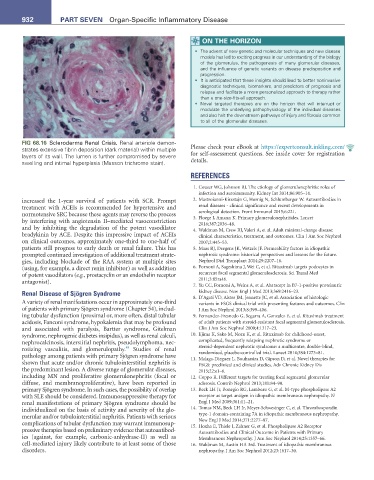
        FIG 68.16  Scleroderma Renal Crisis. Renal arteriole demon-
        strates extensive fibrin deposition (dark material) within multiple   Please check your eBook at https://expertconsult.inkling.com/
        layers of its wall. The lumen is further compromised by severe   for self-assessment questions. See inside cover for registration
        swelling and intimal hyperplasia (Masson trichrome stain).   details.

                                                               REFERENCES

                                                                1.  Couser WG, Johnson RJ. The etiology of glomerulonephritis: roles of
                                                                  infection and autoimmunity. Kidney Int 2014;86:905–14.
        increased the 1-year survival of patients with SCR. Prompt   2.  Mastroianni-Kirsztajn G, Hornig N, Schlumberger W. Autoantibodies in
        treatment  with  ACEIs is recommended for hypertensive and   renal diseases - clinical significance and recent developments in
        normotensive SRC because these agents may reverse the process   serological detection. Front Immunol 2015;6:221.
        by interfering with angiotensin II–mediated vasoconstriction   3.  Floege J, Amann K. Primary glomerulonephritides. Lancet
                                                                  2016;387:2036–48.
        and by inhibiting the degradation of the potent vasodilator   4.  Waldman M, Crew RJ, Valeri A, et al. Adult minimal-change disease:
        bradykinin by ACE. Despite this impressive impact of ACEIs   clinical characteristics, treatment, and outcomes. Clin J Am Soc Nephrol
        on clinical outcomes, approximately one-third to one-half of   2007;2:445–53.
        patients still progress to early death or renal failure. This has   5.  Maas RJ, Deegens JK, Wetzels JF. Permeability factors in idiopathic
        prompted continued investigation of additional treatment strate-  nephrotic syndrome: historical perspectives and lessons for the future.
        gies, including blockade of the RAA system at multiple sites   Nephrol Dial Transplant 2014;29:2207–16.
        (using, for example, a direct renin inhibitor) as well as addition   6.  Fornoni A, Sageshima J, Wei C, et al. Rituximab targets podocytes in
        of potent vasodilators (e.g., prostacyclin or an endothelin receptor     recurrent focal segmental glomerulosclerosis. Sci Transl Med
        antagonist).                                              2011;3:85ra46.
                                                                7.  Yu CC, Fornoni A, Weins A, et al. Abatacept in B7-1-positive proteinuric
        Renal Disease of Sjögren Syndrome                         kidney disease. New Engl J Med 2013;369:2416–23.
                                                                8.  D’Agati VD, Alster JM, Jennette JC, et al. Association of histologic
        A variety of renal manifestations occur in approximately one-third   variants in FSGS clinical trial with presenting features and outcomes. Clin
        of patients with primary Sjögren syndrome (Chapter 54), includ-  J Am Soc Nephrol 2013;8:399–406.
        ing tubular dysfunction (proximal or, more often, distal tubular   9.  Fernandez-Fresnedo G, Segarra A, Gonzalez E, et al. Rituximab treatment
        acidosis, Fanconi syndrome, hypokalemia that may be profound   of adult patients with steroid-resistant focal segmental glomerulosclerosis.
        and associated with paralysis, Bartter syndrome, Gitelman   Clin J Am Soc Nephrol 2009;4:1317–23.
        syndrome, nephrogenic diabetes insipidus), as well as renal calculi,   10.  Iijima K, Sako M, Nozu K, et al. Rituximab for childhood-onset,
        nephrocalcinosis, interstitial nephritis, pseudolymphoma, nec-  complicated, frequently relapsing nephrotic syndrome or
                                          48
        rotizing  vasculitis,  and glomerulopathy.   Studies of  renal   steroid-dependent nephrotic syndrome: a multicentre, double-blind,
                                                                  randomised, placebo-controlled trial. Lancet 2014;384:1273–81.
        pathology among patients with primary Sjögren syndrome have   11.  Malaga-Dieguez L, Bouhassira D, Gipson D, et al. Novel therapies for
        shown that acute and/or chronic tubulointerstitial nephritis is   FSGS: preclinical and clinical studies. Adv Chronic Kidney Dis
        the predominant lesion. A diverse range of glomerular diseases,   2015;22:e1–6.
        including MN and proliferative glomerulonephritis (focal or   12.  Coppo R. Different targets for treating focal segmental glomerular
        diffuse, and membranoproliferative), have been reported in   sclerosis. Contrib Nephrol 2013;181:84–90.
        primary Sjögren syndrome. In such cases, the possibility of overlap   13.  Beck LH Jr, Bonegio RG, Lambeau G, et al. M-type phospholipase A2
        with SLE should be considered. Immunosuppressive therapy for   receptor as target antigen in idiopathic membranous nephropathy. N
        renal manifestations of primary Sjögren syndrome should be   Engl J Med 2009;361:11–21.
        individualized on the basis of activity and severity of the glo-  14.  Tomas NM, Beck LH Jr, Meyer-Schwesinger C, et al. Thrombospondin
        merular and/or tubulointerstitial nephritis. Patients with serious   type-1 domain-containing 7A in idiopathic membranous nephropathy.
                                                                  New Engl J Med 2014;371:2277–87.
        complications of tubular dysfunction may warrant immunosup-  15.  Hoxha E, Thiele I, Zahner G, et al. Phospholipase A2 Receptor
        pressive therapies based on preliminary evidence that autoantibod-  Autoantibodies and Clinical Outcome in Patients with Primary
        ies (against, for example, carbonic-anhydrase-II) as well as   Membranous Nephropathy. J Am Soc Nephrol 2014;25:1357–66.
        cell-mediated injury likely contribute to at least some of those   16.  Waldman M, Austin HA 3rd. Treatment of idiopathic membranous
        disorders.                                                nephropathy. J Am Soc Nephrol 2012;23:1617–30.

