


Page 1127 - Hall et al (2015) Principles of Critical Care-McGraw-Hill
P. 1127
766     PART 6: Neurologic Disorders


                                                                       junction testing. Peripheral motor nerve stimulation elicits a compound
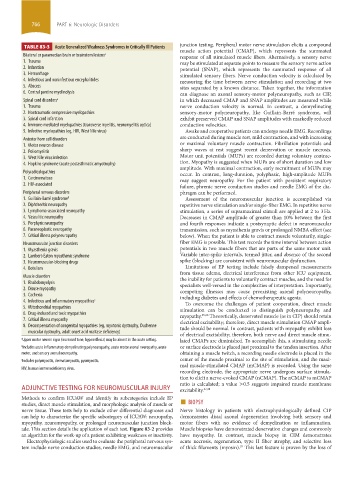
                   TABLE 83-3    Acute Generalized Weakness Syndromes in Critically Ill Patients
                                                                       muscle action potential (CMAP), which represents the summated
                  Bilateral or paramedian brain or brainstem lesions a  response  of  all  stimulated  muscle  fibers.  Alternatively,  a  sensory  nerve
                  1.  Trauma                                           may be stimulated at separate points to measure the sensory nerve action
                  2.  Infarction                                       potential  (SNAP),  which represents  the  summated  response  of  all
                  3.  Hemorrhage                                       stimulated sensory fibers. Nerve conduction velocity is calculated by
                  4.  Infectious and noninfectious encephalitides      measuring the time between nerve stimulation and recording at two
                  5.  Abscess                                          sites separated by a known distance. Taken together, the information
                  6.  Central pontine myelinolysis                     can diagnose an axonal sensory-motor polyneuropathy, such as CIP,
                  Spinal cord disorders a                              in which decreased CMAP and SNAP amplitudes are measured while
                  1.  Trauma                                           nerve conduction velocity is normal. In contrast, a demyelinating
                  2.  Nontraumatic compressive myelopathies            sensory-motor  polyneuropathy,  like  Guillain-Barré  syndrome,  will
                  3.  Spinal cord infarction                           exhibit preserved CMAP and SNAP amplitudes with markedly reduced
                  4.  Immune-mediated myelopathies (transverse myelitis, neuromyelitis optica)  conduction velocities.
                  5.  Infective myelopathies (eg, HIV, West Nile virus)  Awake and cooperative patients can undergo needle EMG. Recordings
                  Anterior horn cell disorders                         are conducted during muscle rest, mild contraction, and with  increasing
                  1.  Motor neuron disease                             or maximal voluntary muscle contraction. Fibrillation potentials and
                  2.  Poliomyelitis                                    sharp waves at rest suggest recent denervation or muscle necrosis.
                  3.  West Nile virus infection                        Motor unit potentials (MUPs) are recorded during voluntary contrac-
                  4.  Hopkins syndrome (acute postasthmatic amyotrophy)  tion. Myopathy is suggested when MUPs are of short duration and low
                                                                       amplitude. With maximal contraction, early recruitment of MUPs may
                  Polyradiculopathies                                  occur. In contrast, long-duration, polyphasic, high-amplitude MUPs
                  1.  Carcinomatous                                    may suggest neuropathy. For the patient with persistent respiratory
                  2.  HIV-associated                                   failure, phrenic nerve conduction studies and needle EMG of the dia-
                  Peripheral nervous disorders                         phragm can be performed.
                  1.  Guillain-Barré syndrome b                          Assessment of the neuromuscular junction is accomplished via
                  2.  Diphtheritic neuropathy                          repetitive nerve stimulation and/or single-fiber EMG. In repetitive nerve
                  3.  Lymphoma-associated neuropathy                   stimulation, a series of supramaximal stimuli are applied at 2 to 3 Hz.
                  4.  Vasculitic neuropathy                            Decreases in CMAP amplitude of greater than 10% between the first
                  5.  Porphyric neuropathy                             and fourth responses indicate a postsynaptic defect in neuromuscular
                  6.  Paraneoplastic neuropathy                        transmission, such as myasthenia gravis or prolonged NMBA effect (see
                  7.  Critical illness polyneuropathy                  below). When the patient is able to contract muscle voluntarily, single-
                  Neuromuscular junction disorders                     fiber EMG is possible. This test records the time interval between action
                  1.  Myasthenia gravis                                potentials in two muscle fibers that are parts of the same motor unit.
                  2.  Lambert-Eaton myasthenic syndrome                Variable inter-spike intervals, termed jitter, and absence of the second
                  3.  Neuromuscular-blocking drugs                     spike (blocking) are consistent with neuromuscular dysfunction.
                  4.  Botulism                                           Limitations of EP testing include falsely dampened measurements
                                                                       from tissue edema, electrical interference from other ICU equipment,
                  Muscle disorders                                     the inability for patients to voluntarily contract muscles, and the need for
                  1.  Rhabdomyolysis                                   specialists well-versed in the complexities of interpretation. Importantly,
                  2.  Disuse myopathy                                  competing illnesses may cause preexisting axonal polyneuropathy,
                  3.  Cachexia                                         including diabetes and effects of chemotherapeutic agents.
                  4.  Infectious and inflammatory myopathies c           To overcome the challenges of patient cooperation, direct   muscle
                  5.  Mitochondrial myopathies                         stimulation can be conducted to distinguish polyneuropathy and
                  6.  Drug-induced and toxic myopathies                  myopathy. 25,26  Theoretically, denervated muscle (as in CIP) should retain
                  7.  Critical illness myopathy                        electrical excitability; therefore, direct muscle stimulation CMAP ampli-
                  8.   Decompensation of congenital myopathies (eg, myotonic dystrophy, Duchenne   tude should be normal. In contrast, patients with myopathy exhibit loss
                     muscular  dystrophy, adult onset acid maltase deficiency)
                                                                       of electrical excitability; therefore, both nerve and direct muscle stimu-
                 a Upper motor neuron signs (increased tone, hyperreflexia) may be absent in the acute setting.  lated CMAPs are diminished. To accomplish this, a stimulating needle
                 b Includes acute inflammatory demyelinating polyneuropathy, acute motor axonal neuropathy, acute   or surface electrode is placed just proximal to the tendon  insertion. After
                 motor, and sensory axonal neuropathy.                 obtaining a muscle twitch, a recording needle electrode is placed in the
                 c Includes polymyositis, dermatomyositis, pyomyositis.  center of the muscle proximal to the site of stimulation, and the maxi-
                                                                       mal muscle-stimulated CMAP (mCMAP) is recorded. Using the same
                 HIV, human immunodeficiency virus.
                                                                       recording electrode, the appropriate nerve undergoes surface stimula-
                                                                       tion to elicit a nerve-evoked CMAP (nCMAP). The nCMAP to mCMAP
                                                                       ratio is calculated; a value  >0.5 suggests impaired muscle membrane
                 ADJUNCTIVE TESTING FOR NEUROMUSCULAR INJURY           excitability. 27,28
                 studies, direct muscle stimulation, and morphologic analysis of muscle or   ■  BIOPSY
                 Methods to  confirm  ICUAW and  identify its  subcategories  include  EP
                 nerve tissue. These tests help to exclude other differential diagnoses and   Nerve histology in patients with electrophysiologically defined CIP
                 can help to characterize the specific subcategory of ICUAW: neuropathy,   demonstrates distal axonal degeneration involving both sensory and
                 myopathy, neuromyopathy, or prolonged neuromuscular junction block-  motor fibers with no evidence of demyelination or inflammation.
                 ade. This  section details the application of each test. Figure 83-2 provides   Muscle biopsies have demonstrated denervation changes and  commonly
                 an algorithm for the work-up of a patient exhibiting weakness or inactivity.  have myopathy. In contrast, muscle biopsy in CIM demonstrates
                   Electrophysiologic studies used to evaluate the peripheral nervous sys-  acute necrosis, regeneration, type II fiber atrophy, and selective loss
                 tem include nerve conduction studies, needle EMG, and neuromuscular   of thick filaments (myosin).  This last feature is proven by the loss of
                                                                                            29


            section06.indd   766                                                                                       1/23/2015   12:55:30 PM

