


Page 1344 - Hall et al (2015) Principles of Critical Care-McGraw-Hill
P. 1344
CHAPTER 97: Acute Kidney Injury  917


                                                                          increases in leukocyte trafficking and dysregulated aquaporin channel
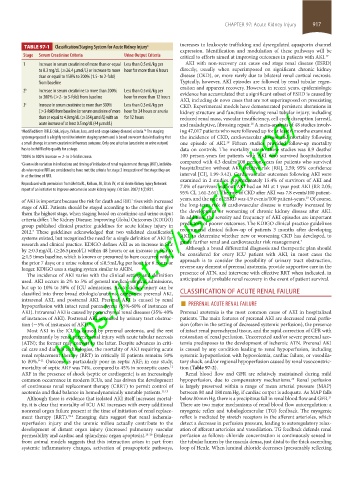
                      TABLE 97-1    Classification/Staging System for Acute Kidney Injury a
                                                                          expression. Identification and modulation of these pathways will be
                    Stage  Serum Creatinine Criteria   Urine Output Criteria  critical to efforts aimed at improving outcomes in patients with AKI. 17
                    1    Increase in serum creatinine of more than or equal  Less than 0.5 mL/kg per   AKI with non-recovery can cause end stage renal disease (ESRD)
                         to 0.3 mg/dL (≥26.4 µmol/L) or increase to more  hour for more than 6 hours  directly; usually when superimposed  on  significant chronic kidney
                         than or equal to 150% to 200% (1.5- to 2-fold)    disease (CKD), or, more rarely due to bilateral renal cortical necrosis.
                         from baseline                                    Typically, however, AKI episodes are followed by renal tubular regen-
                                                                          eration and apparent recovery. However, in recent years, epidemiologic
                    2 b  Increase in serum creatinine to more than 200%   Less than 0.5 mL/kg per   evidence has accumulated that a significant subset of ESRD is caused by
                         to 300% (>2- to 3-fold) from baseline  hour for more than 12 hours
                                                                          AKI, including de novo cases that are not superimposed on preexisting
                    3 c  Increase in serum creatinine to more than 300%   Less than 0.3 mL/kg per   CKD. Experimental models have demonstrated persistent alterations in
                                  https://kat.cr/user/tahir99/
                         (>3-fold) from baseline (or serum creatinine of more  hour for 24 hours or anuria   kidney structure and function following renal tubular injury, including
                         than or equal to 4.0 mg/dL (≥354 µmol/L) with an   for 12 hours  reduced renal mass, vascular insufficiency, cell cycle disruption (arrest),
                         acute increase of at least 0.5 mg/dL (44 µmol/L)  and maladaptive, fibrosing repair.  A meta-analysis of 48 studies involv-
                                                                                                  18
                    a Modified from RIFLE (risk, injury, failure, loss, and end-stage kidney disease) criteria.  The staging   ing 47,017 patients who were followed up for at least 6 months examined
                                                             26
                      system proposed is a highly sensitive interim staging system and is based on recent data indicating that   the incidence of CKD, cardiovascular disease and mortality following
                    a small change in serum creatinine influences outcome. Only one criterion (creatinine or urine output)   one episode of AKI.  Fifteen studies provided follow-up mortality
                                                                                         19
                    has to be fulfilled to qualify for a stage.           data on controls. The mortality rate in these studies was 8.9 deaths/
                    b 200% to 300% increase = 2- to 3-fold increase.      100   person-years for patients with AKI who survived hospitalization
                                                                          compared with 4.3 deaths/100 person-years for patients who survived
                    c Given wide variation in indications and timing of initiation of renal replacement therapy (RRT), individu-
                    als who receive RRT are considered to have met the criteria for stage 3 irrespective of the stage they are   hospitalization without AKI (relative risk [RR], 2.59; 95% confidence
                    in at the time of RRT.                                interval [CI], 1.99-3.42). Cardiovascular outcomes following AKI were
                                                                          examined in 2 studies. Approximately 15.4% of survivors of AKI and
                    Reproduced with permission from Mehta RL, Kellum, JA, Shah SV, et al. Acute Kidney Injury Network:   7.0% of survivors without AKI had an MI at 1 year post AKI (RR 2.05;
                    report of an initiative to improve outcomes in acute kidney injury. Crit Care. 2007;11(2):R31.
                                                                          95% CI, 1.61-2.61). The rate of CKD after AKI was 7.8 events/100 patient-
                                                                                                                     19
                    of AKI is important because the risk for death and RRT rises with increased   years, and the rate of ESRD was 4.9 events/100 patient-years.  Of course,
                    stage of AKI. Patients should be staged according to the criteria that give   the long-term risk of cardiovascular disease is markedly increased by
                    them the highest stage, when staging based on creatinine and urine output   the development or worsening of chronic kidney disease after AKI.
                    criteria differ. The Kidney Disease: Improving Global Outcomes (KDIGO)   In addition, the severity and frequency of AKI episodes are important
                    group published clinical practice guidelines for acute kidney injury in   predictors of poorer outcomes. The KDIGO clinical practice guidelines
                    2012.  These guidelines acknowledged that two validated classification   recommend clinical follow-up of patients 3 months after developing
                       7
                    systems existed, but recognized the need for a single definition of AKI for   AKI, to determine whether new or worsening CKD has developed, to
                                                                                                                   7
                    research and clinical practice. KDIGO defines AKI as an increase in SCr   guide further renal and cardiovascular risk management.
                    by ≥0.3 mg/dL (≥26.5 µmol/L) within 48 hours; or an increase in SCr to   Although a broad differential diagnosis and therapeutic plan should
                    ≥1.5 times baseline, which is known or presumed to have occurred within   be considered for every ICU patient with AKI, in most cases the
                    the prior 7 days; or a urine volume of ≤0.5 mL/kg per hour for 6 hours or   approach  is  to  consider  the  possibility  of  urinary  tract  obstruction,
                    longer. KDIGO uses a staging system similar to AKIN.  reverse any element of prerenal azotemia, provide supportive care in the
                     The incidence of AKI varies with the clinical setting and definition   presence of ATN, and intervene with effective RRT when indicated, in
                    used. AKI occurs in 2% to 5% of general medical-surgical admissions,   anticipation of probable renal recovery in the event of patient survival.
                    but up to 10% to 30% of ICU admissions. Acute kidney injury can be
                    classified into three broad etiologic/anatomic categories: prerenal AKI,   CLASSIFICATION OF ACUTE RENAL FAILURE
                    hypoperfusion with intact renal parenchyma (55%-60% of instances of   ■  PRERENAL ACUTE RENAL FAILURE
                    intrarenal AKI, and postrenal AKI. Prerenal AKI is caused by renal
                    AKI). Intrarenal AKI is caused by parenchymal renal diseases (35%-40%   Prerenal azotemia is the most common cause of AKI in hospitalized
                    of instances of AKI). Postrenal AKI is caused by urinary tract obstruc-  patients. The main features of prerenal AKI are decreased renal perfu-
                    tion (∼5% of instances of AKI). 8                     sion (often in the setting of decreased systemic perfusion), the presence
                     Most AKI in the ICU is caused by prerenal azotemia, and the rest   of intact renal parenchymal tissue, and the rapid correction of GFR with
                    predominantly by renal parenchymal injury with acute tubular necrosis   restoration of renal perfusion. Uncorrected and/or severe prerenal azo-
                    (ATN); the former may convert to the latter. Despite advances in criti-  temia predisposes to the development of ischemic ATN. Prerenal AKI
                    cal care and dialysis technologies, the mortality of AKI requiring acute   is caused by any condition leading to renal hypoperfusion, including
                    renal replacement therapy (RRT) in critically ill patients remains 50%   systemic hypoperfusion with hypovolemia, cardiac failure, or vasodila-
                    to 80%. 9-11  Outcome is particularly poor in septic ARF; in one study,   tory shock, and/or regional hypoperfusion caused by renal vasoconstric-
                    mortality of septic ARF was 74%, compared to 45% in nonseptic cases.    tion (Table 97-2).
                                                                      12
                    ARF in the presence of shock (septic or cardiogenic) is an increasingly   Renal blood flow and GFR are relatively maintained during mild
                    common occurrence in modern ICUs, and has driven the development   hypoperfusion, due to compensatory mechanisms.  Renal perfusion
                                                                                                                20
                    of continuous renal replacement therapy (CRRT) to permit control of   is largely preserved within a range of mean arterial pressure (MAP)
                    azotemia and fluid balance in hemodynamically unstable patients. 11,13  between 80 and 180 mm Hg, if cardiac output is adequate. As MAP falls
                     Although there is evidence that isolated AKI itself increases mortal-  below 80 mm Hg, there is a precipitous fall in renal blood flow and GFR.
                                                                                                                            21
                    ity, it is clear that mortality of ICU AKI increases with every additional   There are two major mechanisms of renal blood flow autoregulation: a
                    nonrenal organ failure present at the time of initiation of renal replace-  myogenic reflex and tubuloglomerular (TG) feedback. The myogenic
                    ment therapy (RRT).  Emerging data suggest that renal ischemia-  reflex is mediated by stretch receptors in the afferent arterioles, which
                                   9,11
                    reperfusion injury and the  uremic milieu actually contribute to  the   detect a decrease in perfusion pressure, leading to autoregulatory relax-
                    development of distant organ injury (increased pulmonary vascular   ation of afferent arterioles and vasodilation. TG feedback defends renal
                    permeability and cardiac and splanchnic organ apoptosis). 14-16  Evidence   perfusion as follows: chloride concentration is continuously sensed in
                    from animal models suggests that this interaction arises in part from   the tubular lumen by the macula densa, just distal to the thick ascending
                    systemic inflammatory changes, activation of proapoptotic pathways,   loop of Henle. When luminal chloride decreases (presumably reflecting


            section08.indd   917                                                                                       1/14/2015   8:27:52 AM

