


Page 1345 - Hall et al (2015) Principles of Critical Care-McGraw-Hill
P. 1345
918     PART 8: Renal and Metabolic Disorders


                                                                       response to shock. Systemic hypoperfusion activates the sympathetic
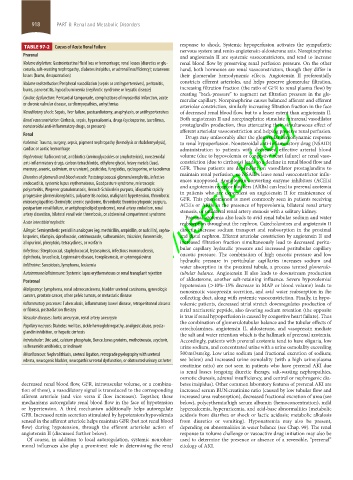
                   TABLE 97-2    Causes of Acute Renal Failure
                                                                       nervous system and renin-angiotensin-aldosterone axis. Norepinephrine
                  Prerenal                                             and angiotensin II are systemic vasoconstrictors, and tend to increase
                  Volume depletion: Gastrointestinal fluid loss or hemorrhage; renal losses (diuretics or glu-  renal blood flow by preserving renal perfusion pressure. On the other
                  cosuria, salt-wasting nephropathy, diabetes insipidus, or adrenal insufficiency); cutaneous   hand, both hormones are renal vasoconstrictors, though they differ in
                  losses (burns, desquamation)                         their glomerular hemodynamic effects. Angiotensin II preferentially
                  Volume redistribution: Peripheral vasodilation (sepsis or antihypertensives), peritonitis,   constricts efferent arterioles, and helps preserve glomerular filtration,
                  burns,  pancreatitis, hypoalbuminemia (nephrotic syndrome or hepatic disease)  increasing filtration fraction (the ratio of GFR to renal plasma flow) by
                                                                       creating “back-pressure” to augment net filtration pressure in the glo-
                  Cardiac dysfunction: Pericardial tamponade, complications of myocardial infarction, acute   merular capillary. Norepinephrine causes balanced afferent and efferent
                  or chronic valvular disease, cardiomyopathies, arrhythmias  arteriolar constriction, similarly increasing filtration fraction in the face
                                https://kat.cr/user/tahir99/
                  Vasodilatory shock: Sepsis, liver failure, postcardiotomy, anaphylaxis, or antihypertensives  of decreased renal blood flow, but to a lesser extent than angiotensin II.
                  Renal vasoconstriction: Cirrhosis, sepsis, hypercalcemia, drugs (cyclosporine, tacrolimus,   Both angiotensin II and norepinephrine stimulate intrarenal vasodilator
                    nonsteroidal anti-inflammatory drugs, or pressors)  prostaglandin production, thus attenuating their simultaneous effect of
                                                                       afferent arteriolar vasoconstriction and helping preserve renal perfusion.
                  Renal
                                                                         Drugs may unfavorably alter the glomerular hemodynamic response
                  Ischemia: Trauma, surgery, sepsis, pigment nephropathy (hemolysis or rhabdomyolysis),   to renal hypoperfusion. Nonsteroidal anti-inflammatory drug (NSAID)
                  cardiac or aortic hemorrhage                         administration to patients with decreased effective arterial blood
                  Nephrotoxic: Radiocontrast, antibiotics (aminoglycosides or amphotericin), nonsteroidal   volume (due to hypovolemia or congestive heart failure) or renal vaso-
                    anti-inflammatory drugs, carbon tetrachloride, ethylene glycol, heavy metals (lead,   constriction (due to cirrhosis) leads to a decline in renal blood flow and
                    mercury,  arsenic, cadmium, or uranium), pesticides, fungicides, cyclosporine, or tacrolimus  GFR. These patients are dependent on vasodilator prostaglandins to
                                                                       maintain renal perfusion, so NSAIDs leave renal vasoconstrictor influ-
                  Disorders of glomeruli and blood vessels: Poststreptococcal glomerulonephritis,  infective   ences unopposed. Angiotensin-converting enzyme inhibitors (ACEIs)
                    endocarditis, systemic lupus erythematosus, Goodpasture syndrome, microscopic   and angiotensin receptor blockers (ARBs) can lead to prerenal azotemia
                  polyarteritis, Wegener granulomatosis, Henoch-Schöunlein purpura, idiopathic rapidly   in patients who are dependent on angiotensin II for maintenance of
                  progressive glomerulonephritis, polyarteritis nodosa, malignant hypertension, thrombotic   GFR. This phenomenon is most commonly seen in patients receiving
                  microangiopathies (hemolytic uremic syndrome, thrombotic thrombocytopenic purpura,   ACEIs or ARBs in the presence of hypovolemia, bilateral renal artery
                  postpartum renal failure, or antiphospholipid syndrome), renal artery embolism, renal   stenosis, or unilateral renal artery stenosis with a solitary kidney.
                  artery dissection, bilateral renal vein thrombosis, or abdominal compartment syndrome  Prerenal azotemia also leads to avid renal tubular sodium and water
                  Acute interstitial nephritis:                        reabsorption throughout the nephron. Catecholamines and angiotensin II
                  Allergic: Semisynthetic penicillin analogues (eg, methicillin, ampicillin, or nafcillin), cepha-  directly increase sodium transport and reabsorption in the proximal
                  losporins, rifampin, ciprofloxacin, cotrimoxazole, sulfonamides, thiazides, furosemide,   and distal nephron. Efferent arteriolar constriction by angiotensin II and
                  allopurinol, phenytoin, tetracyclines, or warfarin   increased filtration fraction simultaneously lead to decreased peritu-
                                                                       bular capillary hydraulic pressure and increased peritubular capillary
                  Infectious: Streptococcal, staphylococcal, leptospirosis, infectious mononucleosis,
                    diphtheria,  brucellosis, Legionnaire disease, toxoplasmosis, or cytomegalovirus  oncotic pressure. The combination of high oncotic pressure and low
                                                                       hydraulic pressure in peritubular capillaries increases sodium and
                  Infiltrative: Sarcoidosis, lymphoma, leukemia        water absorption in the proximal tubule, a process termed glomerulo-
                  Autoimmune/alloimmune: Systemic lupus erythematosus or renal transplant rejection  tubular  balance. Angiotensin II also leads to downstream production
                  Postrenal                                            of aldosterone, another salt-retaining influence. Severe hypovolemia/
                                                                       hypotension (>10%-15% decrease in MAP or blood volume) leads to
                  Malignancy: Lymphoma, renal adenocarcinoma, bladder ureteral carcinoma, gynecologic   nonosmotic vasopressin secretion, and avid water reabsorption in the
                  cancers, prostate cancer, other pelvic tumors, or metastatic disease  collecting duct, along with systemic vasoconstriction. Finally, in hypo-
                  Inflammatory processes: Tuberculosis, inflammatory bowel disease, retroperitoneal abscess   volemic patients, decreased atrial stretch downregulates production of
                  or  fibrosis, postradiation therapy                  atrial natriuretic peptide, also favoring sodium retention (the opposite
                  Vascular diseases: Aortic aneurysm, renal artery aneurysm  is true if renal hypoperfusion is caused by congestive heart failure). Thus
                                                                       the combination of glomerulotubular balance and the tubular effects of
                  Papillary necrosis: Diabetes mellitus, sickle hemoglobinopathy, analgesic abuse, prosta-  catecholamines, angiotensin II, aldosterone, and vasopressin mediate
                  glandin inhibition, or hepatic cirrhosis
                                                                       the salt and water retention which is the hallmark of prerenal azotemia.
                  Intratubular: Uric acid, calcium phosphate, Bence Jones proteins, methotrexate, acyclovir,   Accordingly, patients with prerenal azotemia tend to have oliguria, low
                    sulfonamide antibiotics, or indinavir              urine sodium, and concentrated urine with a urine osmolality exceeding
                  Miscellaneous: Nephrolithiasis, ureteral ligation, retrograde pyelography with ureteral   500 mOsm/kg. Low urine sodium (and fractional excretion of sodium;
                  edema,  neurogenic bladder, neuropathic ureteral dysfunction, or obstructed urinary catheter  see below) and increased urine osmolality (with a high urine:plasma
                                                                       creatinine ratio) are not seen in patients who have prerenal AKI due
                                                                       to renal losses (ongoing diuretic therapy, salt-wasting nephropathies,
                                                                       osmotic diuresis, adrenal insufficiency, and central or nephrogenic dia-
                 decreased renal blood flow, GFR, intravascular volume, or a combina-  betes insipidus). Other common laboratory features of prerenal AKI are
                 tion of these), a vasodilatory signal is transduced to the corresponding   increased serum BUN:creatinine ratio (caused by low tubular flow and
                 afferent arteriole (and vice versa if flow increases). Together, these   increased urea reabsorption), decreased fractional excretion of urea (see
                 mechanisms autoregulate renal blood flow in the face of hypotension   below), polycythemia/high serum albumin (hemoconcentration), mild
                 or  hypertension.  A  third  mechanism  additionally  helps  autoregulate   hypercalcemia, hyperuricemia, and acid-base abnormalities (metabolic
                 GFR. Increased renin secretion stimulated by hypotension/hypovolemia    acidosis from diarrhea or shock or lactic acidosis; metabolic alkalosis
                 sensed in the afferent arteriole helps maintain GFR (but not renal blood   from diuretics or vomiting). Hyponatremia may also be present,
                 flow) during hypotension, through the efferent arteriolar action of   depending on abnormalities in water balance (see Chap. 99). The renal
                 angiotensin II (discussed further below).             response to volume challenge or vasoactive drug initiation may also be
                   Of course, in addition to local autoregulation, systemic neurohor-  used to determine the presence or absence of a reversible, “prerenal”
                 monal influences also play a prominent role in determining the renal   etiology of AKI.


            section08.indd   918                                                                                       1/14/2015   8:27:52 AM

