


Page 1657 - Hall et al (2015) Principles of Critical Care-McGraw-Hill
P. 1657
1176     PART 10: The Surgical Patient


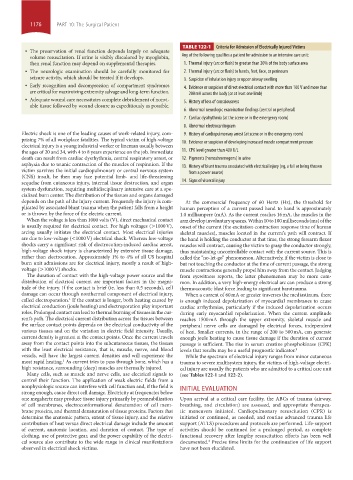
                                                                         TABLE 122-1    Criteria for Admission of Electrically injured Victims
                     • The preservation of renal function depends largely on adequate
                    volume resuscitation. If urine is visibly discolored by myoglobin,   Any of the following qualifies a patient for admission to an intensive care unit:
                    then renal function may depend on supplemental therapies.  1. Thermal injury (arc or flash) to greater than 20% of the body surface area
                     • The neurologic examination should be carefully monitored for   2. Thermal injury (arc or flash) to hands, feet, face, or perineum
                    seizure activity, which should be treated if it develops.  3. Suspicion of inhalation injury or upper airway swelling
                     • Early recognition and decompression of compartment syndromes   4. Evidence or suspicion of direct electrical contact with more than 100 V and more than
                    are critical for maximizing extremity salvage and long-term function.  200 mA across the body (or at least one limb)
                     • Adequate wound care necessitates complete debridement of nonvi-  5. History of loss of consciousness
                    able tissue followed by wound closure as expeditiously as possible.
                                                                         6. Abnormal neurologic examination findings (central or peripheral)
                                                                         7. Cardiac dysrhythmia (at the scene or in the emergency room)
                                                                         8. Abnormal electrocardiogram
                 Electric shock is one of the leading causes of work-related injury, com-  9. History of cardiopulmonary arrest (at scene or in the emergency room)
                 prising 7% of all workplace fatalities. The typical victim of high-voltage   10. Evidence or suspicion of developing increased muscle compartment pressure
                 electrical injury is a young industrial worker or lineman usually between
                 the ages of 20 and 34, with 4 to 8 years experience on the job. Immediate   11. CPK level greater than 400 U/L
                 death can result from cardiac dysrhythmia, central respiratory arrest, or   12. Pigments (hemochromogens) in urine
                 asphyxia due to tetanic contraction of the muscles of respiration. If the   13. History of blunt trauma associated with electrical injury (eg, a fall or being thrown
                 victim survives the initial cardiopulmonary or central nervous system   from a power source)
                 (CNS) insult, he then may face potential limb- and life-threatening
                 sequelae from cutaneous injury, internal tissue destruction, and organ   14. Signs of visceral injury
                 system dysfunction, requiring multidisciplinary intensive care at a spe-
                 cialized burn center. The distribution of the tissues and organs damaged
                 depends on the path of the injury current. Frequently the injury is com-  At the commercial frequency of 60 Hertz (Hz), the threshold for
                 plicated by associated blunt trauma when the patient falls from a height   human perception of a current passed hand to hand is approximately
                 or is thrown by the force of the electric current.    1.0 milliampere (mA). As the current reaches 16 mA, the muscles in the
                   When the voltage is less than 1000 volts (V), direct mechanical contact   arm develop involuntary spasms. Within 10 to 100 milliseconds (ms) of the
                 is usually required for electrical contact. For high voltages (>1000 V),     onset of the current (the excitation-contraction response time of human
                 arcing usually initiates the electrical contact. Most electrical injuries   skeletal muscles), muscles located in the current’s path will contract. If
                 are due to low-voltage (<1000 V) electrical shock. Whereas low-voltage   the hand is holding the conductor at that time, the strong forearm flexor
                 shocks carry a significant risk of electrocution-induced cardiac arrest,   muscles will contract, causing the victim to grasp the conductor strongly,
                 high-voltage shock injury is characterized by extensive tissue damage,   thus maintaining uncontrollable contact with the current source. This is
                 rather than electrocution. Approximately 1% to 4% of all US hospital   called the “no-let-go” phenomenon. Alternatively, if the victim is close to
                 burn unit admissions are for electrical injury, mostly a result of high-  but not touching the conductor at the time of current passage, the strong
                 voltage (>1000 V) shocks.                             muscle contractions generally propel him away from the contact. Judging
                   The duration of contact with the high-voltage power source and the   from eyewitness reports, the latter phenomenon may be more com-
                 distribution of electrical current are important factors in the magni-  mon. In addition, a very high-energy electrical arc can produce a strong
                 tude of the injury. If the contact is brief (ie, less than 0.5 seconds), cell    thermoacoustic blast force leading to significant barotrauma.
                 damage can occur through nonthermal component of electrical injury,   When a current of 60 mA or greater traverses the mediastinum, there
                 called electroporation.  If the contact is longer, both heating caused by   is enough induced depolarization of myocardial membranes to cause
                                 1
                 electrical conduction (joule heating) and electroporation play important   cardiac arrhythmias, particularly if the induced depolarization occurs
                 roles. Prolonged contact can lead to thermal burning of tissues in the cur-  during early myocardial repolarization. When the current amplitude
                 rent’s path. The electrical current distribution across the tissues between   reaches 1500 mA through the upper extremity, skeletal muscle and
                 the surface contact points depends on the electrical conductivity of the   peripheral nerve cells are damaged by electrical forces, independent
                 various tissues and on the variation in electric field intensity. Usually,   of heat. Smaller currents, in the range of 200 to 500 mA, can generate
                 current density is greatest at the contact points. Once the current travels   enough joule heating to cause tissue damage if the duration of current
                 away from the contact points into the subcutaneous tissues, the tissues   passage is sufficient. The rise in serum creatine phosphokinase (CPK)
                 with the least electrical resistance, that is, muscle, nerve, and blood    levels that results may be a useful prognostic indicator. 3
                 vessels, will have the largest current densities and will experience the   While the spectrum of electrical injury ranges from minor cutaneous
                 most rapid heating.  As current tries to pass through bone, which has a   trauma to severe multisystem injury, the victims of high-voltage electri-
                               2
                 high resistance, surrounding (deep) muscles are thermally injured.  cal injury are usually the patients who are admitted to a critical care unit
                   Many cells, such as muscle and nerve cells, use electrical signals to   (see Tables 122-1 and 122-2).
                 control their function. The application of weak electric fields from a
                 nonphysiologic source can interfere with cell function and, if the field is   INITIAL EVALUATION
                 strong enough, cause direct cell damage. Electricity at frequencies below
                 one megahertz may produce tissue injury primarily by permeabilization   Upon arrival at a critical care facility, the ABCs of trauma (airway,
                 of cell membranes, electroconformational denaturation of cell mem-  breathing, and circulation) are assessed, and appropriate therapeu-
                 brane proteins, and thermal denaturation of tissue proteins. Factors that   tic maneuvers initiated. Cardiopulmonary resuscitation (CPR) is
                 determine the anatomic pattern, extent of tissue injury, and the relative   initiated or continued, as needed, and routine advanced trauma life
                 contribution of heat versus direct electrical damage include the amount   support (ATLS) procedures and protocols are performed. Life-support
                 of current, anatomic location, and duration of contact. The type of   activities should be continued for a prolonged period, as complete
                 clothing, use of protective gear, and the power capability of the electri-  functional recovery after lengthy resuscitation efforts has been well
                 cal source also contribute to the wide range in clinical manifestations   documented.  Precise time limits for the continuation of life support
                                                                                 4
                 observed in electrical shock victims.                 have not been elucidated.


            section10.indd   1176                                                                                      1/20/2015   9:21:29 AM

