


Page 1656 - Hall et al (2015) Principles of Critical Care-McGraw-Hill
P. 1656
CHAPTER 122: Electrical Trauma  1175


                                                                          the injury with an external fixator, and plan for definitive treatment in
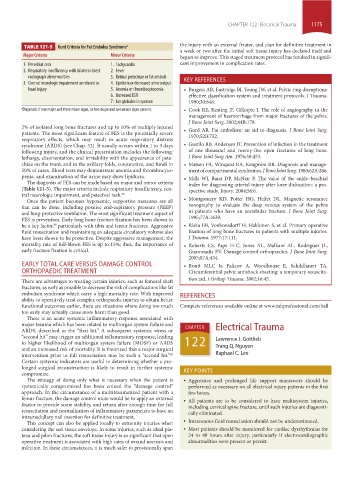
                      TABLE 121-5    Gurd Criteria for Fat Embolus Syndrome a
                                                                          a week or two after the initial soft tissue injury has declared itself and
                    Major Criteria                Minor Criteria          begun to improve. This staged treatment protocol has resulted in signifi-
                    1.  Petechial rash            1.  Tachycardia         cant improvement in complication rates.
                    2.  Respiratory insufficiency with bilateral chest    2.  Fever
                      radiograph abnormalities    3.  Retinal petechiae or fat emboli  KEY REFERENCES
                    3.  Central neurologic impairment unrelated to    4.  Lipiduria or decreased urine output
                      head injury                 5.  Anemia or thrombocytopenia    • Burgess AR, Eastridge BJ, Young JW, et al. Pelvic ring disruptions:
                                                  6.  Increased ESR          effective classification system and treatment protocols. J Trauma.
                                                  7.  Fat globules in sputum  1990;30:848.
                    a Diagnostic if one major and three minor signs, or two major and two minor signs present.    • Cook RE, Keating JF, Gillespie I. The role of angiography in the
                                                                             management of haemorrhage from major fractures of the pelvis.
                                                                             J Bone Joint Surg. 2002;84B:178.
                    2% of isolated long bone fractures and up to 10% of multiply injured     • Gurd AR. Fat embolism: an aid to diagnosis. J Bone Joint Surg.
                    patients. The most significant feature of FES is the potentially severe   1970;52B:732.
                    respiratory effects, which may result in acute respiratory distress
                    syndrome (ARDS) (see Chap. 52). It usually occurs within 1 to 3 days     • Gustilo RB, Anderson JT. Prevention of infection in the treatment
                    following injury, and the clinical presentation includes the following:   of one thousand and twenty-five open fractures of long bone.
                    lethargy, disorientation, and irritability with the appearance of pete-  J Bone Joint Surg Am. 1976;58:453.
                    chiae on the trunk and in the axillary folds, conjunctiva, and fundi in     • Matsen FA, Winquist RA, Krugmire RB. Diagnosis and manage-
                    50% of cases. Blood tests may demonstrate anemia and thrombocyto-  ment of compartmental syndromes. J Bone Joint Surg. 1980;62A:286.
                    penia, and examination of the urine may show lipiduria.    • Mills WJ, Barei DP, McNair P. The value of the ankle–brachial
                     The diagnosis of FES can be made based on major and minor criteria   index for diagnosing arterial injury after knee dislocation: a pro-
                    (Table 121-5). The major criteria include respiratory insufficiency, cen-  spective study. Injury. 2004;56:6.
                    tral neurologic impairment, and petechial rash. 38
                     Once the patient becomes hypoxemic, supportive measures are all     • Montgomery KD, Potter HG, Helfet DL. Magnetic resonance
                    that can be done, including positive end-expiratory pressure (PEEP)   venography to evaluate the deep venous system of the pelvis
                    and lung-protective ventilation. The most significant treatment aspect of   in patients who have an acetabular fracture.  J Bone Joint Surg.
                    FES is prevention. Early long bone fracture fixation has been shown to   1995;77A:1639.
                    be a key factor,  particularly with tibia and femur fractures. Aggressive     • Riska EB, Vonbonsdorff H, Hakkinen S, et al. Primary operative
                               39
                    fluid resuscitation and maintaining an adequate circulatory volume also   fixation of long bone fractures in patients with multiple injuries.
                    have been shown to be protective. Despite aggressive management, the   J Trauma. 1977;17:111.
                    mortality rate of full-blown FES is up to 15%; thus, the importance of     • Roberts CS, Pape H-C, Jones AL, Malkani AL, Rodriguez JL,
                    early fracture fixation is critical.                     Giannoudis PV. Damage control orthopaedics. J Bone Joint Surg.
                                                                             2005;87A:434.
                    EARLY TOTAL CARE VERSUS DAMAGE CONTROL                    • Routt MLC Jr, Falicov A, Woodhouse E, Schildhauer TA.
                    ORTHOPAEDIC TREATMENT                                    Circumferential pelvic antishock sheeting: a temporary resuscita-

                    There are advantages to treating certain injuries, such as femoral shaft   tion aid. J Orthop Trauma. 2002;16:45.
                    fractures, as early as possible to decrease the risk of complications like fat
                    embolism syndrome which carry a high mortality rate. With improved   REFERENCES
                    ability to operatively treat complex orthopaedic injuries to obtain better
                    functional outcomes earlier, there are situations where doing too much   Complete references available online at www.mhprofessional.com/hall
                    too early may actually cause more harm than good.
                     There is an acute systemic inflammatory response associated with
                    major trauma which has been related to multiorgan system failure and   Electrical Trauma
                    ARDS, described as the “first hit.” A subsequent systemic stress or     CHAPTER
                    “second hit” may trigger an additional inflammatory response, leading   Lawrence J. Gottlieb
                    to higher likelihood of multiorgan system failure (MOSF) or ARDS   122
                    and an increased risk of mortality. It is theorized that a major surgical   Trang Q. Nguyen
                    intervention prior to full resuscitation may be such a “second hit.”    Raphael C. Lee
                                                                      40
                    Certain systemic indicators are useful in determining whether a pro-
                    longed surgical reconstruction is likely to result in further systemic
                    compromise.                                            KEY POINTS
                     The strategy of doing only what is necessary when the patient is       • Aggressive and prolonged life support maneuvers should be
                    systemically compromised has been coined the “damage control”   performed as necessary on all electrical injury patients in the first
                    approach. In the circumstance of a multitraumatized patient with a   few hours.
                    femur fracture, the damage control route would be to apply an external     • All patients are to be considered to have multisystem injuries,
                    fixator to provide some stability, and return after enough time for full   including cervical spine fracture, until such injuries are diagnosti-
                    resuscitation and normalization of inflammatory parameters to have an   cally eliminated.
                    intramedullary nail insertion for definitive treatment.
                     This concept can also be applied locally to extremity injuries when     • Intravenous fluid resuscitation should not be underestimated.
                    considering the soft tissue envelope. In some injuries, such as tibial pla-    • Most patients should be monitored for cardiac dysrhythmias for
                    teau and pilon fractures, the soft tissue injury is so significant that open   24 to 48 hours after injury, particularly if electrocardiographic
                    operative treatment is associated with high rates of wound necrosis and   abnormalities were present or persist.
                    infection. In these circumstances, it is much safer to provisionally span


            section10.indd   1175                                                                                      1/20/2015   9:21:29 AM

