


Page 130 - Review of Medical Microbiology and Immunology ( PDFDrive )
P. 130
mebooksfree.com
mebooksfree.com
mebooksfree.com
mebooksfree.com
mebooksfree.com
mebooksfree.com
mebooksfree.com
mebooksfree.com mebooksfree.com mebooksfree.com members of the oral flora, are often found in brain 119 mebooksfree.com
mebooksfree.com
CHAPTER 15 Gram-Positive Cocci
Non–a-Hemolytic Streptococci
abscesses following dental surgery. Peptostreptococcus mag-
Some streptococci produce no hemolysis; others produce
nus and Peptostreptococcus anaerobius are the species fre-
α-hemolysis. The principal α-hemolytic organisms are
quently isolated from clinical specimens.
S. pneumoniae (pneumococci) and the viridans group of
streptococci (e.g., Streptococcus mitis, Streptococcus sangui-
nis, and Streptococcus mutans). Pneumococci and viridans
streptococci are distinguished in the clinical laboratory by
Most streptococci are part of the normal flora of the human
two main criteria: (1) the growth of pneumococci is inhib-
throat, skin, and intestines but produce disease when they
ited by optochin, whereas the growth of viridans strepto- Transmission
gain access to tissues or blood. Viridans streptococci and
mebooksfree.com
mebooksfree.com mebooksfree.com mebooksfree.com numbers; S. agalactiae occurs in the vagina and colon; and mebooksfree.com
mebooksfree.com
cocci is not inhibited; and (2) colonies of pneumococci
S. pneumoniae are found chiefly in the oropharynx; S. pyo-
dissolve when exposed to bile (bile-soluble), whereas colo-
genes is found on the skin and in the oropharynx in small
nies of viridans streptococci do not dissolve.
Viridans streptococci are part of the normal flora of the
both the enterococci and anaerobic streptococci are located
human pharynx and intermittently reach the bloodstream
in the colon.
to cause infective endocarditis. Streptococcus mutans syn-
thesizes polysaccharides (dextrans) that are found in dental
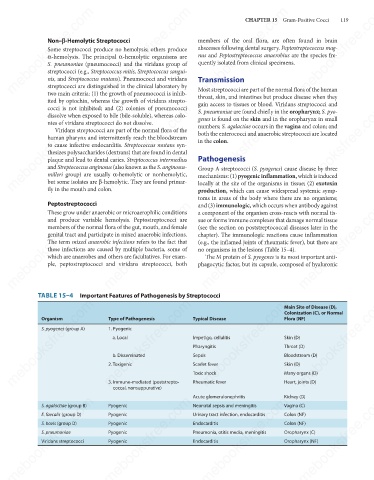
Pathogenesis
plaque and lead to dental caries. Streptococcus intermedius
and Streptococcus anginosus (also known as the S. anginosus-
Group A streptococci (S. pyogenes) cause disease by three
milleri group) are usually α-hemolytic or nonhemolytic,
mechanisms: (1) pyogenic inflammation, which is induced
but some isolates are β-hemolytic. They are found primar-
locally at the site of the organisms in tissue; (2) exotoxin
ily in the mouth and colon.
production, which can cause widespread systemic symp-
toms in areas of the body where there are no organisms;
mebooksfree.com mebooksfree.com mebooksfree.com (see the section on poststreptococcal diseases later in the mebooksfree.com
Peptostreptococci
mebooksfree.com
mebooksfree.com
and (3) immunologic, which occurs when antibody against
These grow under anaerobic or microaerophilic conditions
a component of the organism cross-reacts with normal tis-
and produce variable hemolysis. Peptostreptococci are
sue or forms immune complexes that damage normal tissue
members of the normal flora of the gut, mouth, and female
genital tract and participate in mixed anaerobic infections.
chapter). The immunologic reactions cause inflammation
(e.g., the inflamed joints of rheumatic fever), but there are
The term mixed anaerobic infections refers to the fact that
these infections are caused by multiple bacteria, some of
no organisms in the lesions (Table 15–4).
which are anaerobes and others are facultatives. For exam-
The M protein of S. pyogenes is its most important anti-
ple, peptostreptococci and viridans streptococci, both
phagocytic factor, but its capsule, composed of hyaluronic
TABLE 15–4 Important Features of Pathogenesis by Streptococci Main Site of Disease (D),
mebooksfree.com
mebooksfree.com
mebooksfree.com mebooksfree.com 1. Pyogenic Impetigo, cellulitis Skin (D) mebooksfree.com mebooksfree.com
Colonization (C), or Normal
Organism
Typical Disease
Flora (NF)
Type of Pathogenesis
S. pyogenes (group A)
a. Local
Throat (D)
Pharyngitis
Bloodstream (D)
Sepsis
b. Disseminated
Skin (D)
2. Toxigenic
Scarlet fever
Many organs (D)
Toxic shock
Rheumatic fever
Heart, joints (D)
3. Immune-mediated (poststrepto-
coccal, nonsuppurative)
mebooksfree.com
mebooksfree.com
mebooksfree.com mebooksfree.com Pyogenic Acute glomerulonephritis Kidney (D) mebooksfree.com mebooksfree.com
Vagina (C)
S. agalactiae (group B)
Neonatal sepsis and meningitis
Urinary tract infection, endocarditis
Pyogenic
E. faecalis (group D)
Colon (NF)
Colon (NF)
Pyogenic
Endocarditis
S. bovis (group D)
Oropharynx (C)
Pneumonia, otitis media, meningitis
S. pneumoniae
Pyogenic
Viridans streptococci
Endocarditis
Oropharynx (NF)
Pyogenic
mebooksfree.com mebooksfree.com mebooksfree.com mebooksfree.com mebooksfree.com mebooksfree.com

