Page 160 - Review of Medical Microbiology and Immunology ( PDFDrive )
P. 160
mebooksfree.com
                                                                            mebooksfree.com
                                            mebooksfree.com
 mebooksfree.com
                                            mebooksfree.com
                                                                                                                                           mebooksfree.com
                                                                                                            mebooksfree.com
                                                                            mebooksfree.com
 mebooksfree.com  mebooksfree.com      Source of Site of Infection  CHAPTER 18  Gram-Negative Rods Related to the Enteric Tract  149       mebooksfree.com
            mebooksfree.com
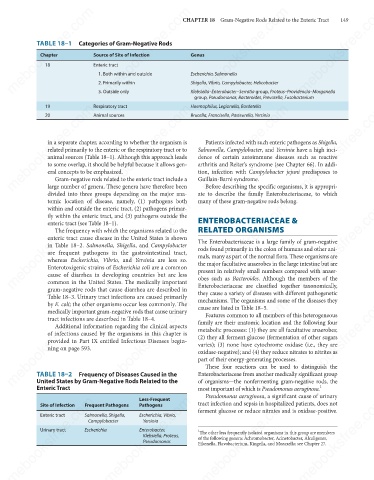
                    TABLE 18–1  Categories of Gram-Negative Rods

                                                                       Genus
                     Chapter
                                                                        
                                       Enteric tract
                       18
                                         1. Both within and outside
                                                                       Escherichia, Salmonella
                      
                                                                       Shigella, Vibrio, Campylobacter, Helicobacter
                                         2. Primarily within
                      
                                                                       Klebsiella–Enterobacter–Serratia group, Proteus–Providencia–Morganella
                      
                                         3. Outside only
                                                                        group, Pseudomonas, Bacteroides, Prevotella, Fusobacterium
                                                                                                            mebooksfree.com
                                                                            mebooksfree.com
 mebooksfree.com  mebooksfree.com           mebooksfree.com              Salmonella, Campylobacter, and Yersinia have a high inci-         mebooksfree.com
                                       Respiratory tract
                                                                       Haemophilus, Legionella, Bordetella
                       19
                                                                       Brucella, Francisella, Pasteurella, Yersinia
                       20
                                       Animal sources
                        in a separate chapter, according to whether the organism is
                                                                           Patients infected with such enteric pathogens as Shigella,
                        related primarily to the enteric or the respiratory tract or to
                        animal sources (Table 18–1). Although this approach leads
                                                                         dence of certain autoimmune diseases such as reactive
                        to some overlap, it should be helpful because it allows gen-
                                                                         arthritis and Reiter’s syndrome (see Chapter 66). In addi-
                        eral concepts to be emphasized.
                                                                         tion,  infection  with  Campylobacter jejuni  predisposes  to
                          Gram-negative rods related to the enteric tract include a
                                                                         Guillain-Barré syndrome.
                        large number of genera. These genera have therefore been
                                                                           Before describing the specific organisms, it is appropri-
                                                                         ate to describe the family Enterobacteriaceae, to which
                        divided into three groups depending on the major ana-
                        tomic location of disease, namely, (1) pathogens both
                                                                            mebooksfree.com
 mebooksfree.com  mebooksfree.com           mebooksfree.com              many of these gram-negative rods belong. mebooksfree.com          mebooksfree.com
                        within and outside the enteric tract, (2) pathogens primar-
                        ily within the enteric tract, and (3) pathogens outside the
                                                                         ENTEROBACTERIACEAE &
                        enteric tract (see Table 18–1).
                                                                         RELATED ORGANISMS
                          The frequency with which the organisms related to the
                        enteric tract cause disease in the United States is shown
                                                                         The Enterobacteriaceae is a large family of gram-negative
                        in Table 18–2.  Salmonella, Shigella, and  Campylobacter
                                                                         rods found primarily in the colon of humans and other ani-
                        are frequent pathogens in the gastrointestinal tract,
                                                                         mals, many as part of the normal flora. These organisms are
                        whereas  Escherichia, Vibrio, and  Yersinia are less so.
                                                                         the major facultative anaerobes in the large intestine but are
                        Enterotoxigenic strains of Escherichia coli are a common
                                                                         present in relatively small numbers compared with anaer-
                        cause of diarrhea in developing countries but are less
                        common in the United States. The medically important
                                                                         Enterobacteriaceae are classified together taxonomically,
                        gram-negative rods that cause diarrhea are described in
                                                                         they cause a variety of diseases with different pathogenetic
                        Table 18–3. Urinary tract infections are caused primarily   obes  such  as  Bacteroides.  Although  the  members  of  the
                                                                         mechanisms. The organisms and some of the diseases they
                                                                                                            mebooksfree.com
 mebooksfree.com  mebooksfree.com           mebooksfree.com              family are their anatomic location and the following four         mebooksfree.com
                                                                            mebooksfree.com
                        by E. coli; the other organisms occur less commonly. The
                                                                         cause are listed in Table 18–5.
                        medically important gram-negative rods that cause urinary
                                                                           Features common to all members of this heterogeneous
                        tract infections are described in Table 18–4.
                          Additional information regarding the clinical aspects
                                                                         metabolic processes: (1) they are all facultative anaerobes;
                        of infections caused by the organisms in this chapter is
                                                                         (2) they all ferment glucose (fermentation of other sugars
                        provided in Part IX entitled Infectious Diseases begin-
                                                                         varies); (3) none have cytochrome oxidase (i.e., they are
                        ning on page 593.
                                                                         oxidase-negative); and (4) they reduce nitrates to nitrites as
                                                                         part of their energy-generating processes.
                                                                           These four reactions can be used to distinguish the
                                                                         Enterobacteriaceae from another medically significant group
                    TABLE 18–2  Frequency of Diseases Caused in the
                                                                         of organisms—the nonfermenting gram-negative rods, the
                    United States by Gram-Negative Rods Related to the
                    Enteric Tract
                                                                                                                 1
                                                                         most important of which is Pseudomonas aeruginosa.
                                                                           Pseudomonas aeruginosa, a significant cause of urinary
 mebooksfree.com  mebooksfree.com    Campylobacter    Less-Frequent      tract infection and sepsis in hospitalized patients, does not     mebooksfree.com
                                                                            mebooksfree.com
                                            mebooksfree.com
                                                                                                            mebooksfree.com
                                    Frequent Pathogens
                                                      Pathogens
                     Site of Infection
                                                                         ferment glucose or reduce nitrates and is oxidase-positive.
                     Enteric tract
                                                      Escherichia, Vibrio,
                                    Salmonella, Shigella,
                                                       Yersinia
                                    Escherichia
                     Urinary tract
                                                      Enterobacter,
                                                                         1
                                                                         The other less frequently isolated organisms in this group are members
                                                       Klebsiella, Proteus,
                                                                         of the following genera: Achromobacter, Acinetobacter, Alcaligenes,
                                                       Pseudomonas
                                                                         Eikenella, Flavobacterium, Kingella, and Moraxella; see Chapter 27.
 mebooksfree.com  mebooksfree.com           mebooksfree.com                 mebooksfree.com                 mebooksfree.com                mebooksfree.com
   155   156   157   158   159   160   161   162   163   164   165