


Page 162 - Review of Medical Microbiology and Immunology ( PDFDrive )
P. 162
mebooksfree.com
mebooksfree.com
mebooksfree.com
mebooksfree.com
mebooksfree.com
mebooksfree.com
mebooksfree.com
mebooksfree.com mebooksfree.com mebooksfree.com CHAPTER 18 Gram-Negative Rods Related to the Enteric Tract 151 mebooksfree.com
mebooksfree.com
In contrast to the Enterobacteriaceae, it is a strict aerobe
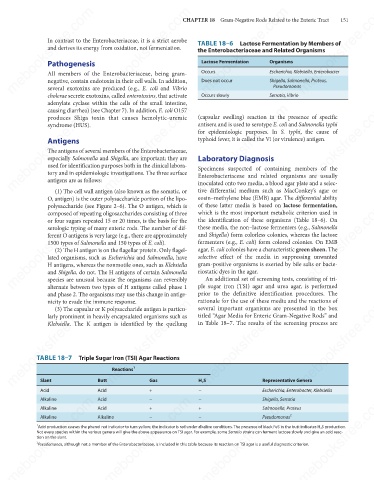
TABLE 18–6 Lactose Fermentation by Members of
and derives its energy from oxidation, not fermentation.
the Enterobacteriaceae and Related Organisms
Lactose Fermentation
Pathogenesis
Organisms
Escherichia, Klebsiella, Enterobacter
Occurs
All members of the Enterobacteriaceae, being gram-
negative, contain endotoxin in their cell walls. In addition,
Does not occur
Shigella, Salmonella, Proteus,
Pseudomonas
several exotoxins are produced (e.g., E. coli and Vibrio
cholerae secrete exotoxins, called enterotoxins, that activate
Serratia, Vibrio
Occurs slowly
adenylate cyclase within the cells of the small intestine, (capsular swelling) reaction in the presence of specific
mebooksfree.com mebooksfree.com mebooksfree.com for epidemiologic purposes. In S. typhi, the cause of mebooksfree.com
mebooksfree.com
mebooksfree.com
causing diarrhea) (see Chapter 7). In addition, E. coli O157
produces Shiga toxin that causes hemolytic-uremic
antisera and is used to serotype E. coli and Salmonella typhi
syndrome (HUS).
typhoid fever, it is called the Vi (or virulence) antigen.
Antigens
The antigens of several members of the Enterobacteriaceae,
Laboratory Diagnosis
especially Salmonella and Shigella, are important; they are
used for identification purposes both in the clinical labora-
Specimens suspected of containing members of the
tory and in epidemiologic investigations. The three surface
antigens are as follows:
inoculated onto two media, a blood agar plate and a selec-
tive differential medium such as MacConkey’s agar or
(1) The cell wall antigen (also known as the somatic, or
eosin–methylene blue (EMB) agar. The differential ability
O, antigen) is the outer polysaccharide portion of the lipo- Enterobacteriaceae and related organisms are usually
mebooksfree.com
mebooksfree.com mebooksfree.com mebooksfree.com these media, the non–lactose fermenters (e.g., Salmonella mebooksfree.com
mebooksfree.com
of these latter media is based on lactose fermentation,
polysaccharide (see Figure 2–6). The O antigen, which is
which is the most important metabolic criterion used in
composed of repeating oligosaccharides consisting of three
the identification of these organisms (Table 18–6). On
or four sugars repeated 15 or 20 times, is the basis for the
serologic typing of many enteric rods. The number of dif-
and Shigella) form colorless colonies, whereas the lactose
ferent O antigens is very large (e.g., there are approximately
fermenters (e.g., E. coli) form colored colonies. On EMB
1500 types of Salmonella and 150 types of E. coli).
agar, E. coli colonies have a characteristic green sheen. The
(2) The H antigen is on the flagellar protein. Only flagel-
selective effect of the media in suppressing unwanted
lated organisms, such as Escherichia and Salmonella, have
gram-positive organisms is exerted by bile salts or bacte-
H antigens, whereas the nonmotile ones, such as Klebsiella
and Shigella, do not. The H antigens of certain Salmonella
An additional set of screening tests, consisting of tri-
species are unusual because the organisms can reversibly
ple sugar iron (TSI) agar and urea agar, is performed
alternate between two types of H antigens called phase 1
prior to the definitive identification procedures. The
and phase 2. The organisms may use this change in antige- riostatic dyes in the agar.
rationale for the use of these media and the reactions of
mebooksfree.com mebooksfree.com mebooksfree.com in Table 18–7. The results of the screening process are mebooksfree.com
mebooksfree.com
mebooksfree.com
nicity to evade the immune response.
several important organisms are presented in the box
(3) The capsular or K polysaccharide antigen is particu-
titled “Agar Media for Enteric Gram-Negative Rods” and
larly prominent in heavily encapsulated organisms such as
Klebsiella. The K antigen is identified by the quellung
TABLE 18–7 Triple Sugar Iron (TSI) Agar Reactions
Slant
Acid Butt Reactions 1 Gas H 2 S Representative Genera
−
Acid
Escherichia, Enterobacter, Klebsiella
+
mebooksfree.com mebooksfree.com Alkaline − − mebooksfree.com mebooksfree.com mebooksfree.com
mebooksfree.com
Shigella, Serratia
−
Alkaline
Acid
−
+
Alkaline
Salmonella, Proteus
+
Acid
2
Pseudomonas
Alkaline
1
Acid production causes the phenol red indicator to turn yellow; the indicator is red under alkaline conditions. The presence of black FeS in the butt indicates H 2 S production.
Not every species within the various genera will give the above appearance on TSI agar. For example, some Serratia strains can ferment lactose slowly and give an acid reac-
tion on the slant.
2
Pseudomonas, although not a member of the Enterobacteriaceae, is included in this table because its reaction on TSI agar is a useful diagnostic criterion.
mebooksfree.com mebooksfree.com mebooksfree.com mebooksfree.com mebooksfree.com mebooksfree.com

