


Page 182 - Review of Medical Microbiology and Immunology ( PDFDrive )
P. 182
mebooksfree.com
mebooksfree.com
mebooksfree.com
mebooksfree.com
mebooksfree.com
mebooksfree.com mebooksfree.com mebooksfree.com mebooksfree.com C H A P T E R mebooksfree.com
mebooksfree.com
mebooksfree.com
to the Respiratory Tract 19
Gram-Negative Rods Related
mebooksfree.com
mebooksfree.com mebooksfree.com mebooksfree.com Acinetobacter mebooksfree.com mebooksfree.com
CHAPTER C ONTENT S
Introduction
Self-Assessment Questions
Haemophilus
Bordetella
Summaries of Organisms
Practice Questions: USMLE & Course Examinations
Legionella
INTRODUCTION “conjugate” vaccine has greatly reduced the incidence of
mebooksfree.com
mebooksfree.com mebooksfree.com mebooksfree.com dren. It also causes pneumonia in adults, particularly in mebooksfree.com
mebooksfree.com
meningitis caused by this organism. It is still an important
There are four medically important gram-negative rods
cause of upper respiratory tract infections (otitis media,
typically associated with the respiratory tract, namely, Hae-
sinusitis, conjunctivitis, and epiglottitis) and sepsis in chil-
mophilus influenzae, Bordetella pertussis, Legionella pneu-
mophila, and Acinetobacter baumannii (Table 19–1).
those with chronic obstructive lung disease. Haemophilus
Hemophilus influenzae and B. pertussis are found only in
ducreyi, the agent of chancroid, is discussed in Chapter 27.
humans, whereas L. pneumophila is found primarily in
environmental water sources. Acinetobacter baumannii is
Important Properties
found in environmental water sources but also colonizes
the skin and upper respiratory tract.
Additional information regarding the clinical aspects of
bacillary rod)) with a polysaccharide capsule (Figure 19–1).
infections caused by the organisms in this chapter is provided
It is one of the three important encapsulated pyogens,
in Part IX entitled Infectious Diseases beginning on page 593. Hemophilus influenzae is a small gram-negative rod (cocco-
along with the pneumococcus and the meningococcus.
mebooksfree.com
mebooksfree.com mebooksfree.com mebooksfree.com invasive diseases, such as meningitis and sepsis, but the mebooksfree.com
mebooksfree.com
Serologic typing is based on the antigenicity of the capsular
HAEMOPHILUS
polysaccharide. Of the six serotypes (a–f), type b is the
most important. Type b used to cause most of the severe,
Diseases
widespread use of the vaccine containing the type b capsu-
Hemophilus influenzae used to be the leading cause of men-
lar polysaccharide as the immunogen, has greatly reduced
ingitis in young children, but the use of the highly effective
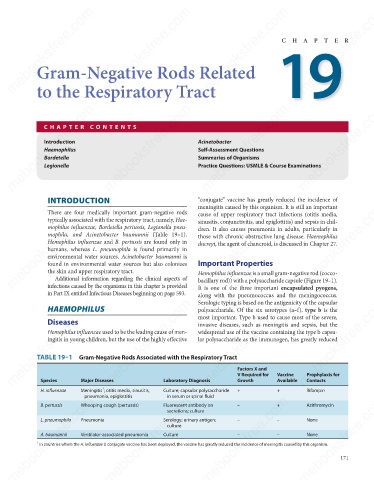
TABLE 19–1 Gram-Negative Rods Associated with the Respiratory Tract
V Required for
Contacts
Species
Available
Growth
1
Rifampin
H. influenzae Major Diseases Laboratory Diagnosis Factors X and Vaccine Prophylaxis for
Culture; capsular polysaccharide
+
+
Meningitis ; otitis media, sinusitis,
in serum or spinal fluid
pneumonia, epiglottitis
mebooksfree.com mebooksfree.com mebooksfree.com mebooksfree.com mebooksfree.com mebooksfree.com
+
–
Azithromycin
Fluorescent antibody on
Whooping cough (pertussis)
B. pertussis
secretions; culture
–
Pneumonia
None
L. pneumophila
Serology; urinary antigen;
–
culture
None
Culture
Ventilator-associated pneumonia
–
A. baumannii
–
1
In countries where the H. influenzae b conjugate vaccine has been deployed, the vaccine has greatly reduced the incidence of meningitis caused by this organism.
171
mebooksfree.com mebooksfree.com mebooksfree.com mebooksfree.com mebooksfree.com mebooksfree.com

