


Page 179 - Review of Medical Microbiology and Immunology ( PDFDrive )
P. 179
mebooksfree.com
mebooksfree.com
mebooksfree.com
mebooksfree.com
mebooksfree.com
mebooksfree.com
mebooksfree.com
mebooksfree.com
mebooksfree.com mebooksfree.com mebooksfree.com which is characterized by a necrotizing ulcerative mebooksfree.com
PART II Clinical Bacteriology
168
Treatment
gingivitis. Fusobacterium necrophorum causes Lemierre’s
Members of the B. fragilis group are resistant to penicillins,
disease, which is an anaerobic infection of the posterior
first-generation cephalosporins, and aminoglycosides,
pharyngeal space accompanied by thrombophlebitis of
making them among the most antibiotic-resistant of the
the internal jugular vein and metastatic infectious
anaerobic bacteria. Penicillin resistance is the result of
emboli to the lung.
β-lactamase production. Metronidazole is the drug of
The laboratory diagnosis is made by culturing the
choice, with cefoxitin, clindamycin, and chloramphenicol
as alternatives. Aminoglycosides are frequently combined
rium infections is either penicillin G, clindamycin, or met-
to treat the facultative gram-negative rods in mixed infec- organism anaerobically. The drug of choice for Fusobacte-
mebooksfree.com
mebooksfree.com mebooksfree.com mebooksfree.com SELF-ASSESSMENT QUESTIONS mebooksfree.com
mebooksfree.com
ronidazole. There is no vaccine.
tions. The drug of choice for P. melaninogenica infections
is either metronidazole or clindamycin. β-Lactamase–
producing strains of P. melaninogenica have been isolated
from patients. Surgical drainage of abscesses usually
accompanies antibiotic therapy, but lung abscesses often
heal without drainage.
1. Your patient is a 75-year-old man with an indwelling urinary
catheter following prostatectomy for prostate cancer. He now has
Prevention
the sudden onset of fever to 40°C, blood pressure of 70/40, and a
Prevention of Bacteroides and Prevotella infections centers
pulse of 140. You draw several blood cultures, and the laboratory
reports that all are positive for a gram-negative rod that forms
on perioperative administration of a cephalosporin, fre-
red pigmented colonies. Which one of the following bacteria is
quently cefoxitin, for abdominal or pelvic surgery. There is
the most likely cause of this infection?
no vaccine. (A) Escherichia coli
mebooksfree.com mebooksfree.com mebooksfree.com 2. You’re a public health epidemiologist who is called to investigate mebooksfree.com
mebooksfree.com
mebooksfree.com
(B) Klebsiella pneumoniae
FUSOBACTERIUM
(C) Proteus mirabilis
(D) Pseudomonas aeruginosa
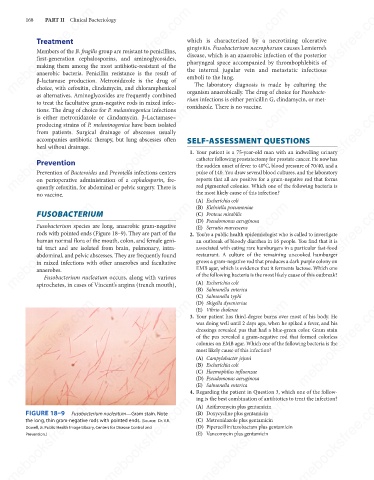
Fusobacterium species are long, anaerobic gram-negative
(E) Serratia marcescens
rods with pointed ends (Figure 18–9). They are part of the
human normal flora of the mouth, colon, and female geni-
an outbreak of bloody diarrhea in 16 people. You find that it is
tal tract and are isolated from brain, pulmonary, intra-
associated with eating rare hamburgers in a particular fast-food
restaurant. A culture of the remaining uncooked hamburger
abdominal, and pelvic abscesses. They are frequently found
grows a gram-negative rod that produces a dark purple colony on
in mixed infections with other anaerobes and facultative
EMB agar, which is evidence that it ferments lactose. Which one
anaerobes.
of the following bacteria is the most likely cause of this outbreak?
Fusobacterium nucleatum occurs, along with various
(A) Escherichia coli
spirochetes, in cases of Vincent’s angina (trench mouth),
(B) Salmonella enterica
(C) Salmonella typhi
mebooksfree.com mebooksfree.com mebooksfree.com (A) Campylobacter jejuni mebooksfree.com mebooksfree.com
mebooksfree.com
(D) Shigella dysenteriae
(E) Vibrio cholerae
3. Your patient has third-degree burns over most of his body. He
was doing well until 2 days ago, when he spiked a fever, and his
dressings revealed pus that had a blue-green color. Gram stain
of the pus revealed a gram-negative rod that formed colorless
colonies on EMB agar. Which one of the following bacteria is the
most likely cause of this infection?
(B) Escherichia coli
(C) Haemophilus influenzae
(D) Pseudomonas aeruginosa
(E) Salmonella enterica
4. Regarding the patient in Question 3, which one of the follow-
mebooksfree.com mebooksfree.com mebooksfree.com (C) Metronidazole plus gentamicin mebooksfree.com mebooksfree.com
mebooksfree.com
ing is the best combination of antibiotics to treat the infection?
(A) Azithromycin plus gentamicin
FIGURE 18–9
(B) Doxycycline plus gentamicin
Fusobacterium nucleatum—Gram stain. Note
the long, thin gram-negative rods with pointed ends. (Source: Dr. V.R.
(D) Piperacillin/tazobactam plus gentamicin
Dowell, Jr. Public Health Image Library, Centers for Disease Control and
(E) Vancomycin plus gentamicin
Prevention.)
mebooksfree.com mebooksfree.com mebooksfree.com mebooksfree.com mebooksfree.com mebooksfree.com

