


Page 354 - Textbook of Pathology, 6th Edition
P. 354
338
SECTION II
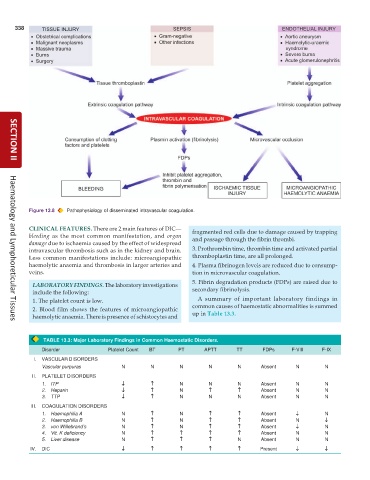
Figure 13.8 Pathophysiology of disseminated intravascular coagulation.
CLINICAL FEATURES. There are 2 main features of DIC— fragmented red cells due to damage caused by trapping
bleeding as the most common manifestation, and organ and passage through the fibrin thrombi.
damage due to ischaemia caused by the effect of widespread
intravascular thrombosis such as in the kidney and brain. 3. Prothrombin time, thrombin time and activated partial
Less common manifestations include: microangiopathic thromboplastin time, are all prolonged.
haemolytic anaemia and thrombosis in larger arteries and 4. Plasma fibrinogen levels are reduced due to consump-
veins. tion in microvascular coagulation.
5. Fibrin degradation products (FDPs) are raised due to
LABORATORY FINDINGS. The laboratory investigations
include the following: secondary fibrinolysis.
1. The platelet count is low. A summary of important laboratory findings in
common causes of haemostatic abnormalities is summed
2. Blood film shows the features of microangiopathic
haemolytic anaemia. There is presence of schistocytes and up in Table 13.3.
Haematology and Lymphoreticular Tissues
TABLE 13.3: Major Laboratory Findings in Common Haemostatic Disorders.
Disorder Platelet Count BT PT APTT TT FDPs F-VIII F-IX
I. VASCULAR DISORDERS
Vascular purpuras N N N N N Absent N N
II. PLATELET DISORDERS
1. ITP ↓ ↓ ↓ ↓ ↓ ↑ ↑ ↑ ↑ ↑ N N N Absent N N
2. Heparin ↓ ↓ ↓ ↓ ↓ ↑ ↑ ↑ ↑ ↑ N ↑ ↑ ↑ ↑ ↑ ↑ ↑ ↑ ↑ ↑ Absent N N
3. TTP ↓ ↓ ↓ ↓ ↓ ↑ ↑ ↑ ↑ ↑ N N N Absent N N
III. COAGULATION DISORDERS
1. Haemophilia A N ↑ ↑ ↑ ↑ ↑ N ↑ ↑ ↑ ↑ ↑ ↑ ↑ ↑ ↑ ↑ Absent ↓ ↓ ↓ ↓ ↓ N
2. Haemophilia B N ↑ ↑ ↑ ↑ ↑ N ↑ ↑ ↑ ↑ ↑ ↑ ↑ ↑ ↑ ↑ Absent N ↓ ↓ ↓ ↓ ↓
3. von Willebrand’s N ↑ ↑ ↑ ↑ ↑ N ↑ ↑ ↑ ↑ ↑ ↑ ↑ ↑ ↑ ↑ Absent ↓ ↓ ↓ ↓ ↓ N
4. Vit. K deficiency N ↑ ↑ ↑ ↑ ↑ ↑ ↑ ↑ ↑ ↑ ↑ ↑ ↑ ↑ ↑ ↑ ↑ ↑ ↑ ↑ Absent N N
5. Liver disease N ↑ ↑ ↑ ↑ ↑ ↑ ↑ ↑ ↑ ↑ ↑ ↑ ↑ ↑ ↑ N Absent N N
IV. DIC ↓ ↓ ↓ ↓ ↓ ↑ ↑ ↑ ↑ ↑ ↑ ↑ ↑ ↑ ↑ ↑ ↑ ↑ ↑ ↑ ↑ ↑ ↑ ↑ ↑ Present ↓ ↓ ↓ ↓ ↓ ↓ ↓ ↓ ↓ ↓

