


Page 38 - Textbook of Pathology, 6th Edition
P. 38
22


     SECTION I


     General Pathology and Basic Techniques


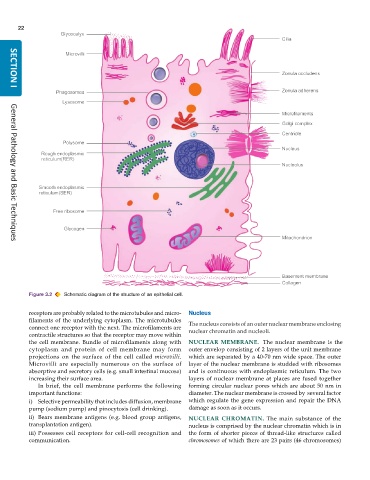
           Figure 3.2  Schematic diagram of the structure of an epithelial cell.


           receptors are probably related to the microtubules and micro-  Nucleus
           filaments of the underlying cytoplasm. The microtubules  The nucleus consists of an outer nuclear membrane enclosing
           connect one receptor with the next. The microfilaments are  nuclear chromatin and nucleoli.
           contractile structures so that the receptor may move within
           the cell membrane. Bundle of microfilaments along with  NUCLEAR MEMBRANE.   The nuclear membrane is the
           cytoplasm and protein of cell membrane may form     outer envelop consisting of 2 layers of the unit membrane
           projections on the surface of the cell called  microvilli.  which are separated by a 40-70 nm wide space. The outer
           Microvilli are especially numerous on the surface of  layer of the nuclear membrane is studded with ribosomes
           absorptive and secretory cells (e.g. small intestinal mucosa)  and is continuous with endoplasmic reticulum. The two
           increasing their surface area.                      layers of nuclear membrane at places are fused together
              In brief, the cell membrane performs the following  forming circular nuclear pores which are about 50 nm in
           important functions:                                diameter. The nuclear membrane is crossed by  several factor
           i) Selective permeability that includes diffusion, membrane  which regulate the gene expression and repair the DNA
           pump (sodium pump) and pinocytosis (cell drinking).  damage as soon as it occurs.
           ii) Bears membrane antigens (e.g. blood group antigens,  NUCLEAR  CHROMATIN.  The main substance of the
           transplantation antigen).                           nucleus is comprised by the nuclear chromatin which is in
           iii) Possesses cell receptors for cell-cell recognition and  the form of shorter pieces of thread-like structures called
           communication.                                      chromosomes of which there are 23 pairs (46 chromosomes)

