


Page 812 - Textbook of Pathology, 6th Edition
P. 812
796                                                        Histologically, craniopharyngioma closely resembles
                                                                 ameloblastoma of the jaw (page 530). There are 2 distinct
                                                                 histologic features:
                                                                 1. Stratified squamous epithelium frequently lining, a
                                                                 cyst and containing loose stellate cells in the centre; and
                                                                 2. Solid ameloblastous areas.

                                                               Granular Cell Tumour (Choristoma)
                                                               Though tumours of the posterior pituitary are rare, granular
                                                               cell tumour or choristoma is the most common tumour of
                                                               the neurohypophysis. It is composed of a mass of cells having
                                                               granular eosinophilic cytoplasm similar to the cells of the
                                                               posterior pituitary. It arises as a result of developmental
                                                               anomaly and hence the name choristoma. Generally, it
                                                               remains asymptomatic and is discovered as an incidental
                                                               autopsy finding.

                                                                               ADRENAL GLAND
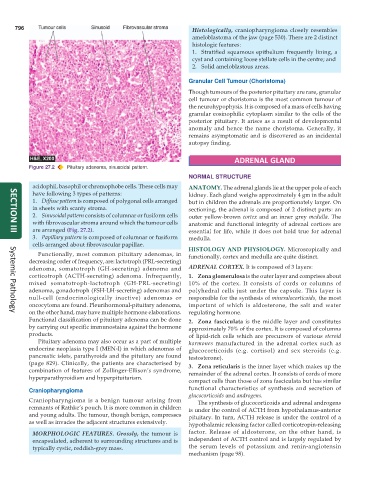
           Figure 27.2  Pituitary adenoma, sinusoidal pattern.
                                                               NORMAL STRUCTURE
            acidophil, basophil or chromophobe cells. These cells may  ANATOMY. The adrenal glands lie at the upper pole of each
            have following 3 types of patterns:                kidney. Each gland weighs approximately 4 gm in the adult
            1. Diffuse pattern is composed of polygonal cells arranged  but in children the adrenals are proportionately larger. On
            in sheets with scanty stroma.                      sectioning, the adrenal is composed of 2 distinct parts: an
            2. Sinusoidal pattern consists of columnar or fusiform cells  outer yellow-brown cortex and an inner grey medulla. The
            with fibrovascular stroma around which the tumour cells  anatomic and functional integrity of adrenal cortices are
            are arranged (Fig. 27.2).                          essential for life, while it does not hold true for adrenal
     SECTION III
            3. Papillary pattern is composed of columnar or fusiform  medulla.
            cells arranged about fibrovascular papillae.
                                                               HISTOLOGY AND PHYSIOLOGY. Microscopically and
              Functionally, most common pituitary adenomas, in  functionally, cortex and medulla are quite distinct.
           decreasing order of frequency, are: lactotroph (PRL-secreting)
           adenoma, somatotroph (GH-secreting) adenoma and     ADRENAL CORTEX. It is composed of 3 layers:
           corticotroph (ACTH-secreting) adenoma. Infrequently,  1. Zona glomerulosa is the outer layer and comprises about
           mixed somatotroph-lactotroph (GH-PRL-secreting)     10% of the cortex. It consists of cords or columns of
           adenoma, gonadotroph (FSH-LH-secreting) adenomas and  polyhedral cells just under the capsule. This layer is
           null-cell (endocrinologically inactive) adenomas or  responsible for the synthesis of mineralocorticoids, the most
           oncocytoma are found. Pleurihormonal-pituitary adenoma,  important of which is aldosterone, the salt and water
           on the other hand, may have multiple hormone elaborations.  regulating hormone.
     Systemic Pathology
           Functional classification of pituitary adenoma can be done  2. Zona fasciculata is the middle layer and constitutes
           by carrying out specific immunostains against the hormone  approximately 70% of the cortex. It is composed of columns
           products.                                           of lipid-rich cells which are precursors of various steroid
              Pituitary adenoma may also occur as a part of multiple  hormones  manufactured in the adrenal cortex such as
           endocrine neoplasia type I (MEN-I) in which adenomas of  glucocorticoids (e.g. cortisol) and sex steroids (e.g.
           pancreatic islets, parathyroids and the pituitary are found  testosterone).
           (page 829). Clinically, the patients are characterised by  3. Zona reticularis is the inner layer which makes up the
           combination of features of Zollinger-Ellison’s syndrome,  remainder of the adrenal cortex. It consists of cords of more
           hyperparathyroidism and hyperpituitarism.
                                                               compact cells than those of zona fasciculata but has similar
           Craniopharyngioma                                   functional characteristics of synthesis and secretion of
                                                               glucocorticoids and androgens.
           Craniopharyngioma is a benign tumour arising from      The synthesis of glucocorticoids and adrenal androgens
           remnants of Rathke’s pouch. It is more common in children  is under the control of ACTH from hypothalamus-anterior
           and young adults. The tumour, though benign, compresses  pituitary. In turn, ACTH release is under the control of a
           as well as invades the adjacent structures extensively.  hypothalamic releasing factor called corticotropin-releasing

            MORPHOLOGIC FEATURES. Grossly, the  tumour is      factor. Release of aldosterone, on the other hand, is
            encapsulated, adherent to surrounding structures and is  independent of ACTH control and is largely regulated by
            typically cystic, reddish-grey mass.               the serum levels of potassium and renin-angiotensin
                                                               mechanism (page 98).

