


Page 849 - Textbook of Pathology, 6th Edition
P. 849
833


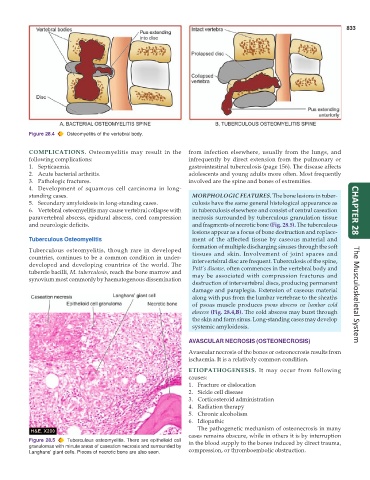
           Figure 28.4  Osteomyelitis of the vertebral body.


           COMPLICATIONS.  Osteomyelitis may result in the     from infection elsewhere, usually from the lungs, and
           following complications:                            infrequently by direct extension from the pulmonary or
           1. Septicaemia.                                     gastrointestinal tuberculosis (page 156). The disease affects
           2. Acute bacterial arthritis.                       adolescents and young adults more often. Most frequently
           3. Pathologic fractures.                            involved are the spine and bones of extremities.
           4. Development of squamous cell carcinoma in long-
           standing cases.                                       MORPHOLOGIC FEATURES. The bone lesions in tuber-
           5. Secondary amyloidosis in long-standing cases.      culosis have the same general histological appearance as
           6. Vertebral osteomyelitis may cause vertebral collapse with  in tuberculosis elsewhere and consist of central caseation  CHAPTER 28
           paravertebral abscess, epidural abscess, cord compression  necrosis surrounded by tuberculous granulation tissue
           and neurologic deficits.                              and fragments of necrotic bone (Fig. 28.5). The tuberculous
                                                                 lesions appear as a focus of bone destruction and replace-
           Tuberculous Osteomyelitis                             ment of the affected tissue by caseous material and
                                                                 formation of multiple discharging sinuses through the soft
           Tuberculous osteomyelitis, though rare in developed   tissues and skin. Involvement of joint spaces and
           countries, continues to be a common condition in under-  intervertebral disc are frequent. Tuberculosis of the spine,
           developed and developing countries of the world. The  Pott’s disease, often commences in the vertebral body and
           tubercle bacilli, M. tuberculosis, reach the bone marrow and  may be associated with compression fractures and
           synovium most commonly by haematogenous dissemination
                                                                 destruction of intervertebral discs, producing permanent
                                                                 damage and paraplegia. Extension of caseous material
                                                                 along with pus from the lumbar vertebrae to the sheaths  The Musculoskeletal System
                                                                 of psoas muscle produces  psoas abscess or  lumbar cold
                                                                 abscess (Fig. 28.4,B). The cold abscess may burst through
                                                                 the skin and form sinus. Long-standing cases may develop
                                                                 systemic amyloidosis.

                                                               AVASCULAR NECROSIS (OSTEONECROSIS)
                                                               Avascular necrosis of the bones or osteonecrosis results from
                                                               ischaemia. It is a relatively common condition.

                                                               ETIOPATHOGENESIS.  It may occur from following
                                                               causes:
                                                               1. Fracture or dislocation
                                                               2. Sickle cell disease
                                                               3. Corticosteroid administration
                                                               4. Radiation therapy
                                                               5. Chronic alcoholism
                                                               6. Idiopathic
                                                                  The pathogenetic mechanism of osteonecrosis in many
                                                               cases remains obscure, while in others it is by interruption
           Figure 28.5  Tuberculous osteomyelitis. There are epithelioid cell  in the blood supply to the bones induced by direct trauma,
           granulomas with minute areas of caseation necrosis and surrounded by
           Langhans’ giant cells. Pieces of necrotic bone are also seen.  compression, or thromboembolic obstruction.

