


Page 102 - 9780077418427.pdf
P. 102
/Users/user-f465/Desktop
          tiL12214_ch03_061-084.indd Page Sec3:79  9/1/10  9:34 PM user-f465
          tiL12214_ch03_061-084.indd Page Sec3:79  9/1/10  9:34 PM user-f465                                            /Users/user-f465/Desktop


                                                                               GEOTHERMAL ENERGY
                                                                               Geothermal energy is energy from beneath Earth’s sur face. The
                                                                               familiar geysers, hot springs, and venting steam of  Yellowstone
                                                                               National Park are clues that this form of energy  exists. There is
                                                                               substantially more geothermal energy than is revealed in Yellow-
                                                                               stone, however, and geothermal resources are more widespread
                                                                               than once thought. Earth has a high internal temperature, and
                                                                               recoverable geothermal resources may underlie most states.
                                                                               These resources occur in four broad categories of geothermal
                                                                               energy: (1) dry steam, (2) hot water, (3) hot, dry rock, and
                                                                               (4) geopressurized resources. Together, the energy contained in
                                                                               these geothermal resources represents about  15,000 times more
                                                                               energy than is consumed in the United States in a given year. The
                                                                               only problem is getting to the geothermal energy, then using it
                                                                               in a way that is economically attractive.
                                                                                  Most geothermal energy occurs as  hot, dry rock, which
                                                                                 accounts for about 85 percent of the total geothermal resource.
                                                                               Hot, dry rock is usually in or near an area of former volcanic
                                                                                 activity. The problem of utilizing this widespread resource is
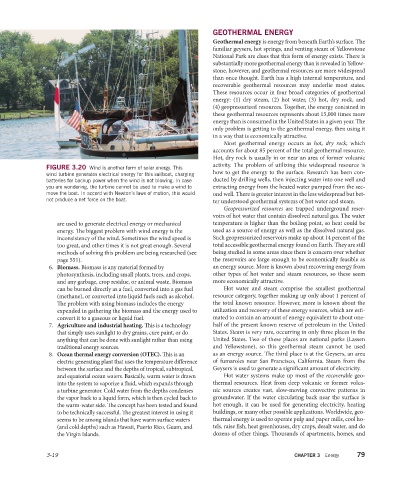
                       FIGURE 3.20  Wind is another form of solar energy. This
                       wind turbine generates electrical energy for this sailboat, charging   how to get the energy to the surface. Research has been con-
                       batteries for backup power when the wind is not blowing. In case   ducted by drilling wells, then injecting water into one well and
                       you are wondering, the turbine cannot be used to make a wind to   extracting energy from the heated water pumped from the sec-
                       move the boat. In accord with Newton’s laws of motion, this would   ond well. There is greater interest in the less widespread but bet-
                       not produce a net force on the boat.                    ter understood geothermal systems of hot water and steam.
                                                                                  Geopressurized resources are trapped underground reser-
                                                                               voirs of hot water that contain dissolved natural gas. The water
                           are used to generate electrical energy or mechanical   temperature is higher than the boiling point, so heat could be

                           energy. The biggest problem with wind energy is the   used as a source of energy as well as the dissolved natural gas.
                           inconsistency of the wind. Sometimes the wind speed is   Such geopressurized reservoirs make up about 14 percent of the
                           too great, and other times it is not great enough. Several   total accessible geothermal energy found on Earth. They are still
                           methods of solving this problem are being researched (see   being studied in some areas since there is concern over whether
                           page  551).                                         the reservoirs are large enough to be economically  feasible as
                         6.   Biomass. Biomass is any material formed by       an energy source. More is known about recovering energy from
                           photosynthesis,  including small plants, trees, and crops,   other types of hot water and steam resources, so these seem
                           and any garbage, crop residue, or animal waste. Biomass   more economically attractive.
                           can be burned directly as a fuel, converted into a gas fuel   Hot water and steam comprise the smallest geothermal
                           (methane), or converted into  liquid fuels such as alcohol.     resource category, together making up only about 1 percent of
                           The problem with using biomass  includes the energy   the total known resource. However, more is known about the

                           expended in gathering the biomass and the energy used to   utilization and recovery of these energy sources, which are esti-
                           convert it to a gaseous or liquid fuel.             mated to contain an amount of energy equivalent to about one-
                         7.   Agriculture and industrial heating. This is a technology   half of the present known reserve of petroleum in the United

                           that simply uses sunlight to dry grains, cure paint, or do   States. Steam is very rare, occurring in only three places in the
                           anything that can be done with sunlight rather than using   United States. Two of these places are national parks (Lassen
                           traditional  energy sources.                        and Yellowstone), so this geothermal steam cannot be used
                         8.   Ocean thermal energy conversion (OTEC). This is an   as an energy source. The third place is at the Geysers, an area

                           electric generating plant that uses the temperature diff erence   of  fumaroles near San Francisco, California. Steam from the
                           between the surface and the depths of tropical, subtropical,     Geysers is used to generate a significant amount of electricity.
                           and equatorial ocean waters. Basically, warm water is drawn   Hot water systems make up most of the recoverable geo-
                           into the system to vaporize a fluid, which expands through   thermal resources. Heat from deep volcanic or former volca-

                           a turbine generator. Cold water from the depths condenses   nic sources creates vast, slow-moving convective patterns in
                           the vapor back to a liquid form, which is then cycled back to   groundwater. If the water circulating back near the surface is
                           the warm-water side. The concept has been tested and found   hot enough, it can be used for generating electricity, heating

                           to be technically successful. The greatest interest in using it   buildings, or many other possible applications. Worldwide, geo-

                           seems to be among islands that have warm surface waters   thermal energy is used to operate pulp and paper mills, cool ho-
                           (and cold depths) such as Hawaii, Puerto Rico, Guam, and   tels, raise fish, heat greenhouses, dry crops, desalt water, and do
                           the Virgin Islands.                                 dozens of other things. Thousands of apartments, homes, and


                       3-19                                                                               CHAPTER 3  Energy   79

