


Page 32 - 2020 Benefits Guide
P. 32
Short Term Disability


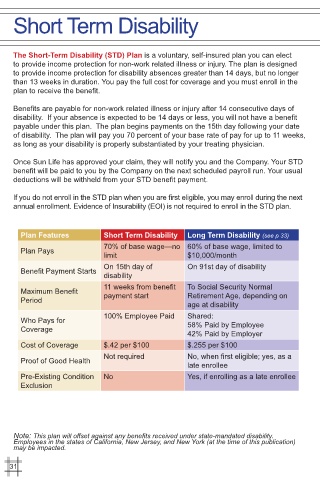
     The Short-Term Disability (STD) Plan is a voluntary, self-insured plan you can elect
     to provide income protection for non-work related illness or injury. The plan is designed
     to provide income protection for disability absences greater than 14 days, but no longer
     than 13 weeks in duration. You pay the full cost for coverage and you must enroll in the
     plan to receive the benefit.

     Benefits are payable for non-work related illness or injury after 14 consecutive days of
     disability.  If your absence is expected to be 14 days or less, you will not have a benefit
     payable under this plan.  The plan begins payments on the 15th day following your date
     of disability.  The plan will pay you 70 percent of your base rate of pay for up to 11 weeks,
     as long as your disability is properly substantiated by your treating physician.

     Once Sun Life has approved your claim, they will notify you and the Company. Your STD
     benefit will be paid to you by the Company on the next scheduled payroll run. Your usual
     deductions will be withheld from your STD benefit payment.

     If you do not enroll in the STD plan when you are first eligible, you may enroll during the next
     annual enrollment. Evidence of Insurability (EOI) is not required to enroll in the STD plan.


       Plan Features         Short Term Disability   Long Term Disability (see p 33)
                             70% of base wage—no  60% of base wage, limited to
       Plan Pays
                             limit                  $10,000/month
                             On 15th day of         On 91st day of disability
       Benefit Payment Starts
                             disability
                             11 weeks from benefit   To Social Security Normal
       Maximum Benefit       payment start          Retirement Age, depending on
       Period
                                                    age at disability
                             100% Employee Paid     Shared:
       Who Pays for                                 58% Paid by Employee
       Coverage
                                                    42% Paid by Employer
       Cost of Coverage      $.42 per $100          $.255 per $100
                             Not required           No, when first eligible; yes, as a
       Proof of Good Health
                                                    late enrollee
       Pre-Existing Condition   No                  Yes, if enrolling as a late enrollee
       Exclusion


     Note: This plan will offset against any benefits received under state-mandated disability.
     Employees in the states of California, New Jersey, and New York (at the time of this publication)
     may be impacted.

    31

