


Page 63 - T-I JOURNAL19 4
P. 63
WOMEN’S ENTREPRENEURSHIP IN STEM                        711
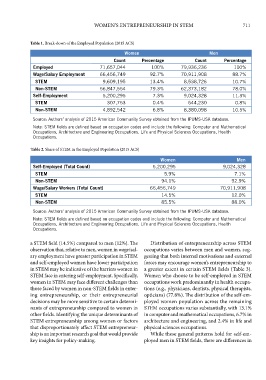
             Table 1. Break-down of the Employed Population (2015 ACS)

                                                Women
             Table 1. Break-down of the Employed Population (2015 ACS)          Men
                                            Count      Percentage          Count      Percentage
                                                Women                           Men
              Employed                 71,657,044         100%        79,936,236          100%
                                            Count
                                                                           Count
                                                          92.7%
                                                                                         88.7%
              Wage/Salary Employment    66,456,749     Percentage     70,911,908      Percentage
              Employed                 71,657,044         100%        79,936,236          100%
                STEM                    9,609,195         13.4%        8,538,726         10.7%
              Wage/Salary Employment    66,456,749        92.7%       70,911,908         88.7%
                Non-STEM               56,847,554         79.3%       62,373,182         78.0%
                STEM                    9,609,195         13.4%        8,538,726         10.7%
              Self-Employment           5,200,295          7.3%        9,024,328         11.3%
                Non-STEM               56,847,554         79.3%       62,373,182         78.0%
                STEM                      307,753          0.4%            644,230        0.8%
              Self-Employment           5,200,295          7.3%        9,024,328         11.3%
                Non-STEM                   4,892,542       6.8%          8,380,098       10.5%
                STEM                      307,753          0.4%            644,230        0.8%
              Source: Authors’ analysis of 2015 American Community Survey obtained from the IPUMS-USA database.
                Non-STEM                   4,892,542       6.8%          8,380,098       10.5%

              Note: STEM fields are defined based on occupation codes and include the following: Computer and Mathematical
              Source: Authors’ analysis of 2015 American Community Survey obtained from the IPUMS-USA database.
              Occupations, Architecture and Engineering Occupations, Life and Physical Sciences Occupations, Health

              Occupations.
              Note: STEM fields are defined based on occupation codes and include the following: Computer and Mathematical
              Occupations, Architecture and Engineering Occupations, Life and Physical Sciences Occupations, Health
              Occupations.
             Table 2. Share of STEM in the Employed Population (2015 ACS)


             Table 2. Share of STEM in the Employed Population (2015 ACS)  Women           Men

              Self-Employed (Total Count)                  5,200,295                  9,024,328
                                                              Women                        Men
              STEM                                             5.9%                       7.1%
              Self-Employed (Total Count)                  5,200,295                  9,024,328
              Non-STEM                                        94.1%                      92.9%
              STEM                                             5.9%                       7.1%
              Wage/Salary Workers (Total Count)           66,456,749                70,911,908
              Non-STEM                                        94.1%                      92.9%
              STEM                                            14.5%                      12.0%
              Wage/Salary Workers (Total Count)           66,456,749                70,911,908
              Non-STEM                                        85.5%                      88.0%
              STEM                                            14.5%                      12.0%
              Source: Authors’ analysis of 2015 American Community Survey obtained from the IPUMS-USA database.  88.0%
              Non-STEM
                                                              85.5%
              Note: STEM fields are defined based on occupation codes and include the following: Computer and Mathematical
              Source: Authors’ analysis of 2015 American Community Survey obtained from the IPUMS-USA database.
              Occupations, Architecture and Engineering Occupations, Life and Physical Sciences Occupations, Health
              Occupations.
              Note: STEM fields are defined based on occupation codes and include the following: Computer and Mathematical
              Occupations, Architecture and Engineering Occupations, Life and Physical Sciences Occupations, Health
              Occupations.
             a STEM field (14.5%) compared to men (12%). The    Distribution of entrepreneurship across STEM

             observation that, relative to men, women in wage/sal-  occupations varies between men and women, sug-
             Table 3. Distribution of STEM Entrepreneurship across STEM Fields (2015 ACS)
             ary employment have greater participation in STEM  gesting that both internal motivations and external

             and self-employed women have lower participation  forces may encourage women’s entrepreneurship to
             Table 3. Distribution of STEM Entrepreneurship across STEM Fields (2015 ACS)
             in STEM may be indicative of the barriers women in  a greater extent in certain STEM fields (Table 3).   Women    Men

             STEM face in entering self-employment. Specifically,  Women who choose to be self-employed in STEM
                                                                                           Men


                                                                          Women
              Self-employed in STEM (Total Count)
                                                                         307,753
                                                                                        644,230


             women in STEM may face different challenges than  occupations work predominantly in health occupa-
              Computer and Mathematical Occupations (e.g., computer
             those faced by women in non-STEM fields in enter-  tions (e.g., physicians, dentists, physical therapists,
                                                                         307,753
                                                                                        644,230
              Self-employed in STEM (Total Count)


              programmers, web developers, operations research analysts)
                                                                                         26.1%
                                                                           13.1%


             ing entrepreneurship, or their entrepreneurial  opticians) (77.8%). The distribution of the self-em-
              Computer and Mathematical Occupations (e.g., computer
             decisions may be more sensitive to certain determi-  ployed women population across the remaining
              programmers, web developers, operations research analysts)
                                                                                         26.1%
                                                                           13.1%


                                                                            6.7%
                                                                                         18.2%


              Architecture and Engineering Occupations
             nants of entrepreneurship compared to women in  STEM occupations varies substantially, with 13.1%
             other fields. Identifying the unique determinants of  in computer and mathematical occupations, 6.7% in
              Life and Physical Sciences Occupations (e.g., physical scientists,
                                                                            6.7%
                                                                                         18.2%


              Architecture and Engineering Occupations


                                                                                          3.1%
              chemist and material scientists, biological scientists)
                                                                            2.4%
             STEM entrepreneurship among women or factors  architecture and engineering, and 2.4% in life and
              Life and Physical Sciences Occupations (e.g., physical scientists,
              Health Occupations (e.g., physicians and surgeons, registered
             that disproportionately affect STEM entrepreneur-  physical sciences occupations.
              chemist and material scientists, biological scientists)

                                                                            2.4%
                                                                                          3.1%

                                                                                         52.6%
                                                                           77.8%
              nurses, clinical laboratory technologists and technicians)


             ship is an important research goal that would provide    While these general patterns hold for self-em-
              Health Occupations (e.g., physicians and surgeons, registered
             key insights for policy-making.            ployed men in STEM fields, there are differences in
              nurses, clinical laboratory technologists and technicians)   77.8%         52.6%
              TOTAL %
                                                                                          100%
                                                                           100%

              Source: Authors’ analysis of 2015 American Community Survey obtained from the IPUMS-USA database.
              TOTAL %                                                      100%           100%
              Note: STEM fields are defined based on occupation codes and include the following: Computer and Mathematical
              Source: Authors’ analysis of 2015 American Community Survey obtained from the IPUMS-USA database.
              Occupations, Architecture and Engineering Occupations, Life and Physical Sciences Occupations, Health
              Occupations.
              Note: STEM fields are defined based on occupation codes and include the following: Computer and Mathematical
              Occupations, Architecture and Engineering Occupations, Life and Physical Sciences Occupations, Health
              Occupations.

