


Page 25 - T-I JOURNAL19-3
P. 25
LA-STEM PROGRAM: STEM SUCCESS MODEL                       585


                100%
                 90%

                 80%
                 70%
                 60%
                 50%

                 40%
                 30%
                 20%
                 10%

                  0%
                            LA-STEM     Highly Selective Institutions  Selective Institutions  Moderately Selective Institutions
                                    All       Women       Men       African Americans

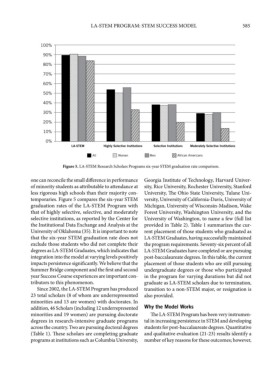
                         Figure 5. LA-STEM Research Scholars Programs six-year STEM graduation rate comparison.

             one can reconcile the small difference in performance  Georgia Institute of Technology, Harvard Univer-
             of minority students as attributable to attendance at  sity, Rice University, Rochester University, Stanford
             less rigorous high schools than their majority con-  University, The Ohio State University, Tulane Uni-
             temporaries. Figure 5 compares the six-year STEM  versity, University of California-Davis, University of
             graduation rates of the LA-STEM Program with  Michigan, University of Wisconsin-Madison, Wake
             that of highly selective, selective, and moderately  Forest University, Washington University, and the
             selective institutions, as reported by the Center for  University of Washington, to name a few (full list
             the Institutional Data Exchange and Analysis at the  provided in Table 2). Table 1 summarizes the cur-
             University of Oklahoma (35). It is important to note  rent placement of those students who graduated as
             that the six-year STEM graduation rate does not  LA-STEM Graduates, having successfully maintained
             exclude those students who did not complete their  the program requirements. Seventy-six percent of all
             degrees as LA-STEM Graduates, which indicates that  LA-STEM Graduates have completed or are pursuing
             integration into the model at varying levels positively  post-baccalaureate degrees. In this table, the current
             impacts persistence significantly. We believe that the  placement of those students who are still pursuing
             Summer Bridge component and the first and second  undergraduate degrees or those who participated
             year Success Course experiences are important con-  in the program for varying durations but did not
             tributors to this phenomenon.              graduate as LA-STEM scholars due to termination,
               Since 2002, the LA-STEM Program has produced  transition to a non-STEM major, or resignation is
             23 total scholars (8 of whom are underrepresented  also provided.
             minorities and 13 are women) with doctorates. In
             addition, 46 Scholars (including 12 underrepresented   Why the Model Works
             minorities and 19 women) are pursuing doctorate    The LA-STEM Program has been very instrumen-
             degrees in research-intensive graduate programs  tal in increasing persistence in STEM and developing
             across the country. Two are pursuing doctoral degrees  students for post-baccalaureate degrees. Quantitative
             (Table 1). These scholars are completing graduate  and qualitative evaluation (21-23) results identify a
             programs at institutions such as Columbia University,  number of key reasons for these outcomes; however,

