


Page 36 - PPE GUIDELINE
P. 36
Guidelines on the Use of PPE Against Chemical Hazards
Use, Maintenance & Disposal
Protective clothing should only be used for the purpose intended. It should be
maintained in good condition and checked regularly. It should be repaired or
discarded if damaged. Contaminated clothing should be washed before reuse.
Contaminated laundry water should not be disposed off directly but treated prior to
discharging into streams, rivers or sea. Clothing that are totally contaminated should
be treated as scheduled waste and should be disposed off as scheduled waste disposal
procedures.
3.2.6. Feet and Leg Protection
Types
The use of safety footwear; gaiters; leggings and spats can protect the feet and leg.
Safety footwear includes:
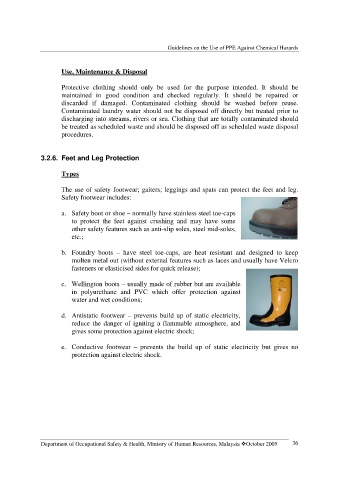
a. Safety boot or shoe – normally have stainless steel toe-caps
to protect the feet against crushing and may have some
other safety features such as anti-slip soles, steel mid-soles,
etc.;
b. Foundry boots – have steel toe-caps, are heat resistant and designed to keep
molten metal out (without external features such as laces and usually have Velcro
fasteners or elasticised sides for quick release);
c. Wellington boots – usually made of rubber but are available
in polyurethane and PVC which offer protection against
water and wet conditions;
d. Antistatic footwear – prevents build up of static electricity,
reduce the danger of igniting a flammable atmosphere, and
gives some protection against electric shock;
e. Conductive footwear – prevents the build up of static electricity but gives no
protection against electric shock.
Department of Occupational Safety & Health, Ministry of Human Resources, Malaysia October 2005 36

