


Page 35 - PPE GUIDELINE
P. 35
Guidelines on the Use of PPE Against Chemical Hazards
3.2.5. Body Protection
Types
The risk that workers may encounter include heat, cold, bad weather, chemical or
metal splash, spray from pressure leaks or spray guns, impact or penetration,
contaminated dust, and excessive wear or entanglement of own clothing.
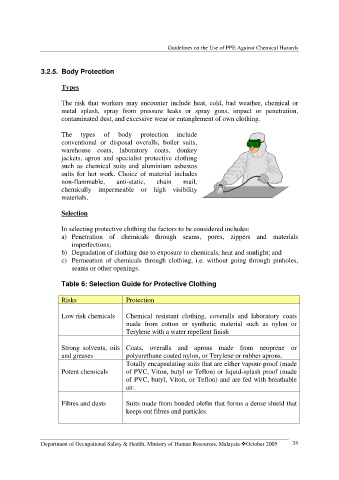
The types of body protection include
conventional or disposal overalls, boiler suits,
warehouse coats, laboratory coats, donkey
jackets, apron and specialist protective clothing
such as chemical suits and aluminium asbestos
suits for hot work. Choice of material includes
non-flammable, anti-static, chain mail,
chemically impermeable or high visibility
materials.
Selection
In selecting protective clothing the factors to be considered includes:
a) Penetration of chemicals through seams, pores, zippers and materials
imperfections;
b) Degradation of clothing due to exposure to chemicals, heat and sunlight; and
c) Permeation of chemicals through clothing, i.e. without going through pinholes,
seams or other openings.
Table 6: Selection Guide for Protective Clothing
Risks Protection
Low risk chemicals Chemical resistant clothing, coveralls and laboratory coats
made from cotton or synthetic material such as nylon or
Terylene with a water repellent finish
Strong solvents, oils Coats, overalls and aprons made from neoprene or
and greases polyurethane coated nylon, or Terylene or rubber aprons.
Totally encapsulating suits that are either vapour-proof (made
Potent chemicals of PVC, Viton, butyl or Teflon) or liquid-splash proof (made
of PVC, butyl, Viton, or Teflon) and are fed with breathable
air.
Fibres and dusts Suits made from bonded olefin that forms a dense shield that
keeps out fibres and particles.
Department of Occupational Safety & Health, Ministry of Human Resources, Malaysia October 2005 35

