


Page 32 - PPE GUIDELINE
P. 32
Guidelines on the Use of PPE Against Chemical Hazards
Table 5: Glove Selection
Risk Factor Glove Type
Extreme For contact with chemical at extreme temperature (hot or
temperature cold), glove with suitable material coating to protect from
Hot or cold the chemical and heat insulation construction should be
used. Double donning with glove liner made of para-
aramid, cotton and leather can be considered as an
alternative.
Gloves made of neoprene are good for handling oil in low
temperatures and gloves made of Kevlar, glass fibre and
leather can be used at higher temperatures;
Corrosive, Glove made of suitable material to protect from the
irritating or toxic chemical used. The toxicity of the chemical shall be
chemical considered during glove selection stage.
Gloves made from chemical resistant material and which
are impervious to liquid penetration;
Skin infection Impervious glove with liquid proof AQL of 1.5 or better.
caused by Micro-
organism
Even though gloves can be used to protect workers from a variety of risks, these
guidelines will focus mainly on the protection from chemicals that are hazardous to
health. There are many tasks where the hands come into contact with toxic or
corrosive substances. Examples include maintenance of machinery, cleaning up
chemical spillage and mixing and dispensing pesticide formulations. If correctly
selected and used, gloves provide a barrier between the wearer’s skin and the harmful
substance, preventing local damage or in some cases absorption through the skin.
Selection
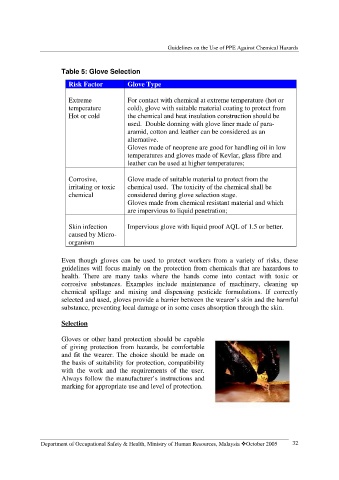
Gloves or other hand protection should be capable
of giving protection from hazards, be comfortable
and fit the wearer. The choice should be made on
the basis of suitability for protection, compatibility
with the work and the requirements of the user.
Always follow the manufacturer’s instructions and
marking for appropriate use and level of protection.
Department of Occupational Safety & Health, Ministry of Human Resources, Malaysia October 2005 32

