


Page 249 - alligood 8th edition_Neat
P. 249
230    UNIT III  Nursing Conceptual Models

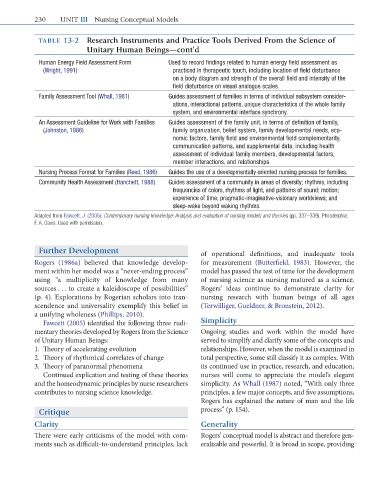
            TABLE 13-2   Research Instruments and Practice Tools Derived From the Science of
                         Unitary Human Beings—cont’d
            Human Energy Field Assessment Form    Used to record findings related to human energy field assessment as
             (Wright, 1991)                      practiced in therapeutic touch, including location of field disturbance
                                                 on a body diagram and strength of the overall field and intensity of the
                                                 field disturbance on visual analogue scales.
            Family Assessment Tool (Whall, 1981)  Guides assessment of families in terms of individual subsystem consider-
                                                 ations, interactional patterns, unique characteristics of the whole family
                                                 system, and environmental interface synchrony.
            An Assessment Guideline for Work with Families   Guides assessment of the family unit, in terms of definition of family,
             (Johnston, 1986)                    family organization, belief system, family developmental needs, eco-
                                                 nomic factors, family field and environmental field complementarity,
                                                 communication patterns, and supplemental data, including health
                                                 assessment of individual family members, developmental factors,
                                                 member interactions, and relationships.
            Nursing Process Format for Families (Reed, 1986)  Guides the use of a developmentally oriented nursing process for families.
            Community Health Assessment (Hanchett, 1988)  Guides assessment of a community in areas of diversity; rhythms, including
                                                 frequencies of colors, rhythms of light, and patterns of sound; motion;
                                                 experience of time; pragmatic-imaginative-visionary worldviews; and
                                                 sleep-wake beyond waking rhythms.
           Adapted from Fawcett, J. (2005). Contemporary nursing knowledge: Analysis and evaluation of nursing models and theories (pp. 337–339). Philadelphia:
           F. A. Davis. Used with permission.


            Further Development                          of  operational  definitions,  and  inadequate  tools
           Rogers  (1986a)  believed  that  knowledge  develop-  for  measurement  (Butterfield,  1983).  However,  the
           ment within her model was a “never-ending process”   model has passed the test of time for the development
           using  “a  multiplicity  of  knowledge  from  many   of nursing science as nursing matured as a science.
           sources . . . to create a kaleidoscope of possibilities”   Rogers’  ideas  continue  to  demonstrate  clarity  for
           (p. 4). Explorations by Rogerian scholars into tran-  nursing  research  with  human  beings  of  all  ages
           scendence  and  universality  exemplify  this  belief  in    (Terwilliger, Gueldner, & Bronstein, 2012).
           a unifying wholeness (Phillips, 2010).
             Fawcett (2005) identified the following three rudi-  Simplicity
           mentary theories developed by Rogers from the Science   Ongoing  studies  and  work  within  the  model  have
           of Unitary Human Beings:                      served to simplify and clarify some of the concepts and
             1.  Theory of accelerating evolution        relationships. However, when the model is examined in
             2.  Theory of rhythmical correlates of change  total perspective, some still classify it as complex. With
             3.  Theory of paranormal phenomena          its continued use in practice, research, and education,
             Continued explication and testing of these theories   nurses  will  come  to  appreciate  the  model’s  elegant
           and the homeodynamic principles by nurse researchers   simplicity. As Whall (1987) noted, “With only three
           contributes to nursing science knowledge.     principles, a few major concepts, and five assumptions,
                                                         Rogers has explained the nature of man and the life
            Critique                                     process” (p. 154).
           Clarity                                       Generality
           There were early criticisms of the model with com-  Rogers’ conceptual model is abstract and therefore gen-
           ments such as difficult-to-understand principles, lack   eralizable and powerful. It is broad in scope, providing

