


Page 246 - alligood 8th edition_Neat
P. 246
CHAPTER 13  Martha E. Rogers  227

             doctoral programs of stature that focus on nursing     Principles of Homeodynamics
             as a learned field of endeavor (p. 34).

                                                           Resonancy        Helicy         Integrality
             Barrett (1990b) notes that with increasing use of
           technology and increasing severity of illness of hospi-
           talized patients, students may be limited to observa-
           tional experiences in these institutions. Therefore, the
           acquisition  of  manipulative  technical  skills  must  be
           accomplished in practice laboratories and at alterna-
           tive sites, such as clinics and home health agencies.         Midrange theories
           Other  sites  for  education  include  health  promotion
           programs, managed care programs, homeless shelters,   Bultemeier   Barrett       Floyd
           and senior centers.                              (1993)          (1990a)         (1983)
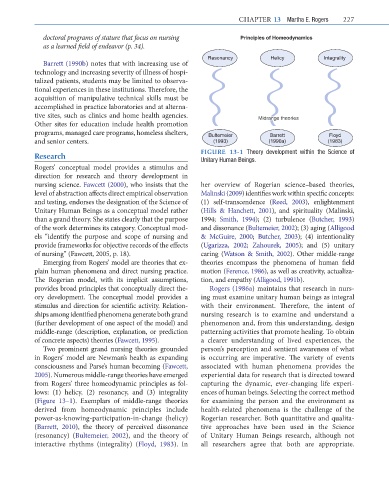
                                                         FIGURE  13-1   Theory  development  within  the  Science  of
           Research                                      Unitary Human Beings.
           Rogers’  conceptual  model  provides  a  stimulus  and
           direction  for  research  and  theory  development  in
           nursing science. Fawcett (2000), who insists that the   her  overview  of  Rogerian  science–based  theories,
           level of abstraction affects direct empirical observation   Malinski (2009) identifies work within specific concepts:
           and testing, endorses the designation of the Science of   (1)  self-transcendence  (Reed,  2003),  enlightenment
           Unitary Human Beings as a conceptual model rather   (Hills  &  Hanchett,  2001),  and  spirituality  (Malinski,
           than a grand theory. She states clearly that the purpose   1994;  Smith,  1994);  (2)  turbulence  (Butcher,  1993)
           of the work determines its category. Conceptual mod-  and dissonance (Bultemeier, 2002); (3) aging (Alligood
           els  “identify  the  purpose  and  scope  of  nursing  and   &  McGuire,  2000;  Butcher,  2003);  (4)  intentionality
           provide frameworks for objective records of the effects   (Ugarizza,  2002;  Zahourek,  2005);  and  (5)  unitary
           of nursing” (Fawcett, 2005, p. 18).           caring  (Watson  &  Smith,  2002).  Other  middle-range
             Emerging from Rogers’ model are theories that ex-  theories  encompass  the  phenomena  of  human  field
           plain human phenomena and direct nursing practice.   motion (Ference, 1986), as well as creativity, actualiza-
           The  Rogerian  model,  with  its  implicit  assumptions,   tion, and empathy (Alligood, 1991b).
           provides broad principles that conceptually direct the-  Rogers (1986a) maintains that research in nurs-
           ory  development.  The  conceptual  model  provides  a   ing must examine unitary human beings as integral
           stimulus and direction for scientific activity. Relation-  with  their  environment.  Therefore,  the  intent  of
           ships among identified phenomena generate both grand   nursing  research  is  to  examine  and  understand  a
           (further development of one aspect of the model) and   phenomenon and, from this understanding, design
           middle-range  (description,  explanation,  or  prediction   patterning activities that promote healing. To obtain
           of concrete aspects) theories (Fawcett, 1995).  a  clearer  understanding  of  lived  experiences,  the
             Two  prominent  grand  nursing  theories  grounded    person’s perception and sentient awareness of what
           in  Rogers’  model  are  Newman’s  health  as  expanding   is  occurring  are  imperative.  The  variety  of  events
           consciousness and Parse’s human becoming (Fawcett,   associated  with  human  phenomena  provides  the
           2005). Numerous middle-range theories have emerged   experiential data for research that is directed toward
           from Rogers’ three homeodynamic principles as fol-  capturing  the  dynamic,  ever-changing  life  experi-
           lows:  (1)  helicy,  (2)  resonancy,  and  (3)  integrality   ences of human beings. Selecting the correct method
           (Figure  13–1).  Exemplars  of  middle-range  theories   for  examining  the  person  and  the  environment  as
           derived  from  homeodynamic  principles  include   health-related  phenomena  is  the  challenge  of  the
           power-as-knowing-participation-in-change  (helicy)   Rogerian researcher. Both quantitative and qualita-
           (Barrett,  2010),  the  theory  of  perceived  dissonance   tive  approaches  have  been  used  in  the  Science
           (resonancy)  (Bultemeier,  2002),  and  the  theory  of   of  Unitary  Human  Beings  research,  although  not
           interactive  rhythms  (integrality)  (Floyd,  1983).  In   all  researchers  agree  that  both  are  appropriate.

