


Page 216 - Basic Course
P. 216
KNX BASIC COURSE

                  10.5 Line coupler or IP router?


                                                IP router as a line coupler
                            Line 1.5                                              Line 2.5
                                                       Floor 5

                            Line 1.4                                              Line 2.4
                                                       Floor 4
                            Line 1.3                                              Line 2.3
                                                       Floor 3
                            Line 1.2                                              Line 2.2
                                                       Floor 2
                            Line 1.1                                              Line 2.1
                                                       Floor 1

                             Area 1 (West wing)                            Area 2 (East wing)
                                                   Data network (LAN)


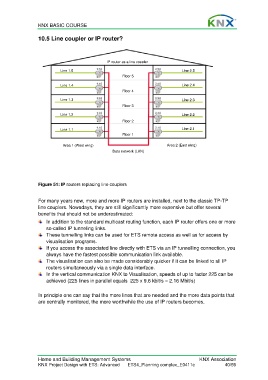
                  Figure 51: IP routers replacing line couplers


                  For many years now, more and more IP routers are installed, next to the classic TP-TP
                  line couplers. Nowadays, they are still significantly more expensive but offer several
                  benefits that should not be underestimated:

                      In addition to the standard multicast routing function, each IP router offers one or more
                      so-called IP tunneling links.
                      These tunnelling links can be used for ETS remote access as well as for access by
                      visualisation programs.
                      If you access the associated line directly with ETS via an IP tunnelling connection, you
                      always have the fastest possible communication link available.
                      The visualisation can also be made considerably quicker if it can be linked to all IP
                      routers simultaneously via a single data interface.
                      In the vertical communication KNX to Visualisation, speeds of up to factor 225 can be
                      achieved (225 lines in parallel equals  225 x 9.6 kbit/s = 2.16 Mbit/s)

                  In principle one can say that the more lines that are needed and the more data points that
                  are centrally monitored, the more worthwhile the use of IP routers becomes.


                  Home and Building Management Systems                                    KNX Association
                  KNX Project Design with ETS: Advanced   ETS4_Planning complex_E0411c               40/59

