


Page 214 - Basic Course
P. 214
KNX BASIC COURSE


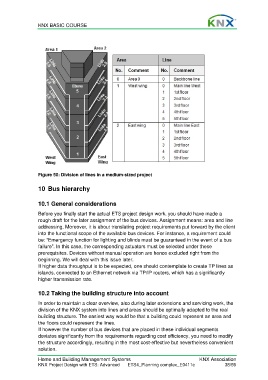
                  Figure 50: Division of lines in a medium-sized project

                  10 Bus hierarchy


                  10.1 General considerations
                  Before you finally start the actual ETS project design work, you should have made a
                  rough draft for the later assignment of the bus devices. Assignment means: area and line
                  addressing. Moreover, it is about translating project requirements put forward by the client
                  into the functional scope of the available bus devices. For instance, a requirement could
                  be: “Emergency function for lighting and blinds must be guaranteed in the event of a bus
                  failure”. In this case, the corresponding actuators must be selected under these
                  prerequisites. Devices without manual operation are hence excluded right from the
                  beginning. We will deal with this issue later.
                  If higher data throughput is to be expected, one should contemplate to create TP lines as
                  islands, connected to an Ethernet network via TP/IP routers, which has a significantly
                  higher transmission rate.


                  10.2 Taking the building structure into account

                  In order to maintain a clear overview, also during later extensions and servicing work, the
                  division of the KNX system into lines and areas should be optimally adapted to the real
                  building structure. The easiest way would be that a building could represent an area and
                  the floors could represent the lines.
                  If however the number of bus devices that are placed in these individual segments
                  deviates significantly from the requirements regarding cost efficiency, you need to modify
                  the structure accordingly, resulting in the most cost-effective but nevertheless convenient
                  solution.

                  Home and Building Management Systems                                    KNX Association
                  KNX Project Design with ETS: Advanced   ETS4_Planning complex_E0411c               38/59

