


Page 22 - Super Earth Encyclopedia
P. 22
COLLISION ZONES


          As new oceanic crust is created at plate boundaries that are                           “Earth’s crust
          pulling apart, old oceanic crust is destroyed at other boundaries
          where plates are pushing together. The edge of one plate dives                     is destroyed as fast
          beneath another in a process called subduction. This creates
          deep ocean trenches and chains of volcanic islands, pushes
          up mountain ranges, and causes earthquakes and tsunamis.                               as it is created.”


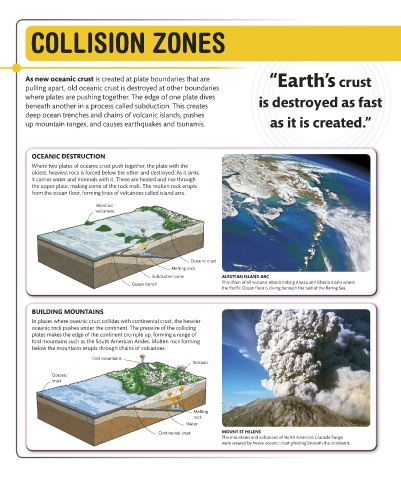
            OCEANIC DESTRUCTION
            Where two plates of oceanic crust push together, the plate with the
            oldest, heaviest rock is forced below the other and destroyed. As it sinks
            it carries water and minerals with it. These are heated and rise through
            the upper plate, making some of the rock melt. The molten rock erupts
            from the ocean floor, forming lines of volcanoes called island arcs.

                                   Island arc
                                   volcanoes


                                                                     Oceanic crust
                                                              Melting rock
                                                       Subduction zone          ALEUTIAN ISLAND ARC
                                                Ocean trench                    This chain of 69 volcanic islands linking Alaska and Siberia marks where
                                                                                the Pacific Ocean floor is diving beneath the bed of the Bering Sea.


            BUILDING MOUNTAINS

            In places where oceanic crust collides with continental crust, the heavier
            oceanic rock pushes under the continent. The pressure of the colliding
            plates makes the edge of the continent crumple up, forming a range of
            fold mountains such as the South American Andes. Molten rock forming
            below the mountains erupts through chains of volcanoes.
                                  Fold mountains
                                                                      Volcano

                    Oceanic
                    crust


                                                                      Melting
                                                                      rock
                                                                   Water
                                                         Continental crust      MOUNT ST HELENS
                                                                                The mountains and volcanoes of North America’s Cascade Range
                                                                                were created by heavy oceanic crust grinding beneath the continent.


   US_020-021_Collision_Zones.indd   20                                                                                             23/03/17   11:05 am

