


Page 53 - DINOSOUR ATLAS
P. 53
europe
Ha†eg Island (5.'!29 !RAD 2 / - ! . ) !
#LUJ .APOCA
In the late cretaceous perIod, about 75 million years ago, the 4IMISOARA 3IBIU "RASOV
Ha†eg Basin area of western Romania was an island in the Tethys Sea. (AEG
Several dinosaur families lived on the island, including titanosaurs, 5SBOTZMWBOJBO "MQT
hadrosaurs, ankylosaurs, and iguanodonts. This was a typical 3%2")! -/.4%.%'2/
Late Cretaceous dinosaur mixture, which could also be found 0ITESTI
in other parts of the world. But what made the Ha†eg Island
animals interesting was their size—Magyarosaurus, Rhabdodon,
and their contemporaries were smaller than usual. Over many
generations, the species adapted to the limited food supplies u Site location
on the island by shrinking in size.
Ha†eg is a town in western Romania. The name comes
from the island that existed in the surrounding area
during the Late Cretaceous. Many fossils have been
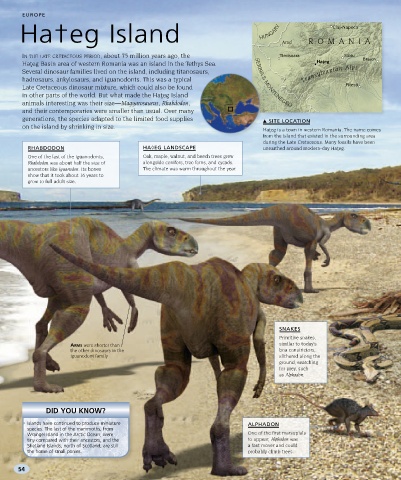
rHaBDoDon Ha◊eG lanDScape unearthed around modern-day Ha†eg.
One of the last of the iguanodonts, Oak, maple, walnut, and beech trees grew
Rhabdodon was about half the size of alongside conifers, tree ferns, and cycads.
ancestors like Iguanodon. Its bones The climate was warm throughout the year.
show that it took about 16 years to
grow to full adult size.
SnakeS
Primitive snakes,
Arms were shorter than similar to today’s
the other dinosaurs in the boa constrictors,
iguanodont family slithered along the
ground, searching
for prey, such
as Alphadon.
did you know?
. Islands have continued to produce miniature alpHaDon
species. The last of the mammoths, from
Wrangel Island in the Arctic Ocean, were One of the first marsupials
tiny compared with their ancestors, and the to appear, Alphadon was
Shetland Islands, north of Scotland, are still a fast mover and could
the home of small ponies. probably climb trees.
54

