


Page 29 - Euclid's Elements of Geometry
P. 29
ST	EW      aþ.


                                                                                            ELEMENTS BOOK 1


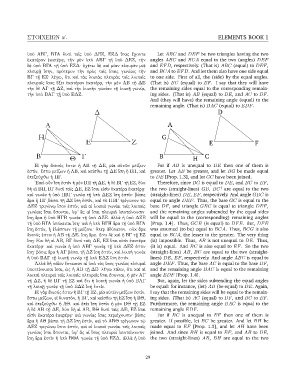
            ὑπὸ ΑΒΓ, ΒΓΑ δυσὶ ταῖς ὑπὸ ΔΕΖ, ΕΖΔ ἴσας ἔχοντα        Let ABC and DEF be two triangles having the two
            ἑκατέραν ἑκατέρᾳ, τὴν μὲν ὑπὸ ΑΒΓ τῇ ὑπὸ ΔΕΖ, τὴν angles ABC and BCA equal to the two (angles) DEF
            δὲ ὑπὸ ΒΓΑ τῇ ὑπὸ ΕΖΔ· ἐχέτω δὲ καὶ μίαν πλευρὰν μιᾷ and EFD, respectively. (That is) ABC (equal) to DEF,
            πλευρᾷ ἴσην, πρότερον τὴν πρὸς ταῖς ἴσαις γωνίαις τὴν and BCA to EFD. And let them also have one side equal
            ΒΓ τῇ ΕΖ· λέγω, ὅτι καὶ τὰς λοιπὰς πλευρὰς ταῖς λοιπαῖς to one side. First of all, the (side) by the equal angles.
            πλευραῖς ἴσας ἕξει ἑκατέραν ἑκατέρᾳ, τὴν μὲν ΑΒ τῇ ΔΕ  (That is) BC (equal) to EF. I say that they will have
            τὴν δὲ ΑΓ τῇ ΔΖ, καὶ τὴν λοιπὴν γωνίαν τῇ λοιπῇ γωνίᾳ, the remaining sides equal to the corresponding remain-
            τὴν ὑπὸ ΒΑΓ τῇ ὑπὸ ΕΔΖ.                             ing sides. (That is) AB (equal) to DE, and AC to DF.
                                                                And (they will have) the remaining angle (equal) to the
                                                                remaining angle. (That is) BAC (equal) to EDF.
                                         ∆                                                  D

                    Α                                                  A

                 Η                                                   G
                                     Ε                  Ζ                               E                   F


                Β             Θ    Γ                                B             H    C

               Εἰ γὰρ ἄνισός ἐστιν ἡ ΑΒ τῇ ΔΕ, μία αὐτῶν μείζων    For if AB is unequal to DE then one of them is
            ἐστίν. ἔστω μείζων ἡ ΑΒ, καὶ κείσθω τῇ ΔΕ ἴση ἡ ΒΗ, καὶ greater. Let AB be greater, and let BG be made equal
            ἐπεζεύχθω ἡ ΗΓ.                                     to DE [Prop. 1.3], and let GC have been joined.
               ᾿Επεὶ οὖν ἴση ἐστὶν ἡ μὲν ΒΗ τῇ ΔΕ, ἡ δὲ ΒΓ τῇ ΕΖ, δύο  Therefore, since BG is equal to DE, and BC to EF,
                                                                                             †
            δὴ αἱ ΒΗ, ΒΓ δυσὶ ταῖς ΔΕ, ΕΖ ἴσαι εἰσὶν ἑκατέρα ἑκατέρᾳ· the two (straight-lines) GB, BC are equal to the two
            καὶ γωνία ἡ ὑπὸ ΗΒΓ γωνίᾳ τῇ ὑπὸ ΔΕΖ ἴση ἐστίν· βάσις (straight-lines) DE, EF, respectively. And angle GBC is
            ἄρα ἡ ΗΓ βάσει τῇ ΔΖ ἴση ἐστίν, καὶ τὸ ΗΒΓ τρίγωνον τῷ equal to angle DEF. Thus, the base GC is equal to the
            ΔΕΖ τριγώνῳ ἴσον ἐστίν, καὶ αἱ λοιπαὶ γωνίαι ταῖς λοιπαῖς base DF, and triangle GBC is equal to triangle DEF,
            γωνίαις ἴσαι ἔσονται, ὑφ᾿ ἃς αἱ ἴσαι πλευραὶ ὑποτείνουσιν· and the remaining angles subtended by the equal sides
            ἴση ἄρα ἡ ὑπὸ ΗΓΒ γωνία τῇ ὑπὸ ΔΖΕ. ἀλλὰ ἡ ὑπὸ ΔΖΕ will be equal to the (corresponding) remaining angles
            τῇ ὑπὸ ΒΓΑ ὑπόκειται ἴση· καὶ ἡ ὑπὸ ΒΓΗ ἄρα τῇ ὑπὸ ΒΓΑ [Prop. 1.4]. Thus, GCB (is equal) to DFE. But, DFE
            ἴση ἐστίν, ἡ ἐλάσσων τῇ μείζονι· ὅπερ ἀδύνατον. οὐκ ἄρα was assumed (to be) equal to BCA. Thus, BCG is also
            ἄνισός ἐστιν ἡ ΑΒ τῇ ΔΕ. ἴση ἄρα. ἔστι δὲ καὶ ἡ ΒΓ τῇ ΕΖ  equal to BCA, the lesser to the greater. The very thing
            ἴση· δύο δὴ αἱ ΑΒ, ΒΓ δυσὶ ταῖς ΔΕ, ΕΖ ἴσαι εἰσὶν ἑκατέρα (is) impossible. Thus, AB is not unequal to DE. Thus,
            ἑκατέρᾳ· καὶ γωνία ἡ ὑπὸ ΑΒΓ γωνίᾳ τῇ ὑπὸ ΔΕΖ ἐστιν (it is) equal. And BC is also equal to EF. So the two
            ἴση· βάσις ἄρα ἡ ΑΓ βάσει τῇ ΔΖ ἴση ἐστίν, καὶ λοιπὴ γωνία  (straight-lines) AB, BC are equal to the two (straight-
            ἡ ὑπὸ ΒΑΓ τῇ λοιπῇ γωνίᾳ τῇ ὑπὸ ΕΔΖ ἴση ἐστίν.      lines) DE, EF, respectively. And angle ABC is equal to
               ᾿Αλλὰ δὴ πάλιν ἔστωσαν αἱ ὑπὸ τὰς ἴσας γωνίας πλευραὶ angle DEF. Thus, the base AC is equal to the base DF,
            ὑποτείνουσαι ἴσαι, ὡς ἡ ΑΒ τῇ ΔΕ· λέγω πάλιν, ὅτι καὶ αἱ and the remaining angle BAC is equal to the remaining
            λοιπαὶ πλευραὶ ταῖς λοιπαῖς πλευραῖς ἴσαι ἔσονται, ἡ μὲν ΑΓ  angle EDF [Prop. 1.4].
            τῇ ΔΖ, ἡ δὲ ΒΓ τῇ ΕΖ καὶ ἔτι ἡ λοιπὴ γωνία ἡ ὑπὸ ΒΑΓ   But, again, let the sides subtending the equal angles
            τῇ λοιπῇ γωνίᾳ τῇ ὑπὸ ΕΔΖ ἴση ἐστίν.                be equal: for instance, (let) AB (be equal) to DE. Again,
               Εἰ γὰρ ἄνισός ἐστιν ἡ ΒΓ τῇ ΕΖ, μία αὐτῶν μείζων ἐστίν. I say that the remaining sides will be equal to the remain-
            ἔστω μείζων, εἰ δυνατόν, ἡ ΒΓ, καὶ κείσθω τῇ ΕΖ ἴση ἡ ΒΘ, ing sides. (That is) AC (equal) to DF, and BC to EF.
            καὶ ἐπεζεύχθω ἡ ΑΘ. καὶ ἐπὲι ἴση ἐστὶν ἡ μὲν ΒΘ τῇ ΕΖ  Furthermore, the remaining angle BAC is equal to the
            ἡ δὲ ΑΒ τῇ ΔΕ, δύο δὴ αἱ ΑΒ, ΒΘ δυσὶ ταῖς ΔΕ, ΕΖ ἴσαι remaining angle EDF.
            εἰσὶν ἑκατέρα ἑκαρέρᾳ· καὶ γωνίας ἴσας περιέχουσιν· βάσις  For if BC is unequal to EF then one of them is
            ἄρα ἡ ΑΘ βάσει τῇ ΔΖ ἴση ἐστίν, καὶ τὸ ΑΒΘ τρίγωνον τῷ greater. If possible, let BC be greater. And let BH be
            ΔΕΖ τριγώνῳ ἴσον ἐστίν, καὶ αἱ λοιπαὶ γωνίαι ταῖς λοιπαῖς made equal to EF [Prop. 1.3], and let AH have been
            γωνίαις ἴσαι ἔσονται, ὑφ᾿ ἃς αἱ ἴσας πλευραὶ ὑποτείνουσιν· joined. And since BH is equal to EF, and AB to DE,
            ἴση ἄρα ἐστὶν ἡ ὑπὸ ΒΘΑ γωνία τῇ ὑπὸ ΕΖΔ. ἀλλὰ ἡ ὑπὸ the two (straight-lines) AB, BH are equal to the two


                                                              29

