


Page 133 - text book form physics kssm 2020
P. 133
Chapter 4
                                                                                                     Heat
                  Specifi c Heat Capacity of Substance
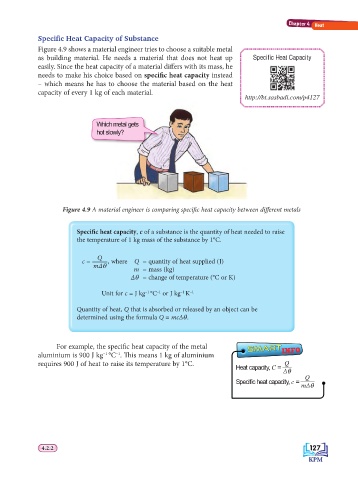
                  Figure 4.9 shows a material engineer tries to choose a suitable metal
                  as building material. He needs a material that does not heat up   Specifi c Heat Capacity
                  easily. Since the heat capacity of a material diff ers with its mass, he
                  needs to make his choice based on specifi c heat capacity instead
                  – which means he has to choose the material based on the heat
                  capacity of every 1 kg of each material.
                                                                                http://bt.sasbadi.com/p4127


                                    Which metal gets
                                    hot slowly?


                          Figure 4.9 A material engineer is comparing specifi c heat capacity between diff erent metals


                              Specifi c heat capacity, c of a substance is the quantity of heat needed to raise
                              the temperature of 1 kg mass of the substance by 1°C.

                                    Q
                                c =    , where   Q  = quantity of heat supplied (J)
                                   mΔθ
                                               m  = mass (kg)
                                              Δθ  = change of temperature (°C or K)

                                                  –1
                                                             –1
                                                      –1
                                     Unit  for  c  = J kg °C  or J kg K –1
                              Quantity of heat, Q that is absorbed or released by an object can be
                              determined using the formula Q = mcΔθ.


                                                                                 SMART
                        For example, the specifi c heat capacity of the metal    SMART      INFO
                  aluminium is 900 J kg °C . Th  is means 1 kg of aluminium
                                      –1
                                          –1
                  requires 900 J of heat to raise its temperature by 1°C.                   Q
                                                                              Heat capacity, C =  Δθ
                                                                                                   Q
                                                                              Specifi c heat capacity, c =  mΔθ


                                                                                                    127
                                                                                                    127
                   4.2.2
                   4.2.2                                                                            127

