


Page 335 - The Complete Dog Breed Book Choose the Perfect Dog for You, New Edition (DK)
P. 335
HEAL TH       335


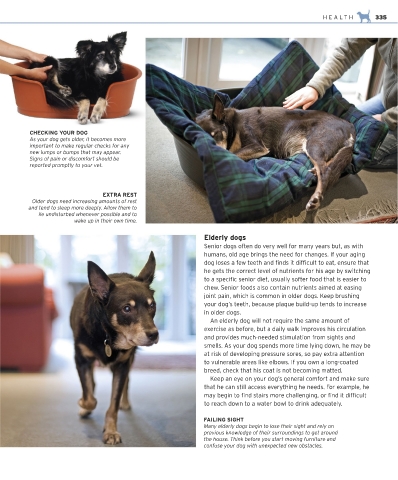
         CHECKING YOUR DOG
         As your dog gets older, it becomes more
         important to make regular checks for any
         new lumps or bumps that may appear.
         Signs of pain or discomfort should be
         reported promptly to your vet.


                              EXTRA REST
          Older dogs need increasing amounts of rest
         and tend to sleep more deeply. Allow them to
            lie undisturbed whenever possible and to
                      wake up in their own time.
                                                          Elderly dogs
                                                          Senior dogs often do very well for many years but, as with
                                                          humans, old age brings the need for changes. If your aging
                                                          dog loses a few teeth and finds it difficult to eat, ensure that
                                                          he gets the correct level of nutrients for his age by switching
                                                          to a specific senior diet, usually softer food that is easier to
                                                          chew. Senior foods also contain nutrients aimed at easing
                                                          joint pain, which is common in older dogs. Keep brushing
                                                          your dog’s teeth, because plaque build-up tends to increase
                                                          in older dogs.
                                                           An elderly dog will not require the same amount of
                                                          exercise as before, but a daily walk improves his circulation
                                                          and provides much-needed stimulation from sights and
                                                          smells. As your dog spends more time lying down, he may be
                                                          at risk of developing pressure sores, so pay extra attention
                                                          to vulnerable areas like elbows. If you own a long-coated
                                                          breed, check that his coat is not becoming matted.
                                                           Keep an eye on your dog’s general comfort and make sure
                                                          that he can still access everything he needs. For example, he
                                                          may begin to find stairs more challenging, or find it difficult
                                                          to reach down to a water bowl to drink adequately.

                                                          FAILING SIGHT
                                                          Many elderly dogs begin to lose their sight and rely on
                                                          previous knowledge of their surroundings to get around
                                                          the house. Think before you start moving furniture and
                                                          confuse your dog with unexpected new obstacles.


   US_334-335_178795_Health_3.indd   335                                                             10/09/19   3:42 PM

