


Page 20 - Mammal (DK Eyewitness)
P. 20
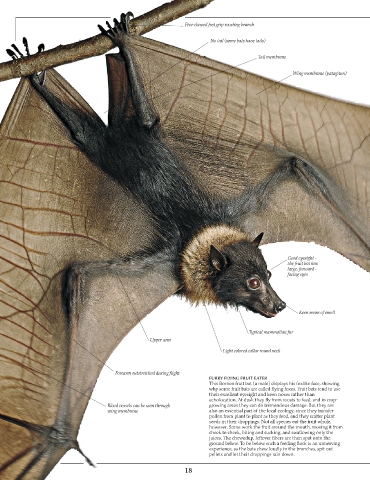
Fiveclawed feet grip roosting branch
No tail (some bats have tails)
Tail membrane
Wing membrane (patagium)
Good eyesight
the fruit bat has
large, forward
facing eyes
Keen sense of smell
Typical mammalian fur
Upper arm
Light colored collar round neck
Forearm outstretched during flight
FURRY FLYING FRUIT EATER
This Borneo fruit bat (a male) displays his foxlike face, showing
why some fruit bats are called flying foxes. Fruit bats tend to use
their excellent eyesight and keen noses rather than
echolocation. At dusk they fly from roosts to feed, and in crop-
Blood vessels can be seen through growing areas they can do tremendous damage. But they are
wing membrane also an essential part of the local ecology, since they transfer
pollen from plant to plant as they feed, and they scatter plant
seeds in their droppings. Not all species eat the fruit whole,
however. Some work the fruit around the mouth, moving it from
cheek to cheek, biting and sucking, and swallowing only the
juices. The chewedup, leftover fibers are then spat onto the
ground below. To be below such a feeding flock is an unnerving
experience, as the bats chew loudly in the branches, spit out
pellets and let their droppings rain down.
1
(c) 2011 Dorling Kindersley. All Rights Reserved.

