


Page 15 - Mammal (DK Eyewitness)
P. 15
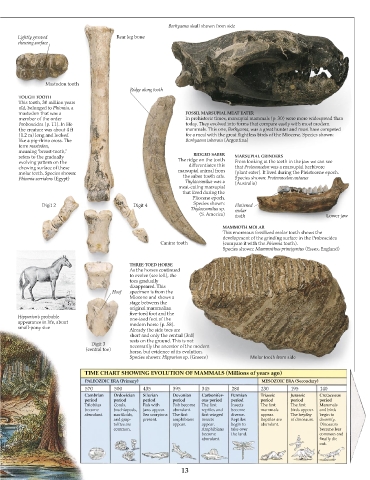
Borhyaena skull shown from side
Lightly grooved Rear leg bone
chewing surface
Mastodon tooth
Ridge along tooth
TOUGH TOOTH
This tooth, 30 million years
old, belonged to Phiomia, a
mastodon that was a FOSSIL MARSUPIAL MEAT EATER
member of the order In prehistoric times, marsupial mammals (p. 30) were more widespread than
Proboscidea (p. 11). In life today. They evolved into forms that compare easily with most modern
the creature was about 4 ft mammals. This one, Borhyaena, was a great hunter and must have competed
(1.2 m) long and looked for a meal with the great flightless birds of the Miocene. Species shown:
like a pig-rhino cross. The Borhyaena tuberata (Argentina)
term mastodon,
meaning “breast-tooth,”
RIDGED SABER
refers to the gradually MARSUPIAL GRINDERS
evolving pattern on the The ridge on the tooth From looking at the teeth in the jaw we can see
chewing surface of these differentiates this that Protemnodon was a marsupial herbivore
molar teeth. Species shown: marsupial animal from (plant eater). It lived during the Pleistocene epoch.
Phiomia serridens (Egypt) the saber-tooth cats. Species shown: Protemnodon antaeus
Thylacosmilus was a (Australia)
meat-eating marsupial
that lived during the
Pliocene epoch.
Digit 2 Digit 4 Species shown: Flattened
Thylacosmilus sp. molar
(S. America) tooth Lower jaw
MAMMOTH MOLAR
This enormous fossilized molar tooth shows the
development of the grinding surface in the Proboscidea
Canine tooth (compare it with the Phiomia tooth).
Species shown: Mammuthus primigenius (Essex, England)
THREETOED HORSE
As the horses continued
to evolve (see left), the
toes gradually
disappeared. This
Hoof specimen is from the
Miocene and shows a
stage between the
original mammalian
five-toed foot and the
Hipparion’s probable one-toed foot of the
appearance in life, about modern horse (p. 58).
small-pony size
Already the side toes are
short and only the central (3rd)
rests on the ground. This is not
Digit 3 necessarily the ancestor of the modern
(central toe)
horse, but evidence of its evolution.
Species shown: Hipparion sp. (Greece) Molar tooth from side
TIME CHART SHOWING EVOLUTION OF MAMMALS (Millions of years ago)
PALEOZOIC ERA (Primary) MESOZOIC ERA (Secondary)
570 500 435 395 345 280 230 195 140
Cambrian Ordovician Silurian Devonian Carbonifer- Permian Triassic Jurassic Cretaceous
period period period period ous period period period period period
Trilobites Corals, Fish with Fish become The first Insects The first The first Mammals
become brachiopods, jaws appear. abundant. reptiles and become mammals birds appear. and birds
abundant. nautiloids, Sea scorpions The first first winged diverse. appear. The heyday begin to
and grap- present. amphibians insects Reptiles Reptiles are of dinosaurs. diversify.
tolites are appear. appear. begin to abundant. Dinosaurs
common. Amphibians take over become less
become the land. common and
abundant. finally die
out.
13

