


Page 61 - Mammal (DK Eyewitness)
P. 61
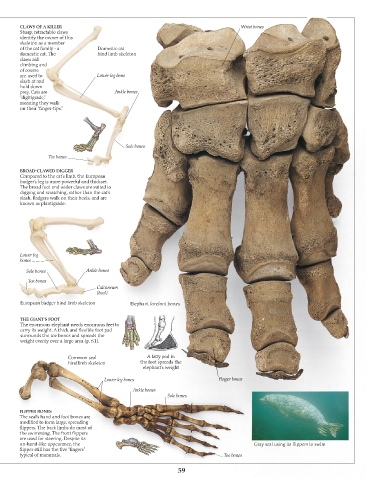
CLAWS OF A KILLER                                                        Wrist bones
        Sharp, retractable claws
        identify the owner of this
        skeleton as a member
        of the cat family - a    Domestic cat
        domestic cat. The        hind limb skeleton
        claws aid
        climbing and
        of course
        are used to              Lower leg bone
        slash at and
        hold down
        prey. Cats are                 Ankle bones
        “digitigrade,”
        meaning they walk
        on their “finger-tips.”


                                           Sole bones
                 Toe bones

        BROAD-CLAWED DIGGER
        Compared to the cat’s limb, the European
        badger’s leg is more powerful and thickset.
        The broad foot and wider claws are suited to
        digging and scratching, rather than the cat’s
        slash. Badgers walk on their heels, and are
        known as plantigrade.


        Lower leg
        bones

          Sole bones          Ankle bones
          Toe bones
                                 Calcaneum
                                 (heel)
        European badger hind limb skeleton  Elephant forefoot bones


        THE GIANT’S FOOT
        The enormous elephant needs enormous feet to
        carry its weight. A thick and flexible foot pad
        surrounds the toe bones and spreads the
        weight evenly over a large area (p. 61).

                        Common seal               A fatty pad in
                        hindlimb skeleton      the foot spreads the
                                                elephant’s weight

                                    Lower leg bones                      Finger bones
                                             Ankle bones
                                                        Sole bones

        FLIPPER BONES
        The seal’s hand and foot bones are
        modified to form large, spreading
        flippers. The back limbs do most of
        the swimming. The front flippers
        are used for steering. Despite its
        un-hand-like appearance, the                                                 Gray seal using its flippers to swim
        flipper still has the five “fingers”
        typical of mammals.                                                Toe bones

                                                            5


 (c) 2011 Dorling Kindersley. All Rights Reserved.

