


Page 58 - Mammal (DK Eyewitness)
P. 58
Life underground
P, , , , and other types of UNDER THE MOLE’S MOUND
grassland are some of the best areas to find burrowing Champion among mammal burrowers is the
European mole, which lives, breeds, sleeps, and eats
mammals. As there are few trees, and so little shelter, the underground. A few mounds of fresh soil in a meadow
main refuge is underground. North American prairie dogs are the only sign of a complex system of burrows and
chambers 3 ft (1 m) or more beneath, and possibly
and ground squirrels, South American viscachas and maras, stretching 300 ft (100 m) in length. The size of the
burrow is determined largely by the richness of the
African root rats and mole-rats, and Asian sousliks and soil. In old pasture, with lots of earthworms and
gerbils all tunnel in grasslands. They gain safety, a place to insects, a mole would have to burrow less than in
poorer, stonier, or sandier soil. Most of the food
build a nest to rest and breed, and shelter comes from the “mole patrol” as the animal wanders
from the hot sun and cold wind. But most of its tunnels, maintaining them and eating creatures
that have fallen in from the walls.
them have to emerge at some time, since they
are chiefly herbivores, and plants do not grow
underground in the dark. More specialized
feeders, such as blind mole-rats, gnaw roots,
bulbs, tubers, and other underground plant
parts, and can stay permanently below the
surface. Then there are the insect eaters,
such as the moles.
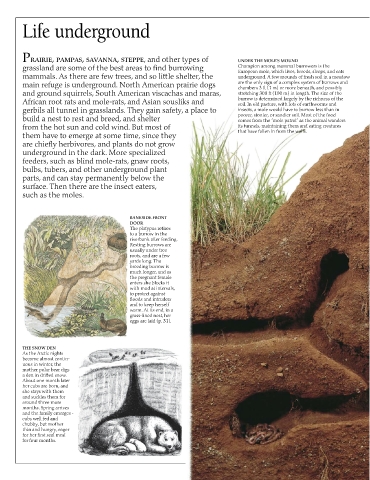
BANKSIDE FRONT
DOOR
The platypus retires
to a burrow in the
riverbank after feeding.
Resting burrows are
usually under tree
roots, and are a few
yards long. The
breeding burrow is
much longer, and as
the pregnant female
enters she blocks it
with mud at intervals,
to protect against
floods and intruders
and to keep herself
warm. At its end, in a
grass-lined nest, her
eggs are laid (p. 31).
THE SNOW DEN
As the Arctic nights
become almost contin-
uous in winter, the
mother polar bear digs
a den in drifted snow.
About one month later
her cubs are born, and
she stays with them
and suckles them for
around three more
months. Spring arrives
and the family emerges -
cubs well fed and
chubby, but mother
thin and hungry, eager
for her first seal meal
for four months.

