


Page 315 - Encyclopedia of Aquarium and Pond Fish, 3rd Edition
P. 315
COLDWATER FISH IN THE HOME    313

         so that the fish can be brought indoors before the temperature
         dips dangerously low. To transfer fish from the pond to a                    Flake foods float
         tank, simply net them out of the pond and transfer them to    Fish tilts its body   on the surface
                                                                    to reach food
         a suitable container, such as a clean plastic bowl. They can    more easily  of the water
         then be brought indoors and introduced into the aquarium.
           Even hardy varieties of goldfish may benefit from spending
         their first winter in an aquarium. If left outdoors, the decline
         in temperature deters them from feeding and so slows their
         rate of growth. Moving them indoors also provides an
         opportunity to tame the young fish.
           Goldfish that have been housed indoors during the winter
         months can be returned to their outdoor accommodation
         in the late spring, once the risk of cold weather has passed.
         Before transferring the fish, ensure that the temperature
         of the water in the pond is close to that of the aquarium,
         so as not to cause them undue stress.
           An aquarium also provides an ideal environment to
         quarantine newly acquired fish, to ensure that they are
         healthy before releasing them into the pond. This is especially
         important for controlling parasites in a pond; these pests can
         be transferred into the pond on a new fish and may multiply
         unchecked and harm other pond occupants before their
         presence is identified. As a general guide, newcomers should
         be kept in an aquarium for a week or so, until it is clear that
         they are feeding well and appear to be generally healthy. Try
         to plan ahead if you are buying fish for a pond; set up the
         aquarium well in advance, and start the maturation of the
         filter by adding an existing fish, if possible. Larger coldwater
         fish, including bigger goldfish, will need a more powerful
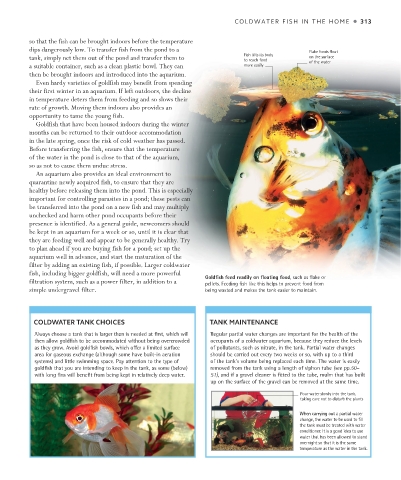
         filtration system, such as a power filter, in addition to a    Goldfish feed readily on floating food, such as flake or
                                                          pellets. Feeding fish like this helps to prevent food from
         simple undergravel filter.                       being wasted and makes the tank easier to maintain.


          COLDWATER TANK CHOICES                           TANK MAINTENANCE
           Always choose a tank that is larger than is needed at first, which will   Regular partial water changes are important for the health of the
           then allow goldfish to be accommodated without being overcrowded   occupants of a coldwater aquarium, because they reduce the levels
           as they grow. Avoid goldfish bowls, which offer a limited surface   of pollutants, such as nitrate, in the tank. Partial water changes
           area for gaseous exchange (although some have built-in aeration   should be carried out every two weeks or so, with up to a third
           systems) and little swimming space. Pay attention to the type of   of the tank’s volume being replaced each time. The water is easily
           goldfish that you are intending to keep in the tank, as some (below)   removed from the tank using a length of siphon tube (see pp.50–
           with long fins will benefit from being kept in relatively deep water.  51), and if a gravel cleaner is fitted to the tube, mulm that has built
                                                           up on the surface of the gravel can be removed at the same time.
                                                                                    Pour water slowly into the tank,
                                                                                    taking care not to disturb the plants

                                                                                    When carrying out a partial water
                                                                                    change, the water to be used to fill
                                                                                    the tank must be treated with water
                                                                                    conditioner. It is a good idea to use
                                                                                    water that has been allowed to stand
                                                                                    overnight so that it is the same
                                                                                    temperature as the water in the tank.


   US_312-313_Coldwat_Fish_Maint_Ch.indd   313                                                       29/08/18   4:11 PM

