


Page 318 - Encyclopedia of Aquarium and Pond Fish, 3rd Edition
P. 318
316    POND FISH: MAINTENANCE

         Food and feeding


         Coldwater fish, such as koi and goldfish, constantly forage
         for food—a behavioral characteristic that makes them seem
         hungry all the time, even though they may have no
         immediate need for sustenance. In the pond
         environment, they are able to browse on a range
         of natural foods, such as algae and plant matter,
         but they also need to be provided with a staple
         formulated food to achieve a balanced diet.

         Most fishkeepers give their fish commercially prepared foods,
         such as pellets and flakes (see box, opposite). These foods contain
         a scientifically formulated balance of ingredients, including
         proteins, fats, carbohydrates, vitamins, minerals, and fiber, all
         of which are essential for a healthy diet. These foods should
         form the basis of the diet that is offered to your fish.
           It is important not to overfeed pond fish, because this can
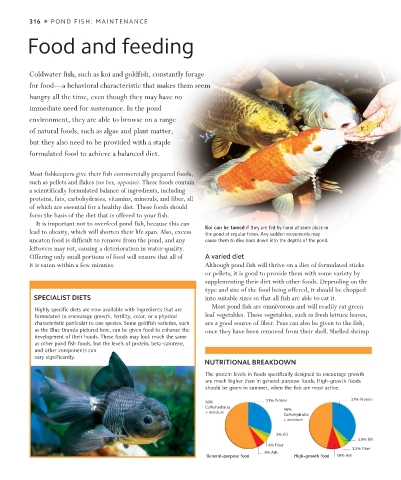
         lead to obesity, which will shorten their life span. Also, excess   Koi can be tamed if they are fed by hand at same place in
                                                          the pond at regular times. Any sudden movements may
         uneaten food is difficult to remove from the pond, and any   cause them to dive back down into the depths of the pond.
         leftovers may rot, causing a deterioration in water quality.
         Offering only small portions of food will ensure that all of    A varied diet
         it is eaten within a few minutes.                Although pond fish will thrive on a diet of formulated sticks
                                                          or pellets, it is good to provide them with some variety by
                                                          supplementing their diet with other foods. Depending on the
                                                          type and size of the food being offered, it should be chopped
          SPECIALIST DIETS                                into suitable sizes so that all fish are able to eat it.
                                                           Most pond fish are omnivorous and will readily eat green
           Highly specific diets are now available with ingredients that are
           formulated to encourage growth, fertility, color, or a physical   leaf vegetables. These vegetables, such as fresh lettuce leaves,
           characteristic particular to one species. Some goldfish varieties, such   are a good source of fiber. Peas can also be given to the fish,
           as the Blue Oranda pictured here, can be given food to enhance the   once they have been removed from their shell. Shelled shrimp
           development of their hoods. These foods may look much the same
           as other pond fish foods, but the levels of protein, beta-carotene,
           and other components can
           vary significantly.
                                                         NUTRITIONAL BREAKDOWN
                                                          The protein levels in foods specifically designed to encourage growth
                                                          are much higher than in general-purpose foods. High-growth foods
                                                          should be given in summer, when the fish are most active.

                                                          56%             31% Protein             37% Protein
                                                          Carbohydrates        46%
                                                          + moisture
                                                                               Carbohydrates
                                                                               + moisture
                                                                             3% Oil
                                                                                                    3.8% Oil
                                                                           4% Fiber
                                                                                                  3.2% Fiber
                                                                          6% Ash
                                                          General-purpose food    High-growth food  10% Ash


   US_316-317_Food_Feeding.indd   316                                                                29/08/18   4:11 PM

