


Page 184 - (DK) Help Your Kids with Growing Up: A No-Nonsense Guide to Puberty and Adolescence
P. 184
182       F AMILIES


        Siblings                                                           SEE ALSO
                                                                           ‹
                                                                           ‹ 174–175  Parent-teen relationships
                                                                            176–177  Building trust
        Parent-teen relationships aren't the only ones to change, and be   ‹ 178–179  Dealing with conflict
        tested, throughout puberty. Teens’ relationships with their brothers    ‹ 180–181  Difficult events
        and sisters also adapt – but in different ways.

        Having siblings
        Siblings play different roles in each other's lives – they are friends one
        minute, adversaries the next. This role-play and role-switching allows
        teens to test relationship boundaries. Having arguments allows teens
        to learn how to resolve conflict, while heated discussions teach
        siblings how to debate, compromise, and respect different opinions –
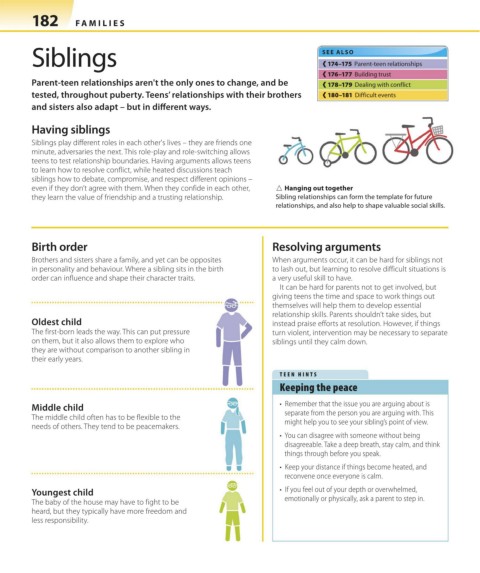
        even if they don’t agree with them. When they confide in each other,   △ Hanging out together
        they learn the value of friendship and a trusting relationship.   Sibling relationships can form the template for future
                                                                 relationships, and also help to shape valuable social skills.


        Birth order                                             Resolving arguments
        Brothers and sisters share a family, and yet can be opposites    When arguments occur, it can be hard for siblings not
        in personality and behaviour. Where a sibling sits in the birth    to lash out, but learning to resolve difficult situations is
        order can influence and shape their character traits.   a very useful skill to have.
                                                                 It can be hard for parents not to get involved, but
                                                                giving teens the time and space to work things out
                                                                themselves will help them to develop essential
                                                                relationship skills. Parents shouldn’t take sides, but
        Oldest child                                            instead praise efforts at resolution. However, if things
        The first-born leads the way. This can put pressure     turn violent, intervention may be necessary to separate
        on them, but it also allows them to explore who         siblings until they calm down.
        they are without comparison to another sibling in
        their early years.

                                                                 TEEN  HINTS
                                                                 Keeping the peace

        Middle child                                             •  Remember that the issue you are arguing about is
        The middle child often has to be flexible to the           separate from the person you are arguing with. This
        needs of others. They tend to be peacemakers.              might help you to see your sibling’s point of view.
                                                                 •  You can disagree with someone without being
                                                                   disagreeable. Take a deep breath, stay calm, and think
                                                                   things through before you speak.
                                                                 •  Keep your distance if things become heated, and
                                                                   reconvene once everyone is calm.
        Youngest child                                           •  If you feel out of your depth or overwhelmed,
        The baby of the house may have to fight to be              emotionally or physically, ask a parent to step in.
        heard, but they typically have more freedom and
        less responsibility.


   182-183_Siblings.indd   182                                                                       24/03/2017   17:19

