


Page 8 - The Book of Caterpillars: A Life-Size Guide to Six Hundred Species From Around the World
P. 8
INTRODUCTION

     6


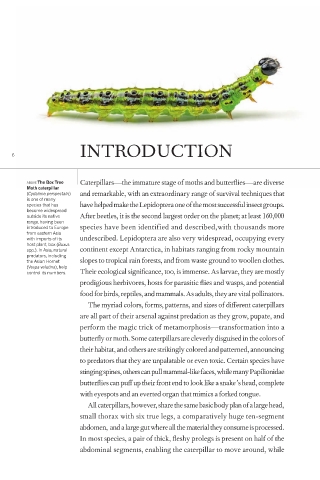
          ABOVE The Box Tree   Caterpillars—the immature stage of moths and butterflies—are diverse
          Moth caterpillar
          (Cydalima perspectalis)   and remarkable, with an extraordinary range of survival techniques that
          is one of many
          species that has   have helped make the Lepidoptera one of the most successful insect groups.
          become widespread
          outside its native   After beetles, it is the second largest order on the planet; at least 160,000
          range, having been
          introduced to Europe   species have been identified and described,with thousands more
          from eastern Asia
          with imports of its   undescribed. Lepidoptera are also very widespread, occupying every
          host plant, box (Buxus
          spp.). In Asia, natural   continent except Antarctica, in habitats ranging from rocky mountain
          predators, including
          the Asian Hornet   slopes to tropical rain forests, and from waste ground to woollen clothes.
          (Vespa velutina), help
          control its numbers.  Their ecological significance, too, is immense. As larvae, they are mostly
                           prodigious herbivores, hosts for parasitic flies and wasps, and potential
                           food for birds, reptiles, and mammals. As adults, they are vital pollinators.

                             The myriad colors, forms, patterns, and sizes of different caterpillars
                           are all part of their arsenal against predation as they grow, pupate, and
                           perform the magic trick of metamorphosis—transformation into a
                           butterfly or moth. Some caterpillars are cleverly disguised in the colors of
                           their habitat, and others are strikingly colored and patterned, announcing

                           to predators that they are unpalatable or even toxic. Certain species have
                           stinging spines, others can pull mammal-like faces, while many Papilionidae
                           butterflies can puff up their front end to look like a snake’s head, complete
                           with eyespots and an everted organ that mimics a forked tongue.

                             All caterpillars, however, share the same basic body plan of a large head,
                           small thorax with six true legs, a comparatively huge ten-segment
                           abdomen,  and a large gut where all the material they consume is processed.
                           In most species, a pair of thick, fleshy prolegs is present on half of the
                           abdominal segments, enabling the caterpillar to move around, while

