


Page 35 - World of Animals - Issue #31
P. 35
r
                                                                                                            d o
                                                                                                                  f t
                                                                                                       Lord of the fl ies
                                                                                                       L
                                                                                                         o
                                                                                                                            i
                                                                                                                             e
                                                                                                                               s
                                                                                                                     h
                                                                                                                       e fl

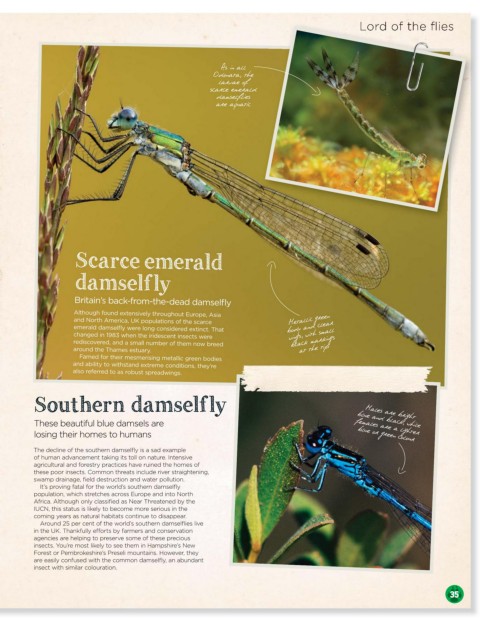
                                                                 As in all
                                                               Odonata, the
                                                                 larvae of
                                                              scarce emerald
                                                                damselflies
                                                                are aquatic


                         Scarce emerald


                         damselfly


                         Britain’s back-from-the-dead damselfl  y
                         Although found extensively throughout Europe, Asia
                                                                                   body and clear
                         and North America, UK populations of the scarce            Metallic green
                         emerald damselfl  y were long considered extinct. That
                         changed in 1983 when the iridescent insects were           wings, with small
                         rediscovered, and a small number of them now breed         black markings
                         around the Thames estuary.                                    at the tips
                           Famed for their mesmerising metallic green bodies
                         and ability to withstand extreme conditions, they’re
                         also referred to as robust spreadwings.


              Southern damselfly                                                                         Males are bright


              These beautiful blue damsels are                                                        females are a lighter
                                                                                                      blue and black, while
              losing their homes to humans                                                            blue or green colour


              The decline of the southern damselfly is a sad example
              of human advancement taking its toll on nature. Intensive
              agricultural and forestry practices have ruined the homes of
              these poor insects. Common threats include river straightening,

              swamp drainage, field destruction and water pollution.

                It’s proving fatal for the world’s southern damselfly
              population, which stretches across Europe and into North
              Africa. Although only classified as Near Threatened by the

              IUCN, this status is likely to become more serious in the
              coming years as natural habitats continue to disappear.
                Around 25 per cent of the world’s southern damselflies live

              in the UK. Thankfully efforts by farmers and conservation
              agencies are helping to preserve some of these precious
              insects. You’re most likely to see them in Hampshire’s New
              Forest or Pembrokeshire’s Preseli mountains. However, they

              are easily confused with the common damselfly, an abundant
              insect with similar colouration.
                                                                                                                               35


       032-038_DamselsinDistress.indd   35                                                                                   02/03/2016   14:24

