


Page 49 - BBC Wildlife Volume 36 #05
P. 49
“ WHEN THE FIRST DEVIL TURNED
                                                                       UP, THERE WAS A TANGIBLE

                                                                       CHANGE OF MOOD IN THE TENT.
                                                                       THIS IS WHAT I CAME TO THE

                                                                       OTHER SIDE OF THE WORLD FOR!”


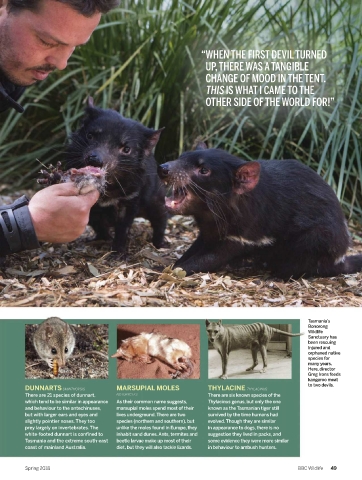
                                                                                                         Tasmania’s
                                                                                                         Bonorong
                                                                                                         W
                                                                                                         Wildlife
                                                                                                         Sanctuary has
                                                                                                         been rescuing
                                                                                                         injured and
                                                                                                         orphaned native
                                                                                                         species for
                                                                                                         many years.
                                                                                                         Here, director
                                                                                                         Greg Irons feeds
                                                                                                         kangaroo meat
                                                                                                         to two devils.
          DUNNARTS SMINTHOPSIS          MARSUPIAL MOLES                THYLACINE  THYLACINUS
          There are 21 species of dunnart,   NOTORYCTES                There are six known species of the
          which tend to be similar in appearance   As their common name suggests,   Thylacinus genus, but only the one
          and behaviour to the antechinuses,   marsupial moles spend most of their   known as the Tasmanian tiger still
          but with larger ears and eyes and   lives underground. There are two   survived by the time humans had
          slightly pointier noses. They too   species (northern and southern), but   evolved. Though they are similar
          prey largely on invertebrates. The   unlike the moles found in Europe, they   in appearance to dogs, there is no
          white-footed dunnart is confined to   inhabit sand dunes. Ants, termites and   suggestion they lived in packs, and
          Tasmania and the extreme south-east   beetle larvae make up most of their   some evidence they were more similar
          coast of mainland Australia.  diet, but they will also tackle lizards.  in behaviour to ambush hunters.


          Spring 2018                                                                                 BBC Wildlife  49

