


Page 220 - The Complete Cat Breed Book (DK)
P. 220
218      C ARE AND BEHA VIOR


        SOCIALIZING YOUR CAT


                                     By nature, cats are solitary creatures. That said, some cats
                                     are able to live quite happily in groups. Bringing a new cat into
                                     your home may change his whole outlook on the people and
                                     other animals around him. But if introductions are made
                                     carefully and sensitively, your cat will grow into a confident,
                Dogs and cats
            need not be arch enemies  friendly animal that can cope with all social situations.


        Start early
        Socialization should start in kittenhood. Give your kitten
        plenty of opportunities to meet new people, cats, and dogs,
        and make it a fun and rewarding experience. Introduce him
        to friends, neighbors, and the vet at an early age; keep initial
        encounters brief and reward your kitten with treats for good
        behavior. A cat that is not exposed to new situations as a
        kitten may grow up to be timid and fearful, and is liable to
        react badly to being touched or approached by strangers.
          Kittens start to learn social skills from their mother
        between 8 and 12 weeks of age. Be wary of bringing home
        a kitten younger than this, otherwise his socialization will be
        your responsibility. It is important that your kitten gets used
        to being handled, with plenty of play designed to hone his
        predatory skills, but let him sleep when he wants to. Kittens
        left to spend a long time on their own without stimulation or
                                                         OLDER AND CALMER
        attention may develop antisocial behaviors and grow up to   If you have very small children, it may be better to get an adult
        be aloof or aggressive toward people and other animals.   cat. Toddlers may not realize how gently they need to handle
                                                         a kitten, while an older cat may be more tolerant of children.
        Socializing an adult cat
        Adult cats take longer than kittens to adapt to new    been treated in the past. Try to get as much information
        people and surroundings. Changes in routine are upsetting   as possible from the previous owner or rescue center about
        for an older cat, and unless you are familiar with your cat’s   the cat’s personality, habits, motivations, and favorite food
        previous home there may be issues related to how he has   and toys. Familiar objects can also help him to settle in, so
                                                         try to bring some of his old bedding or toys to make him
                                                         feel more secure. Provide him with a refuge, such as a
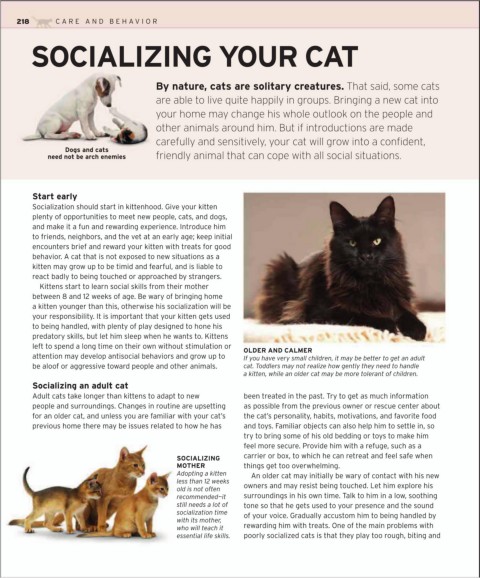
                                          SOCIALIZING    carrier or box, to which he can retreat and feel safe when
                                          MOTHER         things get too overwhelming.
                                          Adopting a kitten   An older cat may initially be wary of contact with his new
                                          less than 12 weeks
                                          old is not often   owners and may resist being touched. Let him explore his
                                          recommended—it   surroundings in his own time. Talk to him in a low, soothing
                                          still needs a lot of   tone so that he gets used to your presence and the sound
                                          socialization time   of your voice. Gradually accustom him to being handled by
                                          with its mother,
                                          who will teach it   rewarding him with treats. One of the main problems with
                                          essential life skills.  poorly socialized cats is that they play too rough, biting and

