


Page 211 - (DK) Help Your Kids with Language Arts
P. 211
209
                                                                   WRITING T O   DE SCRIBE


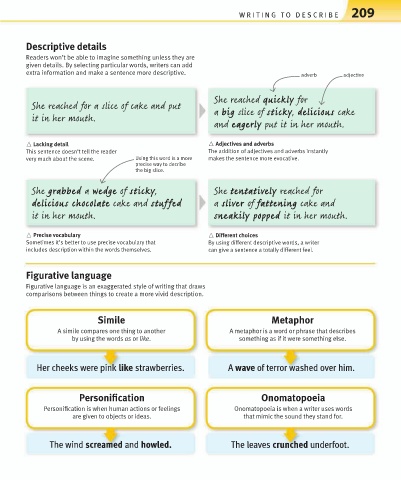
        Descriptive details
        Readers won’t be able to imagine something unless they are
        given details. By selecting particular words, writers can add
        extra information and make a sentence more descriptive.                     adverb      adjective


                                                            She reached quickly for
          She reached for a slice of cake and put           a big slice of sticky, delicious cake

          it in her mouth.
                                                            and eagerly put it in her mouth.

        △ Lacking detail                                  △ Adjectives and adverbs
        This sentence doesn’t tell the reader             The addition of adjectives and adverbs instantly
        very much about the scene.    Using this word is a more   makes the sentence more evocative.
                                      precise way to decribe
                                      the big slice.

          She grabbed a wedge of sticky,                    She tentatively reached for
          delicious chocolate cake and stuffed              a sliver of fattening cake and
          it in her mouth.                                  sneakily popped it in her mouth.


        △ Precise vocabulary                              △ Different choices
        Sometimes it’s better to use precise vocabulary that   By using different descriptive words, a writer
        includes description within the words themselves.  can give a sentence a totally different feel.


        Figurative language
        Figurative language is an exaggerated style of writing that draws
        comparisons between things to create a more vivid description.


                            Simile                                          Metaphor
                 A simile compares one thing to another         A metaphor is a word or phrase that describes
                     by using the words as or like.                something as if it were something else.


           Her cheeks were pink like strawberries.              A wave of terror washed over him.


                       Personification                                    Onomatopoeia
             Personification is when human actions or feelings     Onomatopoeia is when a writer uses words
                     are given to objects or ideas.                 that mimic the sound they stand for.


               The wind screamed and howled.                     The leaves crunched underfoot.

